


Javaid Jawad
“Flowers may wither within hours, but integrity, accountability and dedicated service continue to inspire long after every bouquet has faded.”
The tradition of presenting flower garlands is among the oldest cultural practices in human civilization. Across ancient India, Greece, Rome, and Egypt, garlands symbolized honour, affection, reverence, and welcome. In the Indian subcontinent, flower garlands have long been associated with religious ceremonies, public receptions, and the recognition of distinguished individuals. Likewise, in ancient Greece and Rome, victorious athletes, poets, and military commanders were crowned with laurel wreaths as marks of achievement and public esteem.
Although Islamic history does not contain any formal religious tradition of garlanding individuals, flowers and fragrances have generally been viewed with appreciation and favour. Consequently, in many Islamic institutions, the ceremonial tying of a turban is practised as a mark of respect or welcome. In Kashmir, the locally woven shawl is traditionally presented as a token of reverence and honour, while in Ladakh, a distinctive silk scarf known as the Khatak is offered as a gesture of respect and goodwill.
When a Tradition Loses Its Meaning
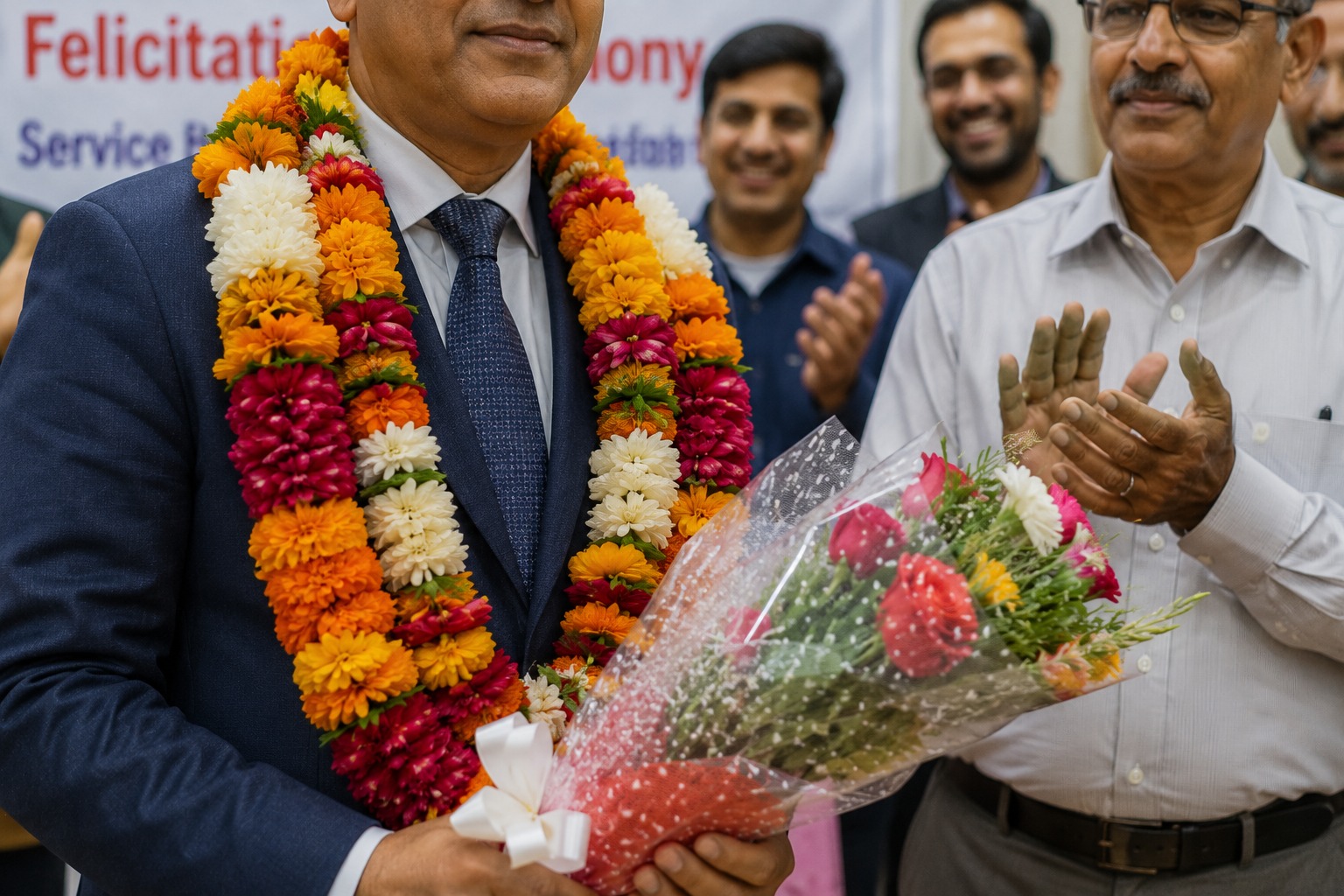
Many traditions are admirable in their original form but gradually lose their significance through excessive and indiscriminate use. In recent years, particularly within government departments in Jammu and Kashmir, the practice of presenting flower garlands to officials on occasions such as appointments, transfers, and retirements has become increasingly common. The education sector, in particular, appears to have embraced the trend with remarkable enthusiasm. Hardly a day passes without photographs of officials adorned with garlands circulating on social media.
This raises an important question: would it not be more meaningful for public employees to demonstrate their respect through professional integrity and dedicated service rather than through ceremonial displays?
Plastic Flowers and Artificial Sentiments
Ironically, many of the bouquets and garlands used today are made of plastic or paper. They possess neither the fragrance nor the vitality of real flowers and often contribute to environmental pollution. Genuine dedication, honesty, and hard work, by contrast, leave a lasting impression that no artificial ornament can match.
The growing popularity of such symbolic gestures sometimes suggests that appearances are valued more highly than actual performance. If merit and accountability were the primary standards of recognition, ceremonial garlanding would not have become such a pervasive feature of institutional culture.
A Lesson from a Retirement Ceremony
A revealing example emerged during a retirement function held in a village in Baramulla district a few years ago. The retiring official was showered with praise, bouquets, and garlands. Speakers extolled his achievements in terms so extravagant that even the guest of honour appeared visibly uncomfortable.
Amid the celebrations, a young teacher was invited to address the gathering. Instead of offering routine compliments, he began speaking candidly about the official’s actual record during his tenure. The atmosphere changed instantly. Organisers attempted to interrupt him, but not before he had raised concerns regarding administrative inefficiency, favouritism, dishonesty, and a culture of sycophancy. His remarks stood in stark contrast to the exaggerated tributes that had dominated the event.
Whether one agreed with his assessment or not, the incident highlighted a broader problem: public ceremonies often reward conformity and praise while discouraging honest evaluation.
The Need for Accountability
When garlands are presented to individuals whose records may be questionable, the gesture risks becoming an exercise in formality rather than a genuine expression of respect. More importantly, such practices can inadvertently normalise inefficiency, favouritism, corruption, and poor governance.
Healthy societies thrive when they are able to distinguish clearly between merit and mediocrity. Recognition should be based on performance, integrity, and public service rather than on ceremonial rituals or personal loyalties. Equally important is the cultivation of a culture in which accountability is valued as highly as appreciation.
Flower garlands possess a rich historical and cultural legacy. Preserving their dignity requires ensuring that they remain symbols of genuine achievement and public respect rather than instruments of flattery. The true fragrance that enriches society does not come from bouquets or garlands; it comes from honesty, competence, and dedicated service.
“Ceremonial garlanding should remain a symbol of genuine achievement and public respect. When used indiscriminately, it loses its dignity and begins to resemble flattery rather than honour.”
Comments are closed.