For many people, the term “metabolic disorder” immediately brings diabetes to mind. Blood glucose is certainly an important indicator of metabolic health, but metabolism is far more complex than a single laboratory value. The human body continuously coordinates the metabolism of carbohydrates, fats, proteins and energy to maintain physiological balance. When this finely regulated system begins to malfunction, the consequences can extend far beyond elevated blood sugar.
Metabolic disorders represent a broad group of conditions in which normal biochemical processes become disturbed. Obesity, insulin resistance, dyslipidemia, fatty liver disease, hypertension and type 2 diabetes frequently occur together because they share several underlying biological mechanisms. What makes these disorders particularly concerning is that metabolic dysfunction can develop silently for years before obvious symptoms appear.
The Metabolic Connection
Metabolism is the collection of biochemical reactions that allows the body to obtain energy, build and repair tissues, and maintain normal cellular function. Carbohydrates are converted into glucose and other metabolic intermediates, fats provide an important energy reserve, and proteins supply amino acids required for tissue maintenance and synthesis.
Glucose is tightly regulated by hormones, particularly insulin and glucagon. After a meal, insulin promotes glucose uptake by skeletal muscle and adipose tissue while reducing glucose production by the liver. During fasting, glucagon and other hormones help maintain blood glucose levels.
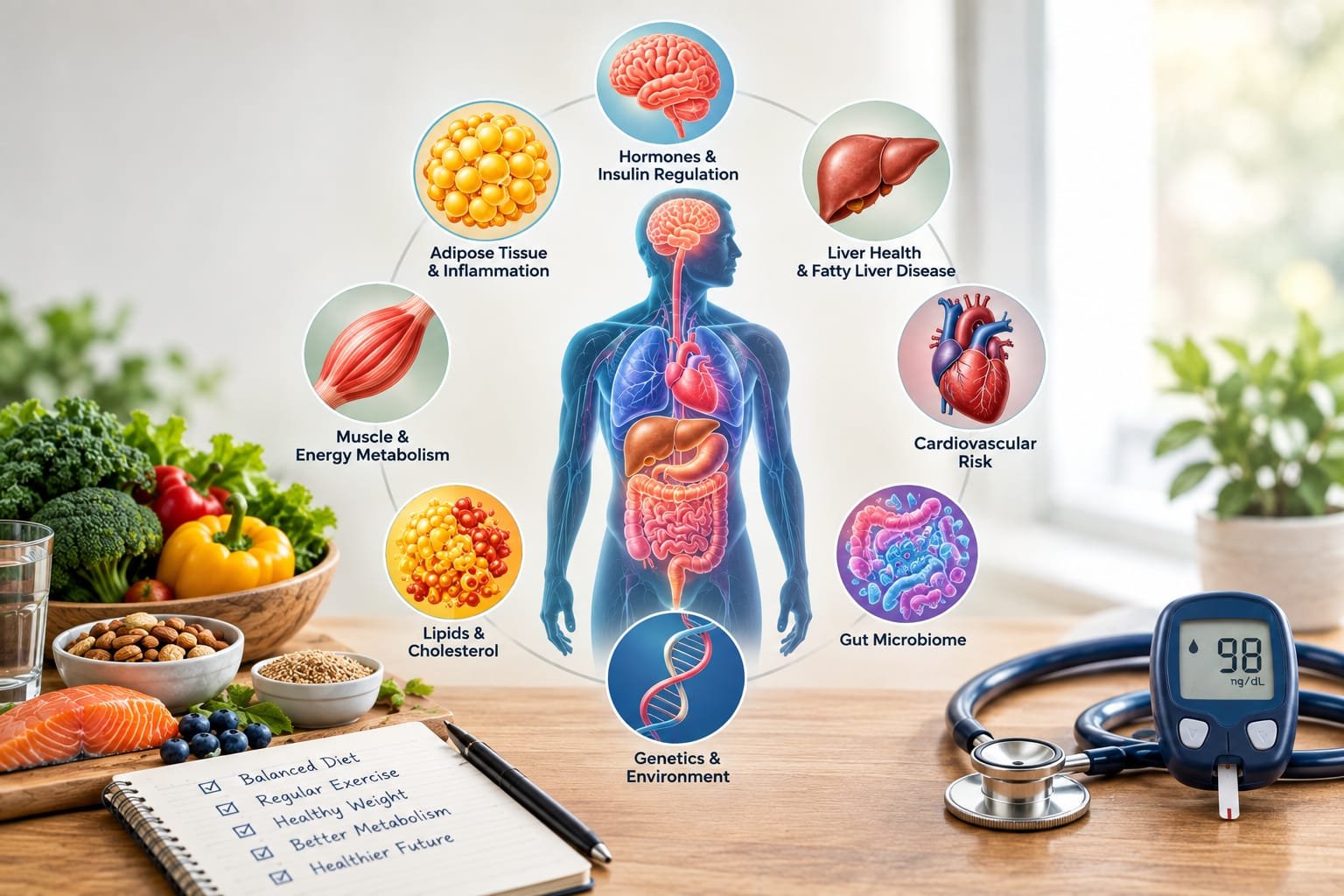
However, glucose regulation does not occur in isolation. It is closely connected with lipid metabolism, liver function, adipose tissue activity, inflammation and energy expenditure. This is why a person can develop significant metabolic dysfunction even when their blood glucose is still within the normal range.
One of the earliest abnormalities is often insulin resistance, in which cells become less responsive to insulin. In response, the pancreas may initially produce more insulin to maintain normal blood glucose. During this stage, routine glucose measurements may appear reassuring even though underlying metabolic dysfunction is developing. Over time, however, persistent insulin resistance can place increasing stress on pancreatic beta cells. When compensation becomes inadequate, blood glucose begins to rise, eventually leading to prediabetes or type 2 diabetes in susceptible individuals.
This makes insulin resistance much more than a problem of elevated glucose. It is a broader disturbance of metabolic regulation.
Another important part of the story is adipose tissue. Traditionally considered simply a storage site for excess energy, adipose tissue is now recognized as an active endocrine organ. It releases hormones and signaling molecules known as adipokines that influence appetite, inflammation and insulin sensitivity.
When excess energy accumulates, particularly around internal organs as visceral fat, adipose tissue can become metabolically dysfunctional. It may release increased amounts of free fatty acids and inflammatory mediators, which can interfere with insulin signaling and contribute to systemic metabolic dysfunction.
This also explains why body weight alone does not tell the entire story. Two individuals with similar body mass indexes can have very different distributions of body fat and very different metabolic risks.
Lipids add another dimension to this picture. Dyslipidemia associated with metabolic dysfunction may involve elevated triglycerides, reduced HDL cholesterol and changes in LDL particles. Insulin resistance can increase the flow of free fatty acids to the liver, encouraging the production of triglyceride-rich lipoproteins. These changes contribute to an altered lipid profile and can increase cardiovascular risk.
The liver occupies a central position in this metabolic network. It regulates glucose production, stores glycogen, synthesizes cholesterol and triglycerides, and processes numerous metabolites. When excess fat accumulates in the liver in association with metabolic dysfunction, metabolic dysfunction-associated steatotic liver disease (MASLD) may develop.
The relationship between the liver and metabolic disease is complex. Insulin resistance can promote fat accumulation in the liver, while hepatic metabolic dysfunction can further disturb glucose and lipid regulation. Therefore, abnormalities in liver enzymes or imaging findings may sometimes provide important clues about a person’s broader metabolic health.
Inflammation and oxidative stress further complicate the picture. Excess visceral fat can promote a state of low-grade chronic inflammation. At the same time, disturbances in cellular energy metabolism can increase the production of reactive oxygen species. When antioxidant defenses are unable to maintain balance, oxidative stress can damage cellular components and interfere with normal signaling.
These processes can reinforce one another. Insulin resistance may contribute to inflammation and oxidative stress, while inflammation and oxidative stress can further impair insulin signaling. What begins as a subtle metabolic imbalance can therefore develop into a self-reinforcing cycle of dysfunction.
Increasing research has also highlighted the potential role of the gut microbiome—the community of microorganisms living in the gastrointestinal tract. These microorganisms participate in the metabolism of dietary components and produce metabolites that can interact with human physiology. Changes in the composition and function of the microbiome have been associated with obesity and metabolic disorders. However, the relationship remains complex because diet, medication, lifestyle and other environmental factors can all influence the microbiome.
Genetics also plays a role. Some individuals are genetically more susceptible to insulin resistance, obesity, dyslipidemia or diabetes. Environmental factors such as sedentary behavior, poor dietary patterns, inadequate sleep and chronic stress can interact with this susceptibility. Metabolic disease is therefore rarely the result of one isolated factor. It is usually the product of multiple biological and environmental influences acting together.
Looking Beyond a Single Laboratory Value
This complexity has an important implication for clinical practice: metabolic health cannot be adequately assessed using a single laboratory test.
Routine investigations such as fasting glucose, HbA1c, triglycerides, HDL cholesterol, LDL cholesterol, liver enzymes, uric acid and creatinine can provide valuable information about different components of metabolic health. When interpreted together with clinical measurements such as blood pressure, waist circumference, body mass index and family history, they can provide a much more informative picture.
For example, an individual may have normal fasting glucose but elevated triglycerides, increased waist circumference and evidence of fatty liver. Another person may have a normal body weight but significant metabolic abnormalities. These situations demonstrate why metabolic assessment should be multidimensional.
Metabolic syndrome is a useful illustration of this interconnected biology. It generally involves a combination of central obesity, elevated blood pressure, abnormal triglycerides, reduced HDL cholesterol and impaired glucose regulation. The importance of metabolic syndrome lies not simply in the individual abnormalities but in their coexistence, which is associated with increased risk of cardiovascular disease and type 2 diabetes.
The challenge now is to move from simply detecting established disease toward identifying metabolic risk at an earlier stage. Metabolic disorders develop gradually, and there may be a window during which intervention can prevent or delay progression.
This is where risk prediction becomes particularly important. Rather than waiting until an individual develops diabetes or cardiovascular disease, clinicians could potentially use combinations of routinely available biochemical and clinical parameters to identify people who require closer monitoring or early lifestyle intervention.
Such approaches could be especially valuable in resource-limited settings, where sophisticated diagnostic technologies may not always be readily available. Affordable risk-prediction tools based on routinely performed laboratory investigations could potentially improve early identification of individuals at increased metabolic risk.
The Need for a Broader Approach
The growing burden of metabolic disorders highlights the need to rethink how metabolic health is understood. Prevention should not begin only after blood glucose becomes persistently elevated or diabetes is diagnosed. The biological changes often begin much earlier.
Regular physical activity, balanced nutrition, adequate sleep, maintenance of a healthy body composition and avoidance of tobacco can contribute to better metabolic health. At the same time, appropriate screening can help identify individuals who are already developing metabolic abnormalities.
The future of metabolic healthcare is likely to involve a more integrated approach in which multiple biochemical markers, clinical characteristics and lifestyle factors are considered together. Advances in laboratory medicine, data analysis and risk prediction may allow clinicians to recognize subtle metabolic changes earlier and intervene before they progress into established disease.
Blood glucose will remain an important marker of metabolic health, but it is only one piece of a much larger puzzle. Metabolism is a dynamic network involving the liver, pancreas, adipose tissue, muscles, immune system and numerous biochemical pathways.
Looking beyond blood sugar therefore does not mean minimizing its importance. Instead, it means understanding the larger biological story behind it.
Metabolic health is not defined by a single number. It is the result of a dynamic balance between multiple biological systems. Understanding that balance may be one of the most important steps toward preventing the chronic diseases of the modern era.
Author Syed Yunis Bukhari is an Assistant Professor in the Department of Medical Laboratory Science, University Institute of Allied Health Sciences (UIAHS), Chandigarh University, Mohali, Punjab, India. He writes on health, education, environment and contemporary social issues. He can be mailed at yunis.e16472@cumail.in


Comments are closed.