
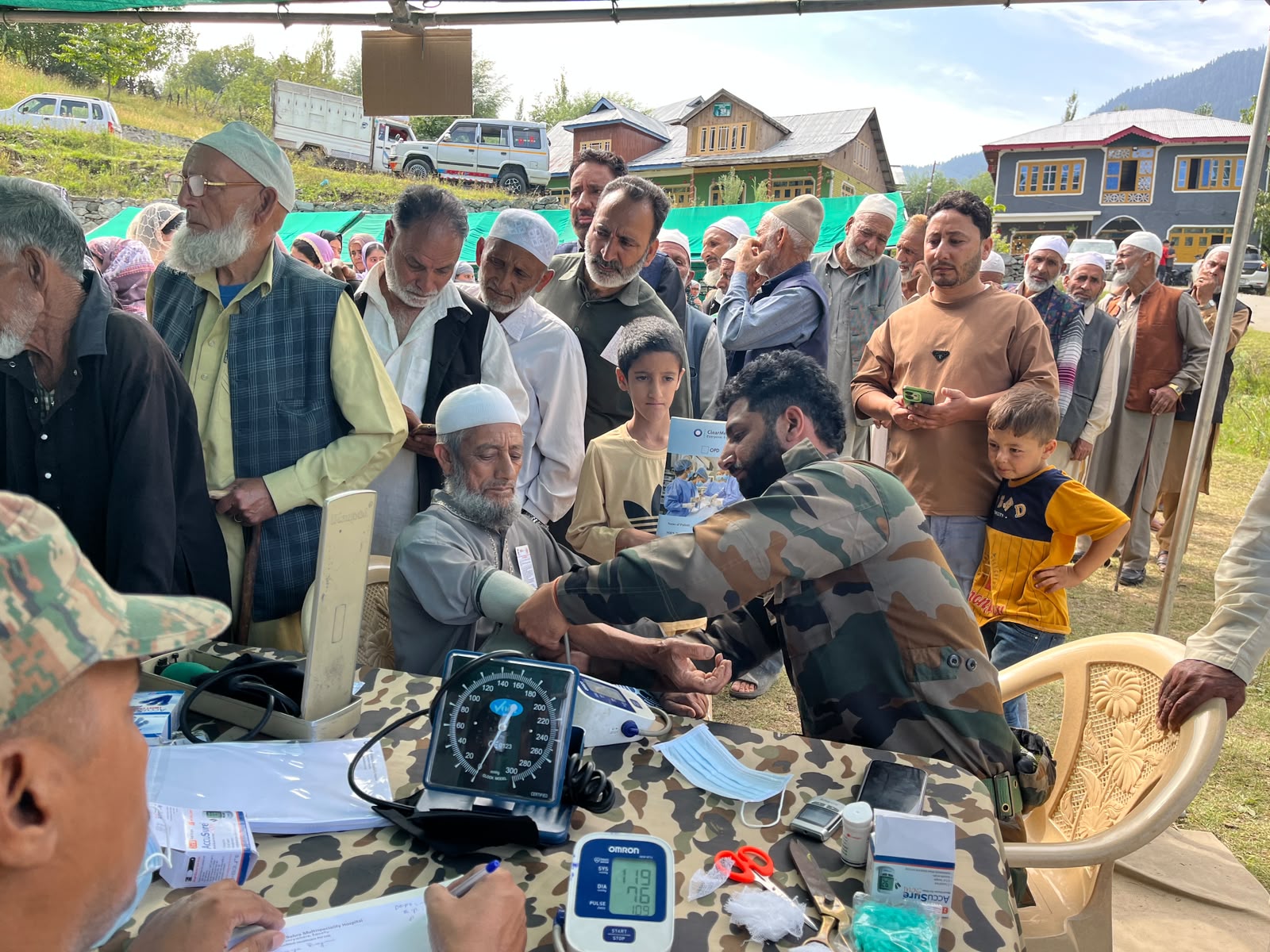

Army’s 52 RR brings specialist health camp to 600 villagers in Baramulla Hamlet

Suhail Khan 


Baramulla, Sep 06: For the residents of Larridora village in north Baramulla’s Kandi area, a trip to a specialist doctor often means a long, arduous journey down winding mountain roads—if they can afford it at all. On Sunday, that distance was erased by the Indian Army’s 52 Rashtriya Rifles, which organised a Mega Health Check-up Camp in the village, bringing a team of super-specialists to their doorstep.

The camp, held in collaboration with Clear Medi Health Care, offered free consultations across multiple disciplines—Orthopaedics, Internal Medicine, General and Onco Surgery, Neurology, Emergency and Critical Care, Gynaecology, and Physiotherapy. Over 600 villagers, many of them elderly women and children, availed of the services, officials said.
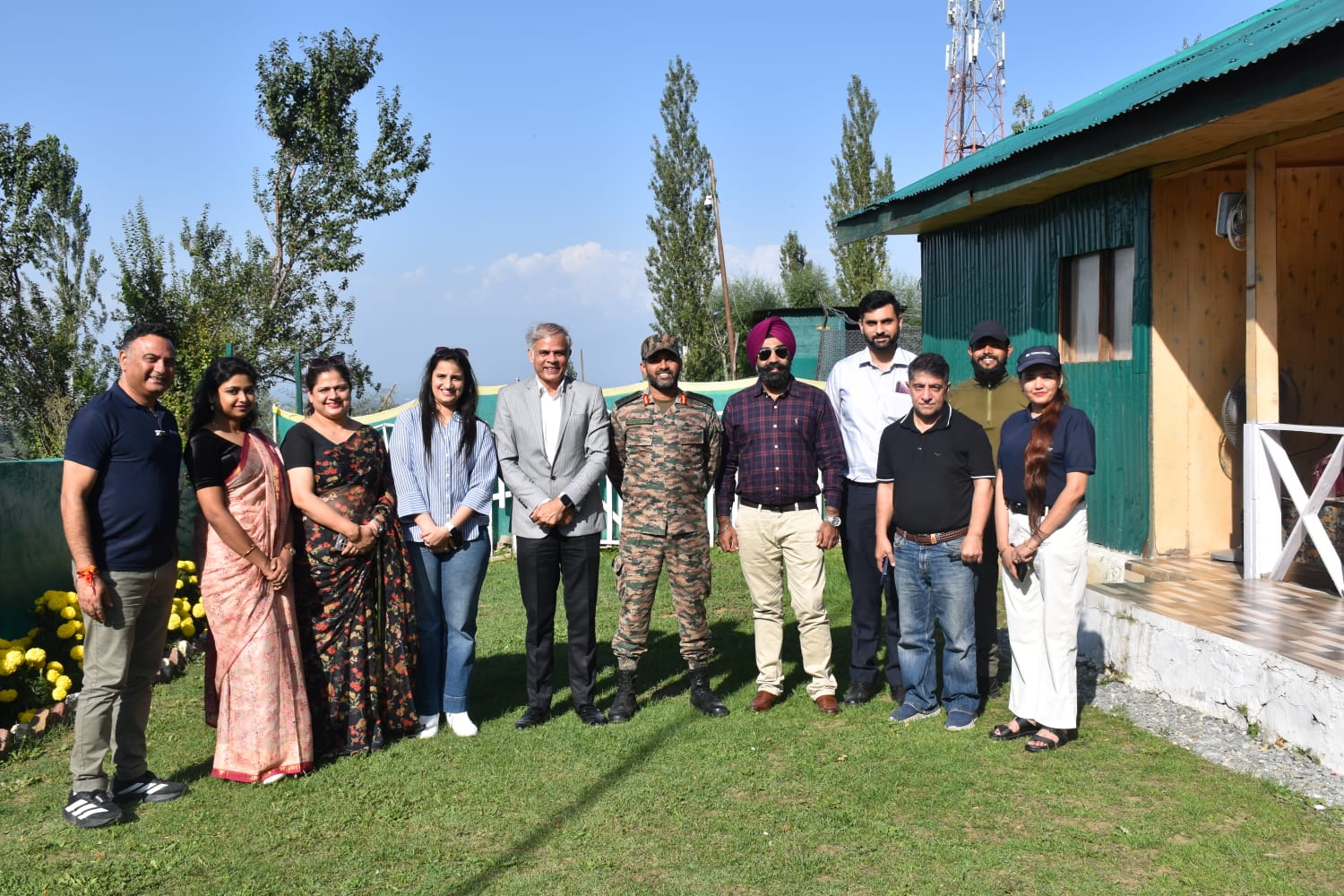
Cdr Navneet Bali (Retd), CEO of Clear Medi Health Care, led the medical team, which also included the Regimental Medical Officer of 52 RR and a Dental Officer from 319 Field Hospital. The camp was supported by Clear Medi’s Facility Directors—Mr. Anshuman Sharma from Noida and Ms. Ritu Ruhela from Mohali.

Beyond the medical expertise, it was the logistics that made the camp possible. The 52 RR handled everything—from security arrangements to liaising with the District Administration, coordinating with the Chief Medical Officer and Government Medical College Baramulla, and managing transit for patients.
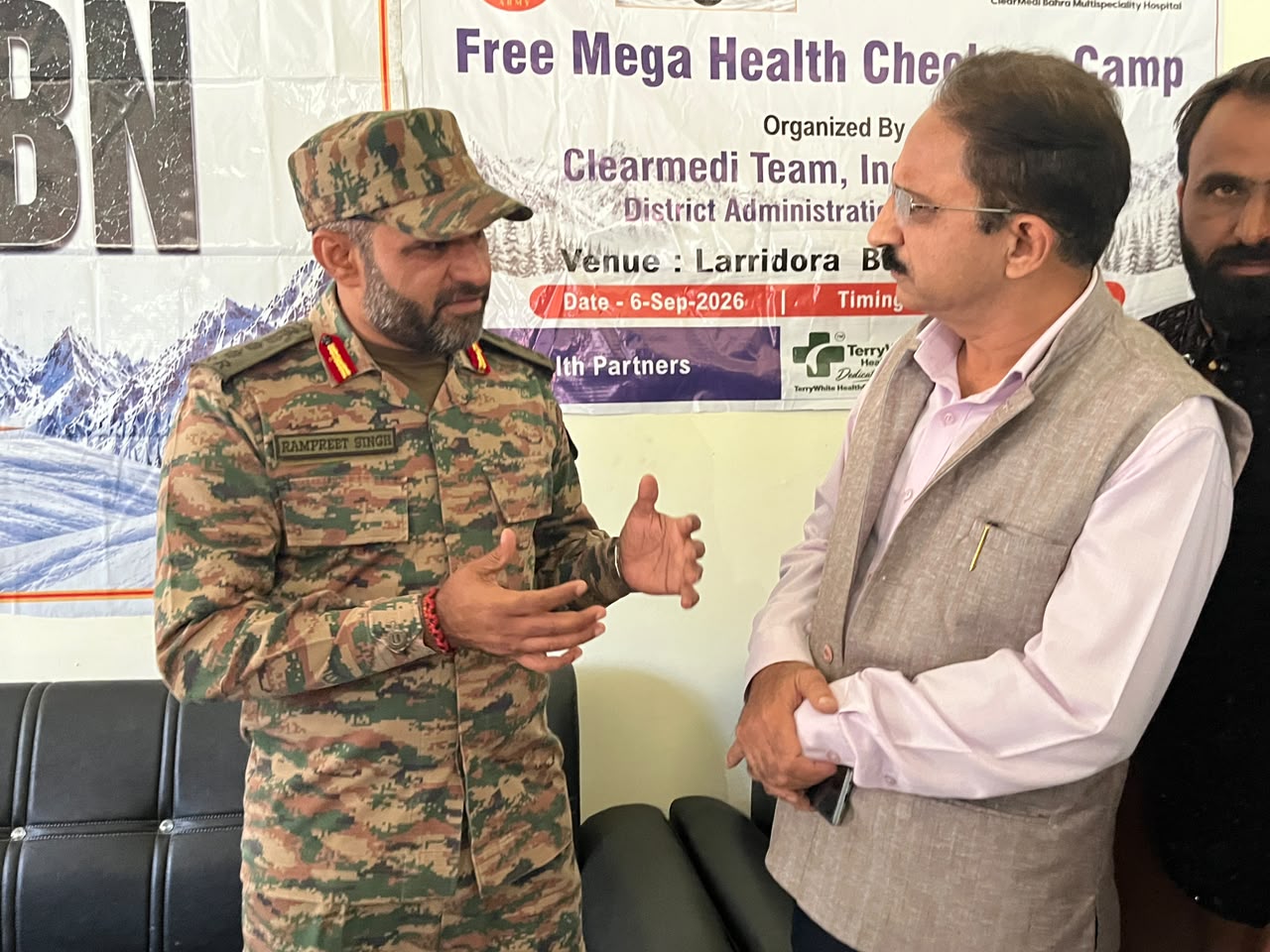
For the Army, this was more than a health camp. “We are committed to the well-being of the people here. These initiatives are about building trust and showing that we care beyond our security mandate,” said an officer.
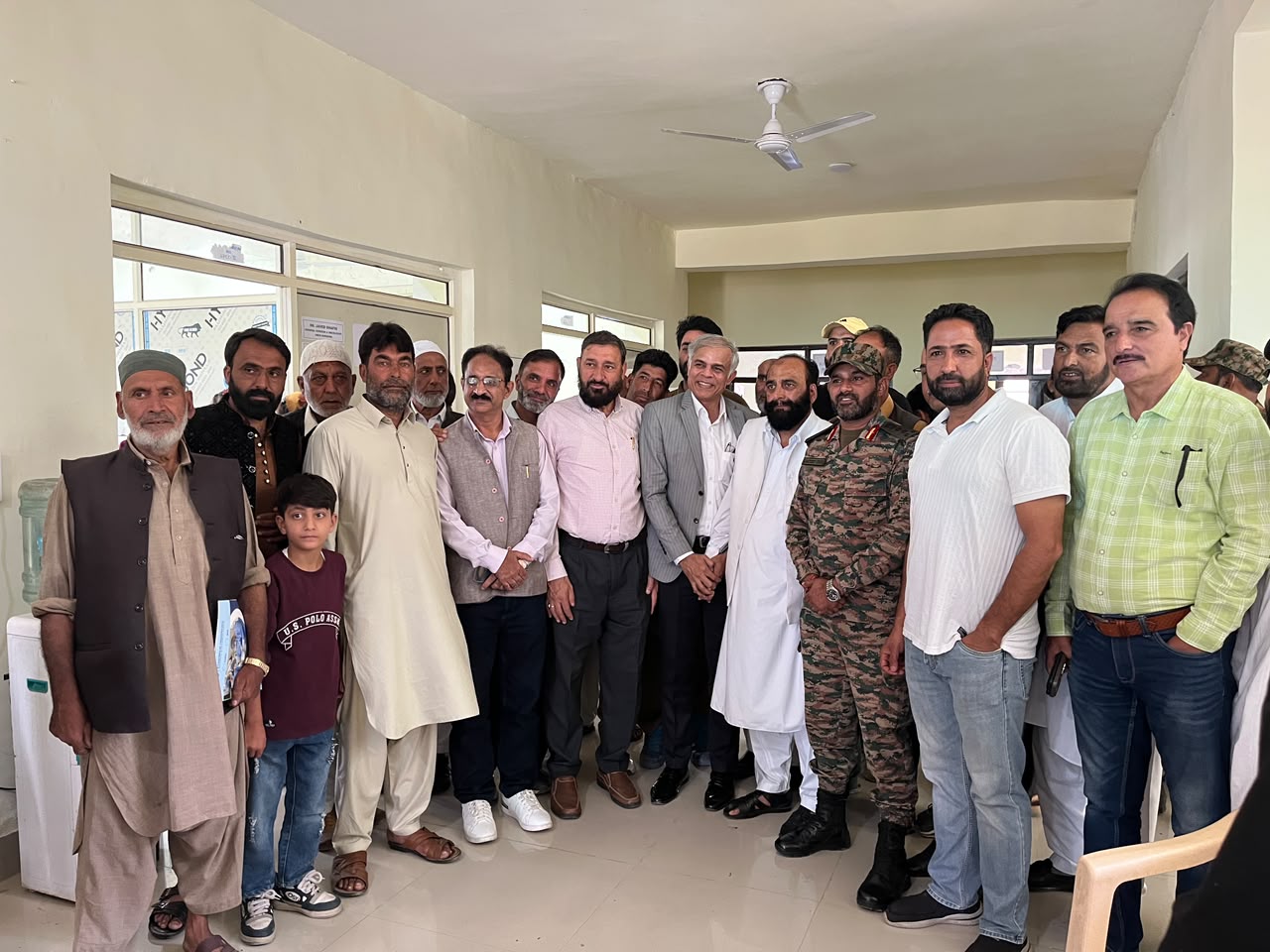
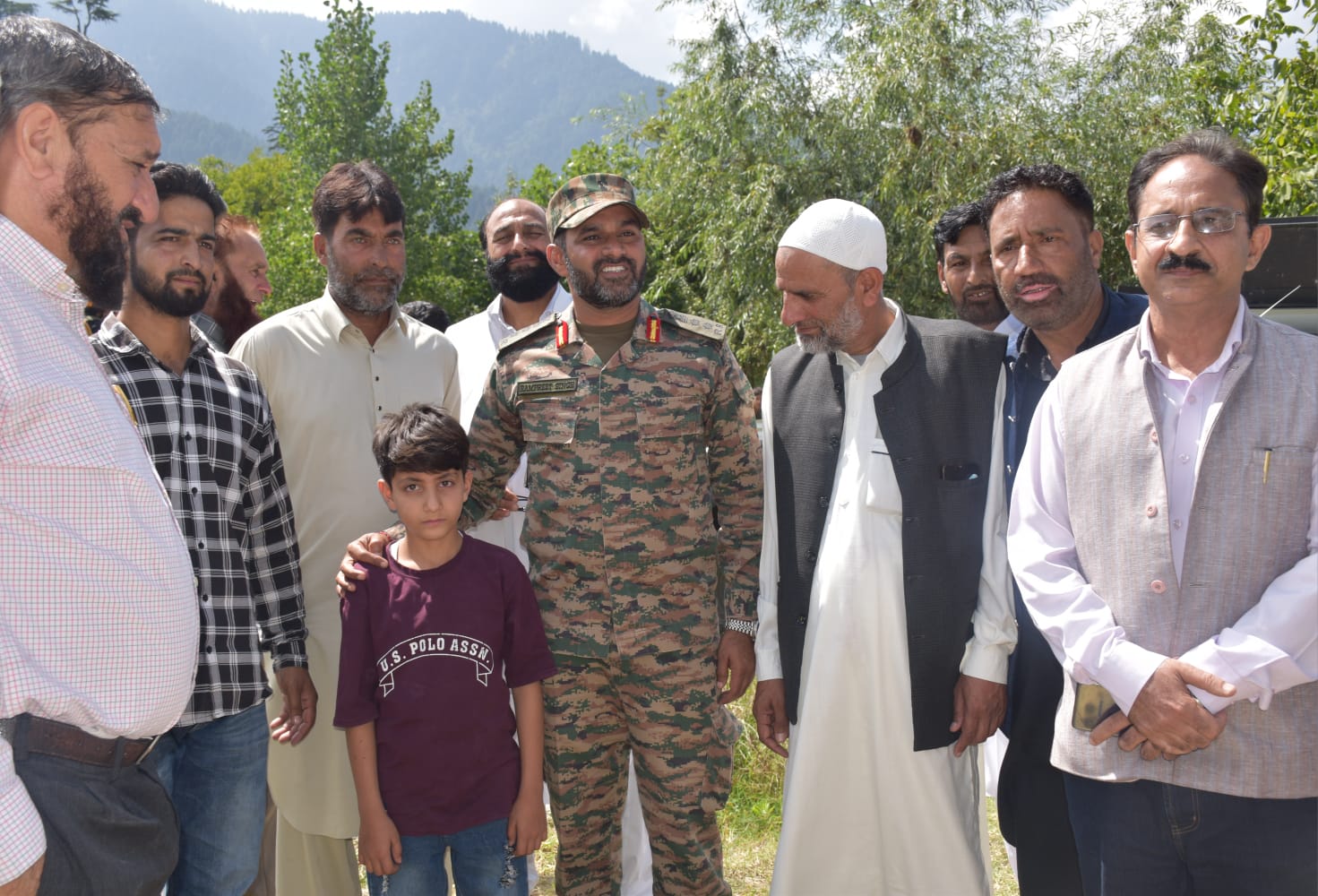
 

Locals said, “The Army came to our village. They didn’t just give us medicines—they listened to us. That matters,” said a resident who had brought his ailing mother for a check-up.

For the villagers, Sunday was nothing short of a blessing. Sixty-two-year-old Gulshan Ara, who has been suffering from severe joint pain for years, could barely contain her emotions. “I have been wanting to see a bone doctor for three years. My sons are daily-wage labourers—they cannot afford to take a day off and take me to town. Today, the Army brought the doctor to me. I got medicine and hope. May God bless them,” she told Kashmir Convener.

Mohammad Shafi Rather, 58, a farmer from a nearby hamlet, walked nearly 5 kilometres to reach the camp. “I have a problem with my back. The nearest specialist is in Baramulla town, and that means spending Rs 500 on travel alone. Here, they checked me, gave me medicine, and even told me exercises. This is the first time I have been treated with such respect,” he said.

Young mother Zahoora Begum, who brought her eight-month-old daughter for a paediatric consultation, said the camp had eased a heavy burden. “My baby has been unwell for weeks. I was worried sick. The Army not only arranged for the doctor but also helped us with transport. I feel like someone finally heard us,” she said.

Teenager Aqib Rasool, who accompanied his grandmother, said the camp had changed his perception of the Army. “We see them in uniform, we see them patrolling. Today, we saw them serving. My grandmother was crying with joy after her check-up. This is the real face of the Army,” he said.

Another elderly villager, 70-year-old Fatima Begum, who was assisted by Army personnel throughout her consultation, summed up the mood: “Humne socha nahi tha ki itne bade doctors ghar aayenge. Yeh fauj humari nahi, humara apna hai.” (We never thought such big doctors would come to our homes. This Army is not here for us—they are one of us.)

Locals said such initiatives go a long way in bridging the trust deficit that has often marked the region’s troubled past. “When the Army comes to heal, not to fight, it changes everything. Today, our children played with the soldiers. Our elders were treated with dignity. This is how peace begins,” said Abdul Gani, a retired school teacher from the village.

The camp reflects a continuing effort by 52 RR to reach out to remote communities in a region where healthcare infrastructure remains thin on the ground. With similar initiatives planned, the unit appears to be quietly building a bridge of goodwill—one village, one patient, at a time.

Comments are closed.