

Arbaeen: The Pilgrimage That Challenges the Modern World

Nuzhath Fatima Mir


“Arbaeen is the world’s largest peaceful human gathering, but its greatest significance lies not in its size, but in its moral message. Imam Hussain (A.S.) did not stand because victory was certain; he stood because silence would have legitimized injustice.”

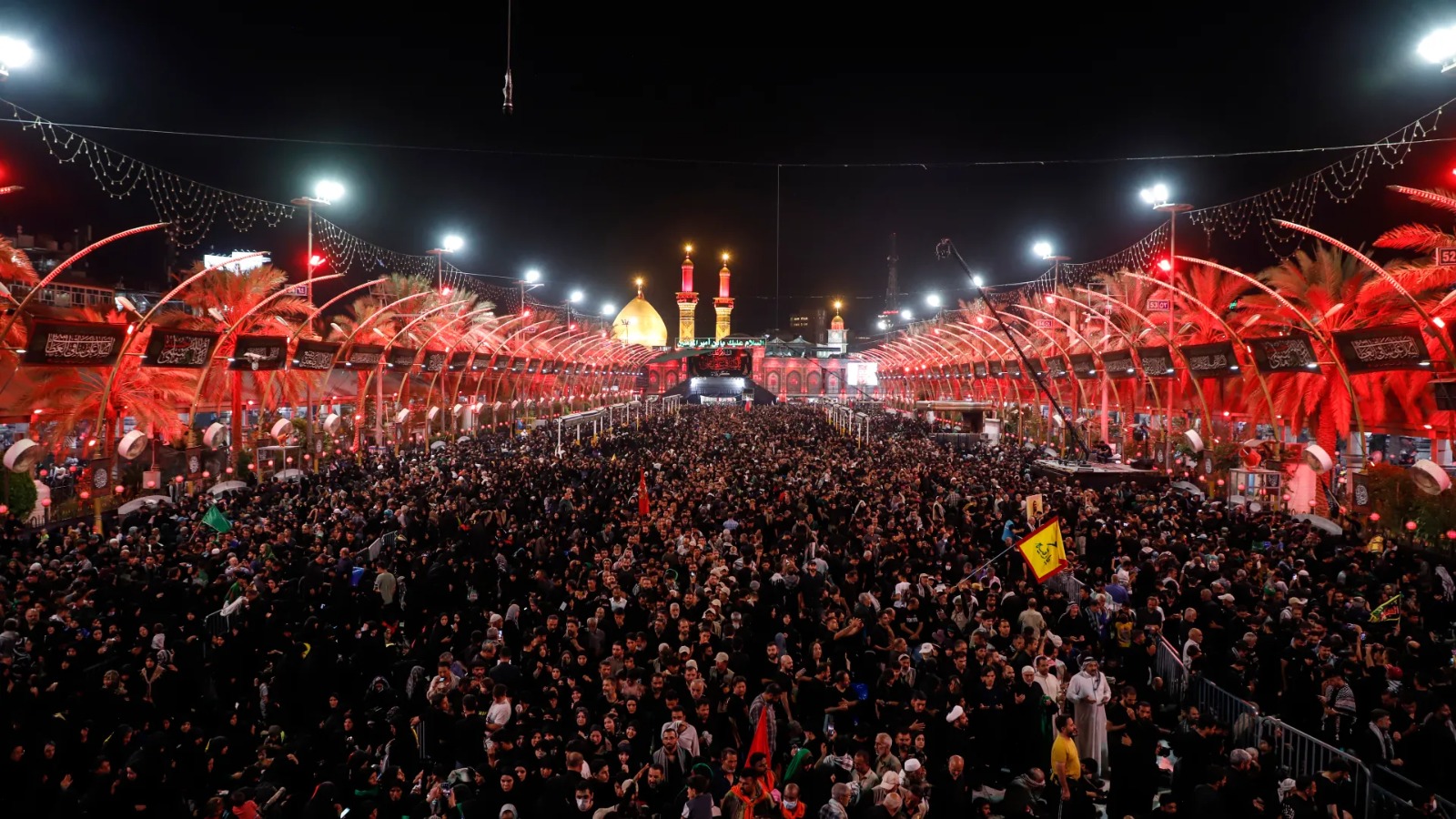
Every year, as the world marvels at the scale of international sporting events, political rallies, and cultural festivals, another gathering quietly surpasses them all. Tens of millions of people converge upon the holy city of Karbala in Iraq, not in pursuit of entertainment, commerce, or political power, but to commemorate the fortieth day after the martyrdom of Imam Hussain ibn Ali (A.S.). Known as Arbaeen, this annual pilgrimage is the largest peaceful human gathering on earth. Yet its true significance cannot be measured by alone. To view Arbaeen merely as a religious procession is to overlook one of the most profound moral and civilizational phenomena of the contemporary world.

Modern civilization often celebrates speed, consumption, and individual success. Arbaeen, by contrast, celebrates patience, sacrifice, and collective responsibility. It asks questions that contemporary societies often avoid: What gives life its meaning? Can moral integrity triumph over political power? Is justice worth personal sacrifice? The answers offered by Karbala continue to resonate because they are rooted not in abstract philosophy but in lived example.

The tragedy of Karbala in 680 CE occupies a unique place in Islamic history. Imam Hussain (A.S.), the grandson of Prophet Muhammad (peace be upon him and his family), refused to pledge allegiance to Yazid, whose rule symbolized the transformation of the Islamic caliphate into hereditary monarchy and political absolutism. Hussain’s refusal was neither a quest for temporal power nor an act of political rebellion in the conventional sense. It was, above all, a moral stand against the normalization of injustice.

His own words reveal the essence of his mission: “I have risen only to seek reform in the nation of my grandfather. I desire to enjoin what is right and forbid what is wrong.” This declaration elevates Karbala from a historical conflict to an enduring ethical paradigm. Imam Hussain (A.S.) did not fight because victory was guaranteed; he stood because silence would have legitimized oppression. In doing so, he transformed resistance into a moral obligation whenever truth is threatened by tyranny.

The Qur’an repeatedly calls believers to uphold justice without compromise. “O you who believe! Stand firmly for justice, as witnesses to Allah, even if it be against yourselves, your parents, or your relatives” (Qur’an 4:135).

Karbala is perhaps the most compelling historical embodiment of this Qur’anic injunction. Imam Hussain (A.S.) demonstrated that faith is not merely a matter of ritual devotion but of ethical courage. His sacrifice reminds humanity that religion loses its soul when it becomes detached from justice.

This is why the influence of Karbala has extended far beyond the boundaries of sect, geography, and even religion. The British historian Edward Gibbon observed that the tragedy of Hussain would awaken sympathy in the coldest hearts. Mahatma Gandhi, reflecting on his own struggle against colonial oppression, acknowledged that he drew inspiration from Imam Hussain’s willingness to sacrifice everything for truth. Whether these figures approached Karbala from historical, political, or moral perspectives, they recognized that its message belonged to humanity rather than to a single community.

Yet Arbaeen is not merely about remembering Karbala; it is about ensuring that Karbala remains morally alive. Memory, after all, can either become ceremonial or transformative. The Arbaeen pilgrimage refuses to allow remembrance to become passive nostalgia. Every step towards Karbala is a conscious reaffirmation that the values for which Imam Hussain (A.S.) sacrificed his life continue to demand commitment in every generation.

There is profound symbolism in the act of walking itself. Modern life encourages efficiency; Arbaeen embraces deliberation. In an era where technology has made travel increasingly effortless, millions voluntarily choose physical hardship. The journey from Najaf to Karbala, stretching roughly eighty kilometres, is undertaken not because walking is necessary but because it embodies spiritual discipline. Fatigue becomes a lesson in patience; thirst reminds one of the suffering of Karbala; every footstep becomes an act of remembrance. The destination matters, but so does the transformation that occurs along the road.

Perhaps nowhere else in the world does one witness such an extraordinary culture of voluntary service. Along the pilgrimage routes, thousands of Mawakib—communhity-run service stations—offer food, water, accommodation, medical assistance, transportation, and even shoe repairs without seeking payment. Families spend their savings throughout the year simply to serve strangers for a few days during Arbaeen. Hospitality ceases to be an act of courtesy and becomes an expression of faith.

In a global economic order where almost every interaction is mediated by financial exchange, Arbaeen quietly proposes another model of human relations. Here, generosity replaces transaction; service replaces competition; dignity is measured not by wealth accumulated but by kindness extended. The value of a person is found not in social status or professional success but in their willingness to alleviate another’s hardship. This ethical economy deserves far

greater attention from scholars of sociology and political philosophy than it has thus far received.

Contemporary social science often asks how trust can be built in fragmented societies. Governments invest enormous resources attempting to strengthen social cohesion, while researchers search for models of civic cooperation. Arbaeen presents one of the largest functioning examples of spontaneous collective organization in the world. Millions of pilgrims are fed, sheltered, guided, and cared for through networks of voluntary cooperation motivated not by state coercion or commercial incentives but by shared moral conviction. Such a phenomenon challenges many conventional assumptions about the limits of human cooperation.


The philosopher Alasdair MacIntyre argued that societies lose their moral direction when they abandon the virtues that once gave meaning to communal life. Whether one agrees entirely with his thesis or not, Arbaeen appears to offer an important counterpoint to the moral fragmentation characteristic of much of modernity. It reminds participants that human flourishing depends not solely upon rights and freedoms but also upon virtues such as generosity, humility, patience, and sacrifice.

“Karbala is not confined to history; it is a moral challenge faced by every generation. Arbaeen transforms remembrance into responsibility and history into living conscience.”


In this sense, Arbaeen is not simply a remembrance of the past. It is a critique of the present.

Yet the significance of Arbaeen extends beyond the road from Najaf to Karbala. It also tells a remarkable story of resilience against political repression. During the regime of Saddam Hussein, public expressions of devotion to Imam Hussain (A.S.), particularly the Arbaeen pilgrimage, were heavily restricted. Many pilgrims were imprisoned, tortured, or even executed for attempting to undertake the journey on foot. After the fall of the Ba’ath regime in 2003, Arbaeen re-emerged with unprecedented vitality. The millions who now walk to Karbala are therefore not only commemorating a seventh-century martyrdom; they are also celebrating the triumph of faith over fear and memory over oppression. The pilgrimage itself has become a testimony that no political system, however powerful, can permanently erase deeply held convictions.

This resilience carries an important lesson for contemporary societies. History repeatedly demonstrates that while governments may command armies and institutions, they cannot indefinitely suppress ideas grounded in moral truth. Karbala survived because it was preserved in the conscience of ordinary people long before it was acknowledged in the public sphere. Every Arbaeen procession affirms that ethical memory is one of humanity’s most enduring forms of resistance.

The late Iranian sociologist Ali Shariati argued that every generation is confronted with a symbolic choice between the path of Hussain and the path of Yazid. His point was not merely historical but existential. Karbala is not an event confined to the year 680 CE; it is a recurring moral challenge. Whenever individuals confront corruption, injustice, or the abuse of power, they are asked to decide whether comfort is more valuable than conscience. Arbaeen keeps this question alive by transforming history into an annual exercise of ethical reflection.

Allama Muhammad Iqbal similarly regarded Imam Hussain (A.S.) as the embodiment of dynamic and living faith. For Iqbal, Islam was never intended to become a static tradition preserved only through ritual. Rather, it was a civilization sustained by moral action and intellectual vitality. In Hussain, Iqbal saw the believer who refused to compromise the ethical foundations of Islam even when compromise appeared politically expedient. This understanding gives Arbaeen significance far beyond devotional practice. It becomes an annual reminder that genuine faith requires courage, critical thought, and responsibility.

Another dimension of Arbaeen that deserves greater recognition is its contribution to inter-human solidarity. In an age marked by increasing polarization, the pilgrimage creates a unique social environment where distinctions of nationality, language, ethnicity, and economic status recede into the background. A wealthy businessman may walk beside a labourer; an Arab may share food with a pilgrim from South Asia, Africa, Europe, or Latin America. The barriers that often define social relationships are replaced by a shared commitment to service and remembrance.

This does not imply that Arbaeen eliminates all social or political differences. Rather, it demonstrates that profound differences need not prevent cooperation when communities are united by ethical ideals. Such a lesson is particularly relevant today, when public discourse across much of the world has become increasingly polarized. Arbaeen quietly illustrates that unity is not achieved by erasing diversity but by anchoring diversity in a common moral purpose.

Despite being the largest annual peaceful gathering on the planet, Arbaeen receives relatively limited attention in international media compared with events of far smaller scale. There are many reasons for this, including editorial priorities, geopolitical realities, and the tendency of global news to focus more readily on conflict than on sustained examples of peaceful civic cooperation. Whatever the reasons, the relative lack of coverage should encourage scholars, journalists, and policymakers to examine Arbaeen more seriously—not merely as a religious event, but as a phenomenon with implications for sociology, public ethics, humanitarian service, and collective identity.

For believers, Arbaeen also points towards the future. Within the tradition of Ahlul Bayt (A.S.), awaiting the reappearance of Imam al-Mahdi (A.J.T.F.S.) is not understood as passive expectation but as active moral preparation. One cannot claim readiness for the Imam while remaining indifferent to injustice, dishonesty, or suffering. The values cultivated during Arbaeen—discipline, patience, generosity, humility, and steadfastness—are precisely those expected of a community that seeks to become worthy of divine guidance. In this sense, Arbaeen is not only an act of remembrance but also a school of character.

This moral education has relevance even beyond religious belief. Every society depends upon citizens who value integrity above convenience, service above selfishness, and justice above personal gain. The crises confronting our world —armed conflict, economic inequality, environmental degradation, and declining trust in institutions—cannot be solved by technology or legislation alone. They require ethical renewal. Arbaeen reminds us that no civilization can endure if it loses its moral compass.

Perhaps this is the deepest lesson of Karbala. Imam Hussain (A.S.) did not ask whether standing for truth would guarantee success; he asked whether remaining silent in the face of injustice was morally acceptable. That question remains as urgent today as it was more than thirteen centuries ago. Every generation must answer it for itself.

As another Arbaeen approaches, millions will once again set out on foot towards Karbala. Some will travel from nearby cities, others from distant continents. Their languages will differ, their cultures will vary, and their personal stories will be unique. Yet they will all be united by the conviction that certain values are worth every hardship. They will walk not because history compels them, but because conscience calls them.

In the final analysis, Arbaeen is not simply the remembrance of a tragedy, nor merely the celebration of a pilgrimage. It is humanity’s annual affirmation that truth cannot be buried by power, that compassion is stronger than indifference, and that justice remains the foundation upon which every enduring civilization must stand.

The roads leading to Karbala are therefore more than physical pathways. They are reminders that while empires rise and fall, moral principles endure. The footsteps of millions echo a timeless message: power may command obedience, but only justice commands the human heart. And for that reason, Karbala continues to illuminate history—not as a relic of the past, but as a beacon for the future.


Author is a student from Magam, Kashmir and can be reached at mirfatima174@gmail.com

Comments are closed.