

Convener News Desk
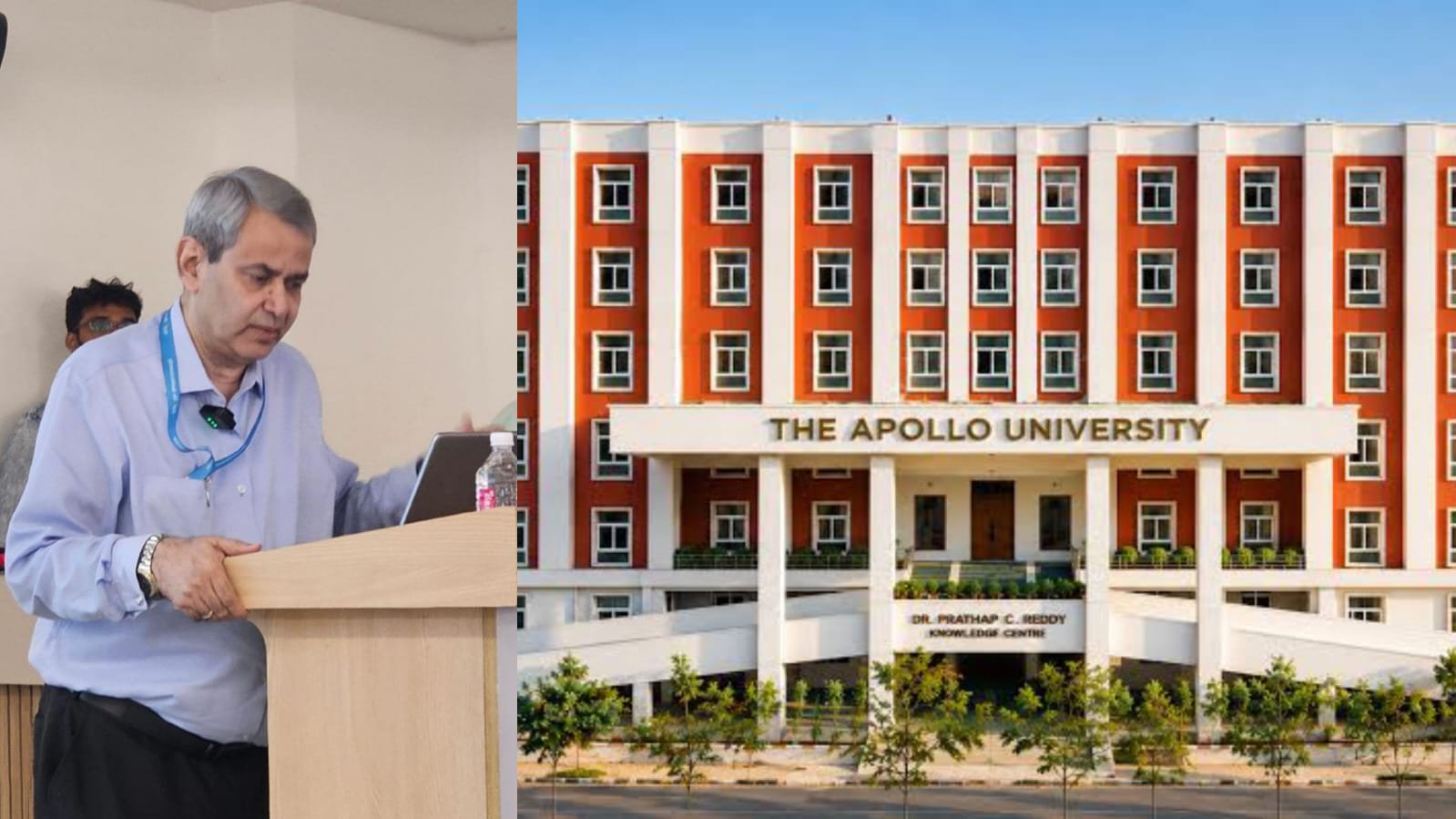
Chittoor, October 29: Apollo Knowledge City in Andhra Pradesh’s Chittoor district is positioning itself as an integrated centre for medical education, healthcare, research and innovation, with plans to expand student enrolment and strengthen industry-oriented training.
During an interaction with journalists at the University, Vice-Chancellor Prof. Nitin M. Nagarkar said the institution planned to increase enrolment to 10,000 by 2030 and was looking to attract students from regions including Jammu and Kashmir for courses linked to employment opportunities, particularly in healthcare.
He said the healthcare sector offered career opportunities in India and abroad, adding that the university was aligned with the broader goal of promoting India as a global healthcare destination under the “Heal in India” initiative.
Operated by the Apollo Hospitals Educational and Research Foundation (AHERF), a not-for-profit organisation established in 2006, the campus has been functioning since 2016. Located near the junction of Andhra Pradesh, Tamil Nadu and Karnataka, it brings together three academic institutions, a district headquarters hospital and research facilities.
The campus houses the Apollo Institute of Medical Sciences and Research (AIMSR), Apollo College of Nursing (ACON) and The Apollo University. AHERF also operates the Chittoor District Headquarters Hospital in partnership with the Andhra Pradesh government. The hospital serves as the principal teaching facility for AIMSR and ACON.
According to institutional figures, the three academic institutions have a combined enrolment of 5,186 students and 1,877 graduates. Apollo University accounts for 3,766 students, while AIMSR has 934 and ACON 486. Students from 27 states are enrolled across the institutions.
Established on November 2, 2021, under the Andhra Pradesh Private Universities (Establishment and Regulation) Act, 2016, The Apollo University offers undergraduate, postgraduate, post-diploma and doctoral programmes through schools covering technology, management, health sciences and pharmaceutical sciences.
The university is also seeking to strengthen its governance through greater digital integration, moving towards a technology-enabled system for decision-making, data management and accountability. Its institutional development plan envisages phases of consolidation and expansion between 2026 and 2028, further growth and research development from 2029 to 2032, and a push towards international recognition by 2035.
Prof Nitin M. Nagarkar said Research facilities at the campus include a Central Research Laboratory, Genomics and Informatics Research Lab, Karyotyping Lab and Drosophila, or FlyOmics, Lab. An incubation and start-up centre, along with an Institutional Innovation Council, supports research, innovation and patent development.
He said the university has collaborations with national and international institutions, including the University of Leicester, Monash University, the University of New South Wales, Brigham and Women’s Hospital, IIT Tirupati and the University of Hyderabad. It has also entered into agreements with industry partners for training, internships, research and digital skills development.
A Centre for Digital Health and Precision Medicine, developed in collaboration with the University of Leicester, Apollo Hospitals and The Apollo University, focuses on using data-driven approaches and artificial intelligence to support personalised and patient-centred healthcare.
Comments are closed.