

Suhail Khan
Srinagar, Nov 07: While families across the country celebrated Diwali with their loved ones, soldiers deployed along the Line of Control (LoC) in north Kashmir spent the festival away from their homes, continuing their duties in difficult terrain and challenging weather conditions. For many of them, the festival meant another day guarding the country’s frontiers. But in a border village, they found an opportunity to celebrate with another family — the people living in the areas they are deployed to protect.
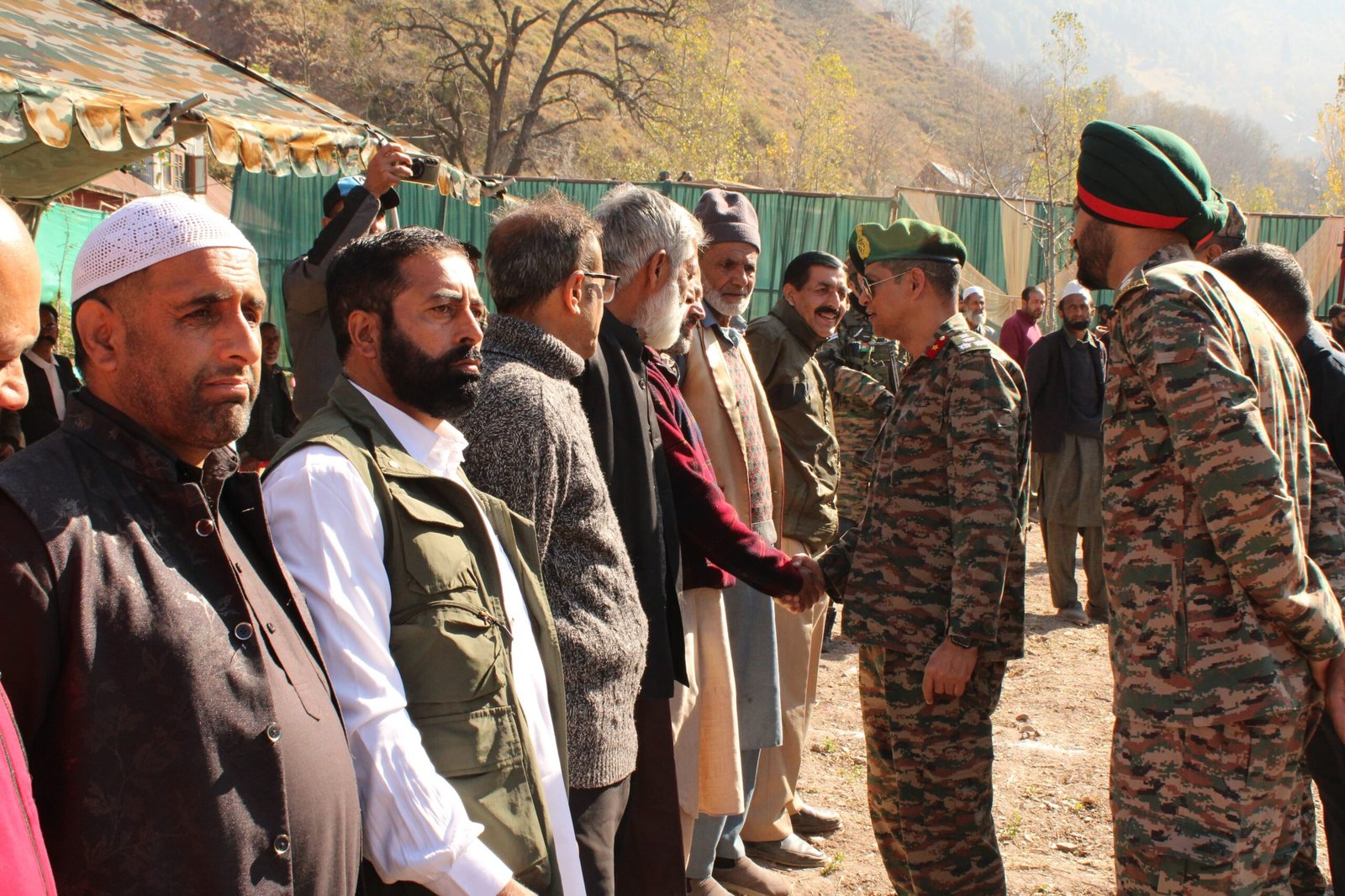
The Indian Army’s Rustam Battalion, under the aegis of Pir Panjal Brigade and Dagger Division, organised a Diwali Mela at Nambla village in Uri on Saturday, bringing together around 568 people from different parts of the region, including residents of remote villages close to the LoC.
The celebration brought attention to the lives of soldiers stationed across the border belt of north Kashmir, including the forward areas of Baramulla, Kupwara and Bandipora districts, where maintaining security involves round-the-clock vigilance in challenging geographical conditions.
For troops deployed in these areas, military service often means spending months away from their families. Difficult mountain terrain, extreme winter temperatures, heavy snowfall, limited connectivity and long hours at forward posts are part of their routine. As winter approaches, conditions become increasingly demanding, with soldiers continuing surveillance and border-security duties despite adverse weather.
Diwali, traditionally a festival of returning home, meeting relatives and celebrating together, can be particularly emotional for personnel unable to be with their families. While homes across the country are illuminated with diyas and families exchange sweets and greetings, many soldiers mark the occasion within their units or at forward positions, often relying on brief phone conversations to connect with loved ones.
The mela in Nambla offered a different setting, allowing soldiers to share the festival with local residents and experience the warmth of community celebrations despite being away from home.
Across north Kashmir, villages situated close to the LoC have for decades lived with the realities of border tensions, geographical isolation and, at times, cross-border shelling. From Uri and other border areas of Baramulla to the remote villages of Kupwara and Bandipora, proximity to the frontier has shaped the everyday lives of residents, affecting their livelihoods, movement and access to essential services.
In these areas, the relationship between soldiers and civilians often extends beyond security arrangements. Through community engagement, educational assistance, medical camps, sports activities and cultural programmes, the Army has sought to maintain interaction with people living in remote border settlements.
At Saturday’s mela, around 568 people participated in sports competitions, cultural activities, music, games and festive stalls. Lucky draws added to the excitement, with children, youngsters and elderly residents joining the celebrations.
The lighting of traditional diyas symbolised hope, peace and the triumph of light over darkness. People from different religious and social backgrounds participated, giving the gathering a wider message of communal harmony and peaceful coexistence.
The event was also attended by Ashish Kaushal, VSM. Army personnel and local residents interacted during the programme, sharing festive moments and strengthening bonds of friendship and mutual trust.
For the soldiers, the occasion offered an opportunity to celebrate Diwali away from their families but among people whose safety forms an important part of their responsibilities. For residents, it was a chance to share the festival with personnel who remain stationed in difficult conditions along the country’s borders.
The Army has organised several such outreach initiatives in border areas of north Kashmir over the years, using cultural and sporting events to bring communities together and strengthen civil-military relations.
The Diwali gathering in Nambla was one such initiative, but its significance extended beyond the venue. It reflected the lives of soldiers who often sacrifice family celebrations to guard the frontiers and the communities who share their festivals with them.
As the celebrations concluded, the message was one of togetherness: even when soldiers cannot return home for Diwali, the warmth of the people living along the borders can make a distant posting feel a little closer to home.
Comments are closed.