

Nadia Afaq
It is time to ask ourselves what we actually value; a brief afternoon of applause on borrowed money or a marriage that can endure when the marquee is taken down. Perhaps it is time we finally started preparing for a marriage, not just staging a wedding.
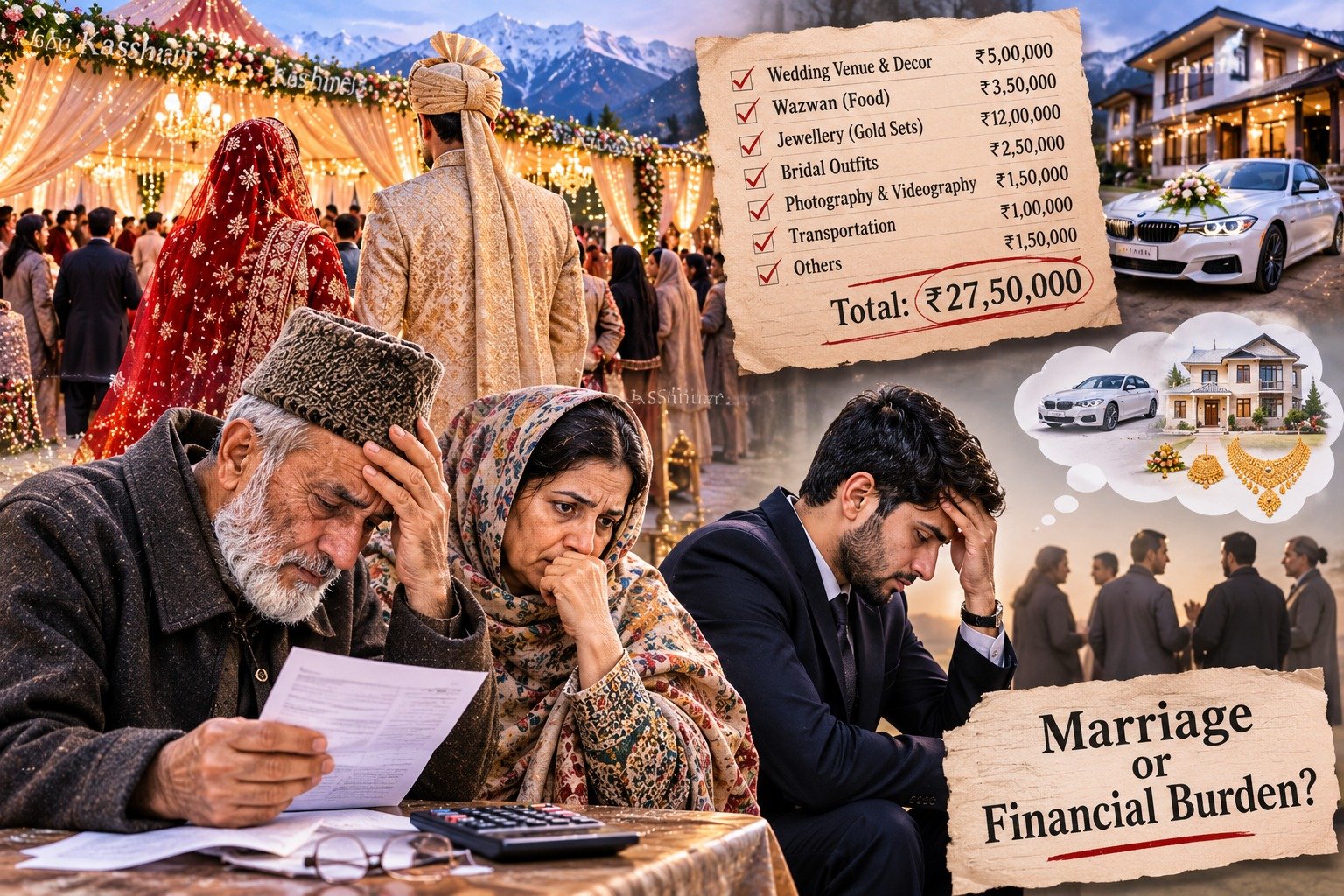
By two in the morning, the heavy aroma of cardamom, saffron, and woodsmoke begins to sour, trapped beneath the damp ceiling of the wedding marquee. While the guests trade banter over their final sips of kehwa, a father draws the balance sheet of the khandar (marriage) in the back room, tucked away from congratulatory eyes, staring at numbers: fifty thousand rupees spent on dry-fruit hampers, thirty-two meat dishes laid out for guests, gold sets worth lakhs purchased by mortgaging orchard land, and huge amounts poured into luxury tents, decorations, floral arrangements, lighting, sound systems, designer outfits, photography, videography, and other wedding arrangements.
There are expenses for transportation and countless details that seem small but add up to a staggering sum. Out front, the family’s generosity is praised as unmatched izzat (honor), while behind closed doors, the price of that honor is measured in debt, sacrificed savings, and land put at risk.
Comments are closed.