

The Autumn Paradox: Apples, Alphabets and the True Wealth of South Kashmir

Muzafer Ahmad Lone


“Our apples may be famous across the world, but the minds we nurture in our classrooms are South Kashmir’s true, enduring harvest.”

The autumn breeze is just beginning to sweep through the orchards of South Kashmir, painting the landscape in breathtaking hues of amber and crimson. With the crisp air comes the early blush of the apple season—a time of immense economic anticipation and agrarian pride. Yet, as the region prepares for its most lucrative season, a familiar and deeply concerning silence begins to settle over our rural schools. Across the apple-bearing belts, attendance is thinning, and classrooms are quietly emptying out.

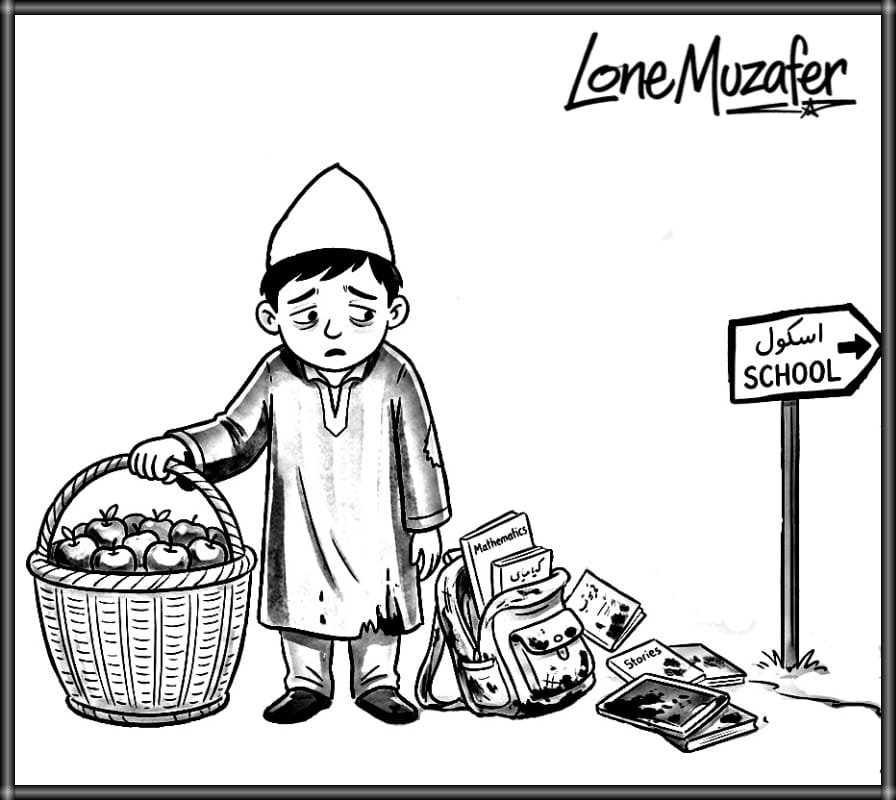
This seasonal migration from the desk to the orchard presents a profound paradox. Small hands, naturally inclined to hold chalk and explore the world through art, storytelling, and play, are instead tasked with hauling heavy wicker baskets and grading fruit. For the educators who spend the year building vibrant, interactive learning environments, watching these spaces fall silent is a stark reminder of a hidden crisis. The dynamic momentum of a classroom—where experiential learning and the joy of discovery take root—cannot simply be paused and effortlessly resumed when winter sets in.

The agrarian demands of our region are undeniably real, and the pressure to gather the crop is immense. However, treating our youth as an accessible solution to seasonal labour shortages carries a compounding cost. It quietly unravels the immense grassroots efforts poured into community mobilization. When local anchors and community members spend months running enrollment drives to ensure every child finds their rightful place at a desk, watching the autumn harvest pull them back into the fields is a cyclical step backward. It places our youth under the dual burden of physical exhaustion and academic lag.

As we approach the busiest weeks of the season, this is a vital moment for gentle reflection. It is an invitation for parents, guardians, and the wider community to pause and think over the true cost of these choices. We must revisit the decisions made out of seasonal habit and ask ourselves a difficult question: Does the immediate, short-term assistance in the orchards outweigh the lifelong foundation of a child’s education?

The work of plucking and packing is a job for today, but education is the architecture of tomorrow. While the harvest sustains families for a winter, an educated mind possesses the potential to innovate, lead, and uplift an entire community for generations. As the leaves continue to turn, let us reconsider our priorities. Let us shoulder the heavy lifting of the harvest as adults, and grant our children the absolute freedom to be students simply.

Our apples may be famous across the world, but the minds we nurture in our classrooms are South Kashmir’s true, enduring harvest.


Author is teacher at Govt. PS Ganaie Mohalla Pariwan Kulgam and can be mailed at lonesabam@gmail.com

Comments are closed.