Puducherry, September 16: On the eve of Prime Minister Narendra Modi’s birthday, Lieutenant Governor K. Kailashnathan, who worked closely with him for nearly two decades in the Gujarat Chief Minister’s Office, on Wednesday shared his recollections of Modi’s working style and approach to governance.
Kailashnathan, a 1979-batch retired IAS officer, served as Principal Secretary and Additional Chief Secretary to Modi when he was Gujarat Chief Minister from 2006 to 2013 and continued as Chief Principal Secretary to the Chief Minister from 2013 until June 2024. He assumed charge as Lieutenant Governor of Puducherry in August 2024.
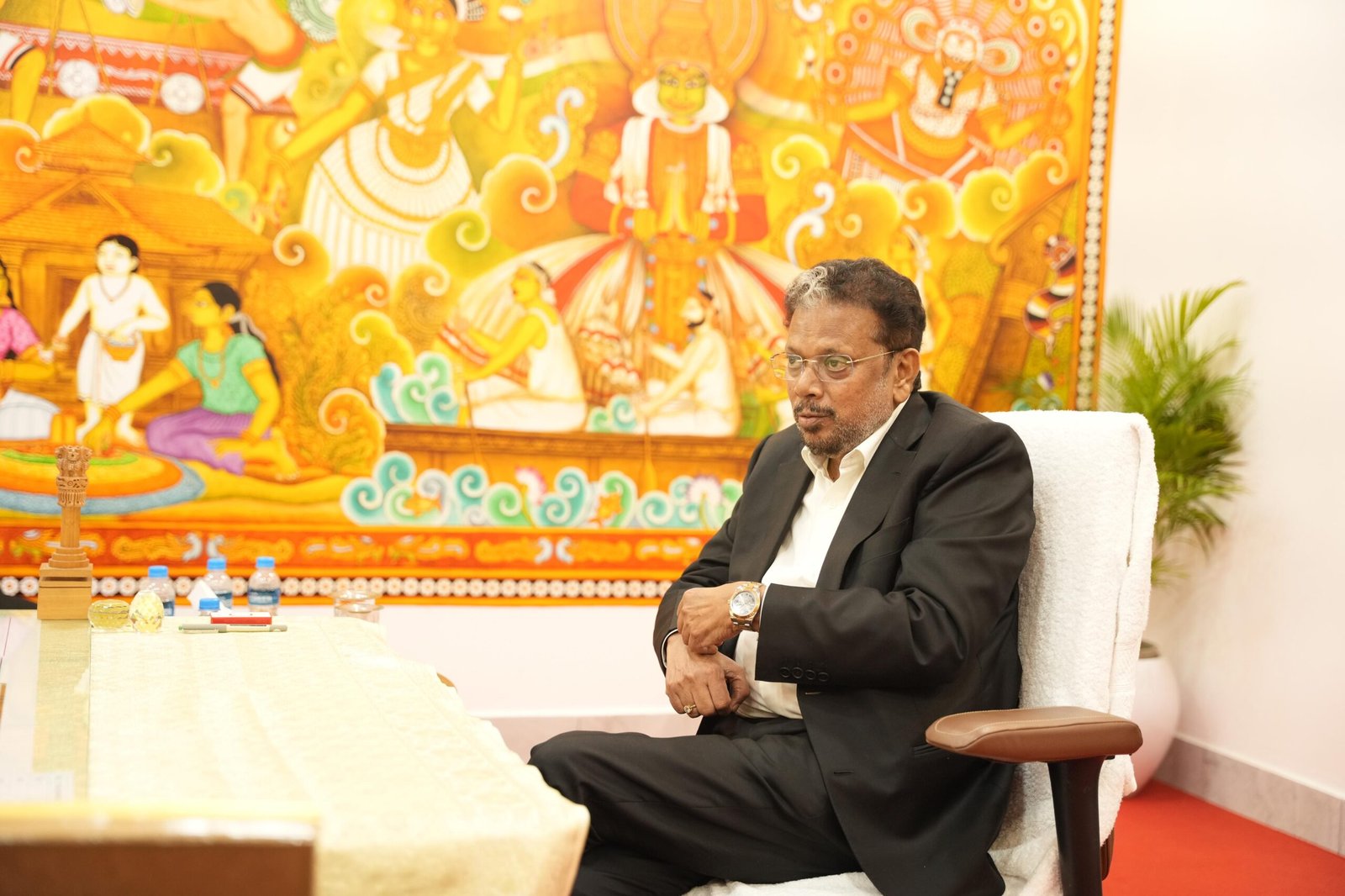
He was speaking to Kashmiri journalists at Lok Nivas in Puducherry during their media exposure tour organised by the Press Information Bureau (PIB), Srinagar.
Recalling his long association with Modi, Kailashnathan said he found the Prime Minister’s approach different from that of many other political leaders, particularly in his willingness to pursue difficult ideas and confidence in implementing them.
“I spent 26 years with Modi and found him totally different from others. He has the will to do things and the confidence that he can do it,” Kailashnathan said.
Kailashnathan said connectivity was among the priorities pursued by Modi during his tenure as Gujarat Chief Minister, particularly to improve access for rural communities and farmers.
He recalled that roads were developed to enable farmers to transport agricultural produce to markets more quickly. Poor roads, he said, had earlier resulted in perishable products such as milk getting spoiled during transportation, particularly because of the hot weather.
According to Kailashnathan, the emphasis on rural connectivity was reflected in initiatives referred to as Kisan Path, Vikas Path and Pragati Path, which he said were based on the belief that connectivity was a first step towards development.
He linked this approach to the wider expansion of roads, highways, railways and airports that he said has taken place across the country.
‘People want speed’
Kailashnathan also narrated an incident from Gujarat that he said illustrated Modi’s approach to understanding public expectations.
He recalled being with Modi at a bus station when the then Chief Minister noticed that some people were not boarding buses.
When asked why they were waiting, they reportedly said they preferred express buses because they reached their destinations faster and made fewer stops.
“Modi told me that people want speed. They don’t care about spending extra money if they have speed,” Kailashnathan recalled.
He said Modi interpreted the incident as an indication that people wanted government services and development projects to be delivered in less time.
Kailashnathan also spoke about water management in Gujarat, saying the state had faced severe water shortages and relied heavily on groundwater when Modi became Chief Minister.
He said projects involving the Narmada and other water sources helped increase the availability and use of surface water.
He also recalled a conversation about the Rann of Kutch, saying Modi had shown him an old Jain text that referred to Kutch becoming like Kashmir and suggested that the region was rich in resources.
Kailashnathan said that at the time he found the idea difficult to imagine, but described Modi as someone who believed that seemingly difficult changes could be achieved.
The Puducherry LG also recalled the power-sector reforms undertaken in Gujarat.
He said agriculture and residential consumers had earlier been supplied electricity through a common feeder system, which created problems for both sectors.
According to Kailashnathan, experts initially expressed reservations about separating the two systems. Modi nevertheless pursued the idea, and the separation was first tested as a pilot project.
Under the new arrangement, agricultural consumers were provided electricity according to scheduled timings, while residential areas received a more reliable supply, he said.
Kailashnathan said the reform had wider social and economic effects, including better electricity availability in villages and reduced pressure on people to migrate to cities in search of basic facilities.
‘Will and confidence’
Kailashnathan said Modi’s willingness to pursue unconventional solutions came from his experience of working on the ground in Gujarat.
“He has the will to do things and a confidence that he can do it,” he said, adding that this approach had influenced the way Modi viewed infrastructure and development.
He said the experience gained in Gujarat was reflected in initiatives being undertaken elsewhere in the country.
Recollections of Modi’s personal routine
Kailashnathan also shared personal recollections of Modi from his years in the Gujarat government.
Recalling a security audit at the Chief Minister’s residence, he said he was struck by the simplicity of the accommodation.
He described the room as having basic furniture, a television, a computer, a table and chair, along with a separate space for prayers.
Kailashnathan also spoke about Modi’s personal routines, including periods of fasting and a reported preference for limited sleep.
He further recalled Modi’s visits to soldiers during Diwali, saying that during his Gujarat years he travelled to border areas to spend the festival with security personnel.
Kailashnathan said his long association with Modi had given him an opportunity to observe both the administrative and personal aspects of the Prime Minister’s working style.
The interaction was part of the PIB Srinagar media delegation’s exposure tour to Tamil Nadu and Puducherry, aimed at giving journalists from Kashmir firsthand exposure to central government institutions, programmes and development initiatives.


Comments are closed.