Srinagar, Sep 04: For decades, Kashmir has existed in the imagination of cinema as a landscape—its mountains, lakes, meadows and old-world charm providing a spectacular backdrop to stories told by filmmakers from elsewhere. Next week, that relationship is set to change. For the first time, Jammu and Kashmir will open its doors to the world not merely as a location for films, but as a destination for filmmakers, storytellers, technicians, students and audiences.
The inaugural International Film Festival of Jammu & Kashmir (IFFJK) 2026, beginning September 7, is being positioned as more than a celebration of cinema. It is an attempt to put Jammu and Kashmir on the global film map, create opportunities for local talent and lay the foundations of a film ecosystem that could eventually translate into a wider creative economy.
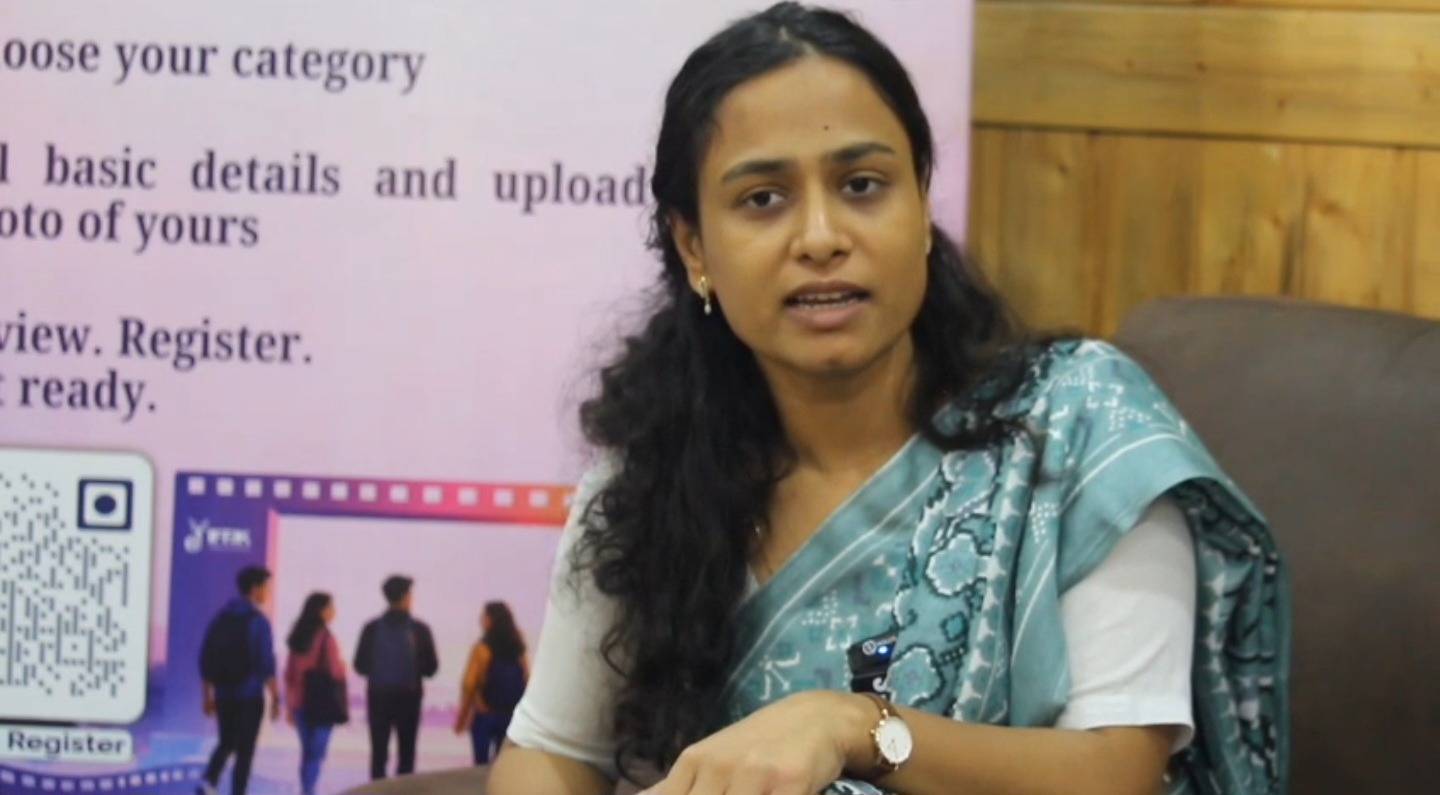
Speaking to Kashmir Convener, Director Information and Public Relations Shreya Singhal said the larger objective was to move beyond the traditional understanding of filmmaking as merely an artistic pursuit.
“The idea is to convert filmmaking into a film economy for J&K,”
Singhal said, underlining the government’s intention to create a self-sustaining ecosystem that supports filmmakers, technicians and artists from the region.
The four-day festival, scheduled from September 7 to 10, will bring together films and filmmakers from across the world, with the main venue at SKICC in Srinagar and events also being held in Jammu and Gulmarg. More than 130 films from over 40 countries are set to be screened, while more than 300 international delegates are expected to attend.
But the real significance of the festival may lie not in the number of films arriving in Kashmir, but in the opportunity it creates for those already working here.
A dedicated ‘J&K Select’ section will showcase local filmmakers, producers and artists, giving them an opportunity to present their work before an international audience and interact with professionals from the global film industry.
“Definitely, the major aim of this festival is that our local talent gets exposure on the international platform and our internationally acclaimed artists and filmmakers also get to know how much talent we have here,” Singhal told Kashmir Convener.
That exchange, she believes, can become one of the festival’s most enduring outcomes.
Jammu and Kashmir has a long association with the film industry. From the iconic locations that have featured in Hindi cinema to the region’s own emerging filmmakers and artists, cinema has never been entirely foreign to Kashmir. What the festival seeks to do is transform that relationship—from being predominantly a shooting destination to becoming a place where films can be conceived, produced, discussed and showcased.
Singhal said the government wants J&K to become a more facilitative destination for filmmakers and production houses.
That emphasis on the local workforce is important because the festival’s vision extends well beyond actors and directors.
Cinema may be visible through its stars, but much of the work happens behind the camera. Cinematographers, editors, sound designers, production teams and other technicians collectively turn an idea into a film.
“Filmmaking is a very intensive process. When we see the audience, we only see the cast—the actors, actresses—but behind that there is a whole technical team working day and night,” Singhal said.
“That is why the main focus of our masterclasses is on the technical aspects of filmmaking,” she added.
Masterclasses, panel discussions and interactive sessions are therefore expected to form a major part of the festival. The focus on technical disciplines could provide young people with a clearer understanding of the range of professional opportunities within the film industry.
For students of mass communication, filmmaking and related disciplines, the festival could function as a four-day classroom outside the classroom.
Singhal has specifically invited students and young people to attend, describing the festival as an opportunity to learn from professionals and understand the industry more closely.
“Please come, be a part of the festival. You can understand it as a four-day knowledge-sharing platform, an entertainment platform in which I am sure every person who comes there is going to have their own takeaways,” she told Kashmir Convener.
The festival also seeks to expose participants to contemporary filmmaking technology, with brand partners expected to showcase the latest equipment and gadgets.
For J&K’s emerging filmmakers, such exposure could help bridge the gap between local ambition and industry standards.
There is also a larger economic argument behind the initiative.
A functioning film ecosystem can create opportunities not only for filmmakers and performers but for technicians, production crews, equipment suppliers, hospitality providers, transporters and a range of associated services. More productions coming to the region could mean more employment and professional opportunities for local people.
But perhaps the most important change the festival hopes to trigger is one of perception.
In Jammu and Kashmir, cinema has traditionally been consumed primarily as entertainment. The festival seeks to encourage young people to look at filmmaking as a serious professional option.
Singhal said she was confident the festival would help generate that shift.
“I am very sure that it will not only give a momentum but also a sense of awareness to our young audiences to take cinema as a main profession, to consider it seriously, and also to view it in a very new perspective,” she said.
The presence of international filmmakers and industry professionals could further help local artists build networks, exchange ideas and explore collaborations. The festival, therefore, is being conceived not simply as four days of screenings, but as a meeting point between local creative talent and the wider film industry.
Its ambition is also to continue beyond the inaugural edition. The government intends the festival to become an annual fixture on J&K’s cultural calendar, allowing the ecosystem created around the event to grow with every edition.
That could ultimately be the festival’s biggest test—and its biggest opportunity.
Kashmir has long been filmed. It has been photographed, romanticised and projected onto screens across generations. But with IFFJK, the region is attempting to move from being the backdrop of someone else’s story to becoming a participant in the global conversation on cinema.
When the lights come on and films from across continents share the screen with stories from Jammu and Kashmir, the significance will extend beyond the festival itself.
It will be an attempt to answer a larger question: Can cinema become not just a window through which the world sees Kashmir, but a bridge through which Kashmir’s talent reaches the world?
For J&K, the first International Film Festival is an opportunity to find out.


Comments are closed.