NEW DELHI, SEPTEMBER 1: Arif Mohammed Khan has called for a deeper understanding of Rajdharma as an enduring ethic of public responsibility, stressing integrity, empathy, fairness and non-discrimination in the exercise of public authority.
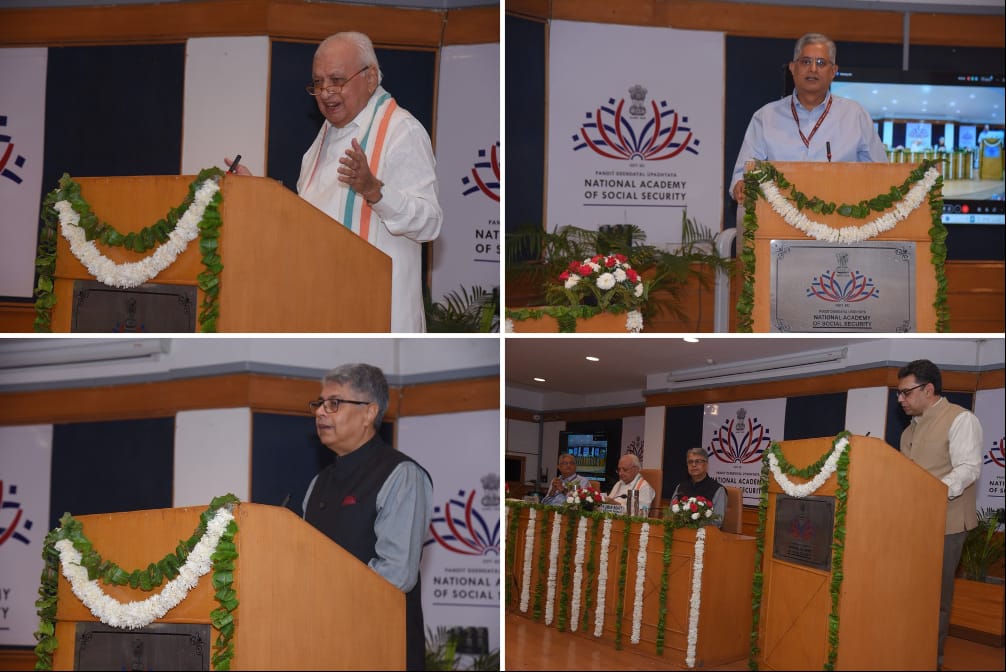
He made the remarks while delivering a keynote address at Reimagining Governance: Discourse for Excellence (RGDE), organised by the Employees’ Provident Fund Organisation (EPFO) on August 31 under the aegis of the Pandit Deendayal Upadhyaya National Academy of Social Security (PDUNASS).
Reflecting on the meaning of Rajdharma, Khan described Dharma as a principle of righteous conduct and moral obligation rather than merely a religious practice. He said Rajdharma is fundamentally concerned with the responsibility of those entrusted with public power and how that power is exercised.
An official spokesperson said he stressed that public officials must recognise the dignity and worth of every individual and ensure that public authority is exercised without discrimination. He called for an approach in which officials see themselves as servants of citizens rather than merely holders of authority.
Khan linked ethical governance with sincerity, honesty and self-restraint, saying that public office carries a moral responsibility beyond adherence to formal procedures. Drawing on Indian spiritual and civilisational traditions, including the Upanishads and teachings associated with Shankaracharya, he emphasised the unity of humanity and the need to overcome narrow distinctions in public life.
He said rules, systems and technology are important tools of governance but cannot replace the human qualities that shape citizens’ experience of public institutions. According to him, sincerity, cultural awareness and ethical conduct must remain central to administration, particularly when officials exercise discretion in dealing with citizens.
Central Provident Fund Commissioner Ramesh Krishnamurthi placed the discussion in the context of EPFO’s responsibility towards millions of workers, pensioners and their families. He stressed the need to combine legal compliance with empathy and citizen-centric service delivery as the organisation embraces technological transformation.
Director, PDUNASS, Kumar Rohit highlighted the contemporary relevance of Rajdharma to public administration, referring to the Bharat-Milap episode at Chitrakoot and the counsel on righteous statecraft associated with Lord Rama and Bharata.
Quoting Goswami Tulsidas’s Ramcharitmanas, he explained that a true administrator should function like the mouth of the social body—receiving nourishment at one point while ensuring that every part of society is sustained equitably and with discernment.
The session also included an interactive discussion with officers on applying ethical and civilisational values in everyday administration, particularly while balancing rules with individual circumstances and maintaining empathy in technology-enabled systems.
The programme was moderated by Prashant Sharma, RPFC-I. The session concluded with a reaffirmation of PDUNASS’s commitment to promoting learning, reflection and excellence in public service.


Comments are closed.