


Mohammad Muslim
“If this remembrance turns a person into a more truthful person, then it is valuable. If this holiday inspires compassion towards poor people, then it is valuable. If this holiday inspires respect towards parents, compassion towards neighbours and tolerance towards disputes, then it is valuable.”
The festival of Eid Milad-un-Nabi is celebrated by millions of Muslims as the day to commemorate the birth and teachings of Prophet Muhammad (SAW). In India, in 2026, it is celebrated on August 26, which falls on 12 Rabi-ul-Awwal 1448 AH in several Islamic calendars. However, some official and holiday calendars mark it as August 26, because of differences in moon sighting.
For Muslims, the importance of this day is more than just the date. It draws our attention to a personality who brought about a revolution in the social, moral and spiritual affairs of seventh century Arabia that till today affects lives of people all over the world. It makes us reflect upon the teachings of a prophet whose behaviour, tolerance, honesty, mercy and regard for human dignity became the focal point of their lives.
The Prophet Muhammad (SAW) was born in Makkah at a time when the society was characterized by tribal rivalries and conflicts. The main objective of his mission was to make people worship one God and to live their lives according to the principles of justice and accountability. He is referred to in the Quran as mercy to the worlds, and this is an important part of his message. His life shows that true faith can never remain restricted to mere words but it needs to influence a person’s conduct in respect of his family members, neighbors, strangers, the needy, the weak and even his opponents.
Today, there is much change in modern society compared to the days of the Prophet, but some human issues remain the same. There is intolerance, lying, poverty, discrimination, family conflicts and social divisions. Communication has changed significantly because of technology, but at the same time, there is no replacement for tolerance, kindness and proper speech. In this environment, the memory of the Prophet’s personality offers Muslims a chance to evaluate themselves.
Truthfulness is one of the main principles which were shown in the Prophet’s life. Before revelation, he was called Al-Amin as he was known as a man of his word. For today’s Muslims, there is a valuable lesson. Truthfulness is needed everywhere – in business, politics, public administration, journalism, education and even in everyday relations. Society can function only when it does not accept corruption as a part of it.
Good communication and good conduct are also important characteristics of his personality. Now when everything is going fast and the information is spread in the matter of seconds, people have a huge responsibility of the information that they share. It is easy to spread a rumor or make accusations. Social media have empowered many users to shape the opinion of the community, but at the same time, they should think about their own actions. Reminding about the Prophet makes us remember that we should be more careful in our conversations.
Compassion was another characteristic of the Prophet. He was concerned about poor people, orphans, widows and vulnerable people of society. He advised people to be generous and stressed that social responsibility is a part of the religion. It makes communities think about the actual social situation and makes them do something. Are there any poor people in the community? Is anyone feeding them? Are there any poor families in need of help? Do children go to school? Do elderly people receive attention?
Such questions have a special meaning on religious events. For example, it could become an opportunity to develop charity activities and help those people who do not receive attention. There could be a feast for a needy family, assistance to students, assistance to elderly people or support for financially poor people.
Another valuable lesson is given in the Prophet’s relationship with neighbours. Nowadays the world has become very crowded and interconnected but still, there is no unity. People can divide themselves into various groups according to their identity, politics, social classes and personal interests. The Prophet has paid a lot of attention to the rights of neighbours and to maintaining good relationships. This means that peaceful community comes from daily life. Respect does not mean agreement on every matter but awareness of the other person’s rights and dignity.
Also, it is necessary to pay attention to the Prophet’s attitude to the family. He took part in house matters, treated his family kindly and was affectionate to children. Such facts show that it is impossible to separate religious devotion from being responsible to your family members. The most challenging moments in one’s life come to the ordinary spaces – home, family, and relatives.
The Prophet also had outstanding patience in times of hardship. During his lifetime, he faced rejection, persecution, loss, conflicts, and hard decisions to make but still he always focused on faith, perseverance and moral values. Patience does not imply doing nothing but continuing following moral values and principles even in tough situations.
Patience is especially significant to the young generation nowadays when social media, academic competition, unemployment and uncertainty in future become the factors which pressurize teenagers. The example of the Prophet teaches them that dignity does not depend only on material things but on one’s character, knowledge, responsibilities and service to society.
On Eid Milad-un-Nabi younger generations can study a lot. Gatherings, sermons, debates and recitations will give them an opportunity to learn about the historical context of the life and mission of the Prophet, the principles which formed his character. Religious education becomes more effective when it combines historical knowledge with one’s own practice. Young people should learn how the Prophet dealt with conflicts, leadership, family issues, poverty, conflicts and injustice.
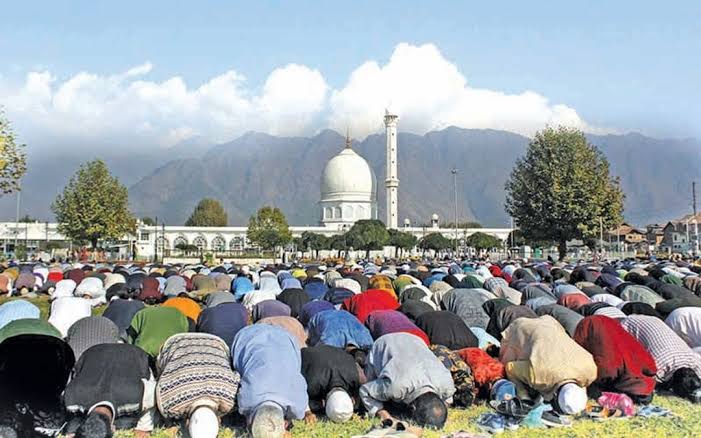
This holiday also has its own meaning for Kashmir because religious customs and traditions have always played an essential role in the life of the region. Mosques and shrines become centers for congregations during Rabi-ul-Awwal. The people gather to pray, discuss and read about the life of the Prophet. This type of congregation can be helpful for strengthening the community ties if it promotes peace, mutual respect and social responsibility.
Nevertheless, the processions and the congregations should not forget about other members of the community as well. It means that the organization of the public processions should take into account the questions of traffic, cleanliness, and public order. Devotion to religion and civic sense are not contradictory notions. In reality, the responsible behavior in public space shows the values of discipline and consideration preached by the Prophet.
It is also important to maintain the sense of moderation. There are many Muslims who have different attitudes to the manner in which the Milad is celebrated. While some communities celebrate Milad in the form of organization of the processions and public holidays, others prefer to organize private celebration or just to ignore this holiday at all. These differences should not lead to conflicts between Muslims who can disagree about the religious customs.
Thus, the most important question that should be asked in relation to this holiday is not the way in which Eid Milad-un-Nabi is celebrated but how it influences the person.
If this remembrance turns a person into a more truthful person, then it is valuable. If this holiday inspires compassion towards poor people, then it is valuable. If this holiday inspires respect towards parents, compassion towards neighbors and tolerance towards disputes, then it is valuable. If this holiday helps to get rid of such bad features as hatred, dishonesty and arrogance, then it is valuable.
The legacy of the Prophet is primarily preserved through his actions. The books write about his life, the scholars explain his doctrines and the communities remember the day of his birth but the individuals preserve that legacy through their actions.
As Muslims celebrate Eid Milad-un-Nabi in 2026, there appears an opportunity to reflect on the occasion and its influence on the life of modern society. It is an opportunity to think about the qualities that made the Prophet Muhammad (SAW) an eternal example for Muslims: truthfulness, mercy, patience, modesty, justice, generosity and compassion towards humanity.
The world does not need another occasion that will end with the ceremony. The world needs people who will take these lessons into everyday life.
The true remembrance of the Prophet starts from the moment when remembrance turns into character and love turns into the commitment to those values.
Comments are closed.