
Mohammad Muslim
The mountains have been saving for us for ten thousand years. We have had a good run spending from that account. The real question for any government, newspaper or family is whether we will be the generation that noticed the balance falling and acted, or the one that kept spending until the account was empty.
Every summer, the rivers of South Asia rise. Farmers open their channels, towns fill their tanks and hydropower stations run at full strength. Most of us treat this as a plain fact of nature, like the sunrise. It is not. It is the result of a very old arrangement between the mountains and the people who live below them, and that arrangement is changing faster than most of us realise.
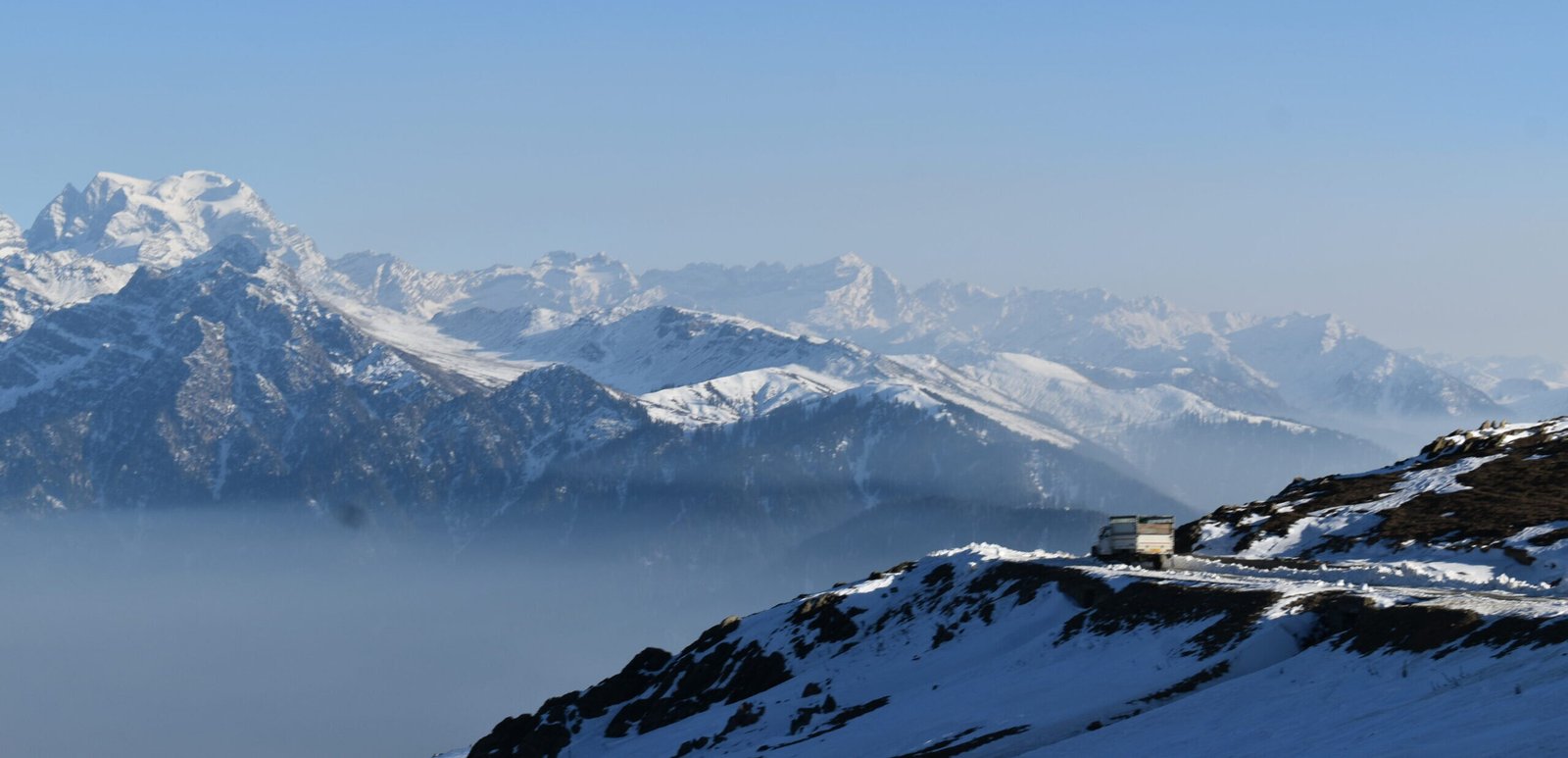
The Hindu Kush Himalaya holds the largest store of ice and snow outside the polar regions. Its glaciers feed at least ten major river systems and support around two billion people. A glacier works a lot like a savings account. Snow falls in winter and adds to the balance. Melt in summer takes a little out. For thousands of years the two roughly matched, and the rivers ran steady.
That balance is now broken. In March 2026, the International Centre for Integrated Mountain Development, known as ICIMOD, released two studies on the state of the region’s glaciers. They found that the average rate of ice loss has nearly doubled since 2000, from about 34 centimetres a year to about 73 centimetres a year. Some parts of the range have thinned by as much as 27 metres since 1975. About 12 percent of the glacier area disappeared between 1990 and 2020.
Think about what that means for anyone who plans ahead. If your savings began to fall twice as fast as before, you would not wait for the account to hit zero before changing your habits. Yet that is more or less what we are doing with the mountains.
One finding in the ICIMOD work deserves more attention than it received. Glaciers smaller than half a square kilometre are shrinking the fastest, and roughly three quarters of the region’s glaciers fall into that size group. Large glaciers make the headlines. Small ones quietly feed streams, springs and village water channels. When a small glacier vanishes, nobody writes about it. A spring simply runs dry one year, and a village starts to argue about water.
Kashmir knows this story. Our valley depends on snow and ice for the Jhelum and its tributaries, and studies of glaciers such as Kolahoi have shown retreat over several decades. Many families who live far from the peaks still drink, farm and earn a living because of what happens up there.
There is a cruel twist in this story. In the early years of fast melt, rivers actually carry more water. Hydropower projects look better. Irrigation seems easier. Officials can say, with some honesty, that supply is fine. Scientists call this the peak water problem. The flow grows, reaches a high point, and then falls once the ice runs out. The danger is that we build our plans, our dams and our farms around the high point and forget that it is temporary.
An earlier ICIMOD assessment warned that if emissions keep following their current path, the region could lose as much as 80 percent of its ice by 2100. Even if the world meets the Paris targets, it expected losses of 30 to 50 percent. Those numbers describe a very different mountain range from the one our grandparents knew.
Melting ice does not only threaten future shortages. It also creates danger today. Meltwater gathers behind loose rock and ice in glacial lakes, and when those natural walls give way, a flood can race down a valley in minutes. On 26 August 2026, a glacial flood in Nepal’s Rasuwa district tore into the Bhote Koshi river and across the border. Reports from the Chinese side counted at least 21 people dead and 541 missing. ICIMOD has said that 21 of Nepal’s 2,070 glacial lakes are highly at risk.
A September report from the group Systemiq widened the picture. It counted 56 glacial lakes across the region as very high risk, and it noted that only 21 of roughly 40,000 glaciers are tracked on the ground. Read that again. We are trying to manage a danger that spreads across 40,000 glaciers while watching 21 of them closely. It is like trying to forecast the weather for a whole continent with 21 thermometers.
There is also a measurement problem inside the science itself. ICIMOD found that only seven of the 38 glaciers in its long term monitoring set meet the global benchmark standards for data quality. We are not only watching too few glaciers. We are watching some of them with tools that are not good enough.
Not every cause sits far away. The Systemiq report estimated that about one third of Himalayan glacier melt is linked to black carbon, the soot that settles on snow and ice. Dark soot soaks up sunlight, so ice that once reflected heat now absorbs it. Much of that soot comes from brick kilns on the plains, along with the burning of crop residue, waste and fuel. ICIMOD’s lead author urged cuts in black carbon for the same reason.
This is one of the few parts of the problem where local action can show results within years instead of decades. Cleaner kiln technology, better waste handling and less open burning would help the mountains and also the air that people breathe in towns and cities. It is a rare case where the climate argument and the public health argument point in the same direction.
A serious response has four parts. First, watch more glaciers and lakes, and share the data openly across borders, because a flood that starts in one country lands in another. Second, build early warning systems in valleys below risky lakes, so that people get hours instead of minutes. Third, plan water use for a future with less ice, which means storage, efficient irrigation, and protection of springs, wetlands and forests that hold water. Fourth, cut soot now, because it is a lever we hold in our own hands.
None of this is glamorous. None of it will win an election on its own. But it is the kind of steady, dull work that keeps a society alive.
There is also a role for ordinary readers and local media. A newspaper that reports on a drying spring, a shrinking stream or a risky lake is doing early warning work of its own. Communities that notice these changes first are often the ones with the most useful knowledge, and they deserve to be heard before the plans are written, not after.
The mountains have been saving for us for ten thousand years. We have had a good run spending from that account. The real question for any government, newspaper or family is whether we will be the generation that noticed the balance falling and acted, or the one that kept spending until the account was empty.
Comments are closed.