

Rubbya Rashid
Janam liya maa ki goud mein,
Zindagi ka aagaz hua maa ki goud mein.
Duniya dekhne lagi maa ki goud se,
Zindagi ka ikhtitam bhi hoga maa ki goud se.
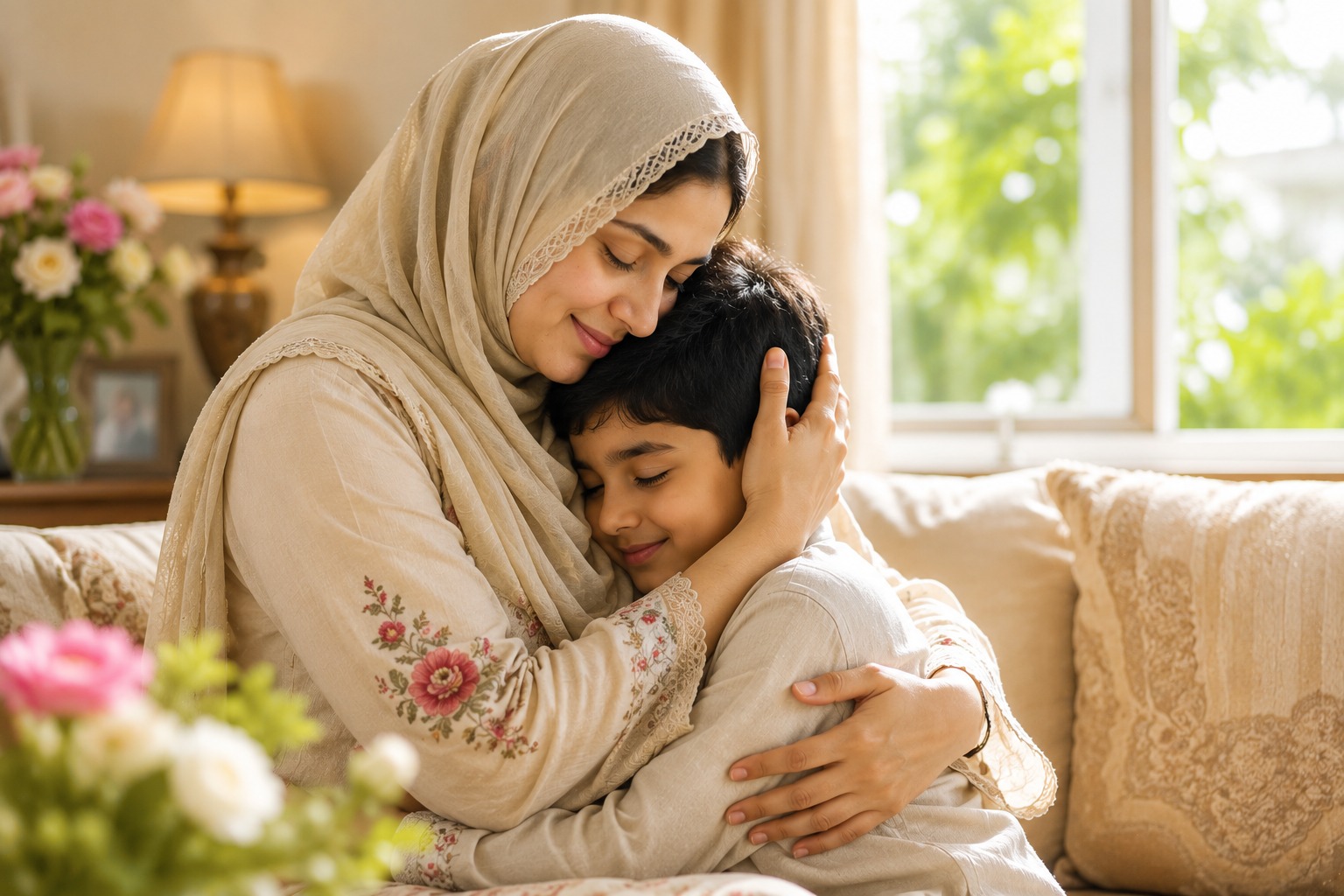
There are some relationships that cannot be adequately described because they are not merely relationships; they are the foundation upon which life itself is built. Mother is one such relationship. Words may attempt to describe her love, sacrifice and tenderness, but they inevitably fall short. A mother is not simply a person in our lives. She is the first home we know, the first voice we recognise, the first prayer that protects us and, for many of us, the last place where the heart longs to find peace.
Life begins in a mother’s lap. Before we understand the world, we understand the warmth of her embrace. Before we learn to speak, we learn the language of her affection. We see the world through her eyes and slowly discover ourselves through the confidence she gives us. In childhood, her lap is a sanctuary; in adulthood, her blessings remain a source of strength; and even when life becomes difficult, the thought of returning to her presence carries a peace that no material comfort can provide.
Perhaps that is why the subject of motherhood is so difficult to write about. One can spend an entire lifetime speaking about a mother and still leave much unsaid. Her sacrifices are too numerous to count, her patience too deep to measure and her love too vast to be contained in words.
“If there is no mother, who will be faithful?
Who will fulfill the right of motherhood?”
Maa na hogi tou wafa kon krega,
Mamta ka haq ada kon krega.
Ya Allah hr maa ko sada salamat rekhna,
Warna hmari zindagi ki dua kon krega.
A mother’s greatness often lies in the things nobody sees.
She wakes when everyone else is asleep. She worries when everyone else is at ease. She hides her own pain so that her children can smile. She gives up her comfort without announcing the sacrifice. When there is little, she somehow finds enough. When the family is troubled, she becomes its strength. When a child fails, she becomes the first person to encourage him to rise again.
There is no adequate name for the tiredness a mother silently carries.
And yet, despite everything, she continues to give.
A mother’s heart is an ocean in which the pains of her children are absorbed with extraordinary compassion. She does not measure her love according to success, wealth, achievement or social status. For a mother, a child remains a child. The world may judge a person by what he has achieved; a mother remembers the child who once held her finger while learning to walk.
That unconditionality is perhaps the purest form of love known to humanity.
A mother’s smile can bring a peace that even the greatest achievements cannot provide. Her voice can calm anxieties that no argument can resolve. Her prayer can become a source of courage when every other source of confidence seems to disappear.
In Kashmiri, the sentiment is beautifully captured in the words: “Moj che aakhri moj aasan.” There is something deeply emotional in the very idea that, despite the uncertainties and hardships of life, the mother’s presence remains a final refuge of comfort.
The spiritual significance of motherhood is equally profound.
Islam gives extraordinary importance to the status of mothers and repeatedly reminds believers of the sacrifices involved in bringing up children. The Qur’anic emphasis on honouring parents and the well-known teachings of the Prophet Muhammad (PBUH) place the mother’s rights in a position of exceptional respect.
The story of Hazrat Hajra (AS) offers one of the most powerful examples of a mother’s faith, anxiety and determination. In search of water for her infant son Hazrat Ismail (AS), she ran between Safa and Marwah. Her desperate search, born out of a mother’s concern for her child, became part of the rites of Hajj. What was once an act of maternal anguish and determination was transformed into a lasting symbol of faith and devotion.
There could hardly be a more powerful reminder of how motherhood can turn an ordinary human struggle into something spiritually eternal.
A mother does not need monuments to establish her greatness. Her monument is found in the lives of her children.
Every educated child carries something of his mother’s sacrifice. Every successful person carries memories of the person who believed in him before the world did. Behind many confident individuals is a mother who quietly taught them that failure is not the end. Behind many compassionate people is a mother who taught them to share. Behind many principled lives is a mother who taught them the difference between right and wrong.
Mother is therefore not only the first teacher of a child; she is often the architect of his character.
This is why the loss or absence of a mother creates a silence that cannot easily be filled. A house may remain the same, its rooms may remain familiar, but something essential disappears when a mother’s voice is no longer heard. Her absence is felt in the smallest things — a meal prepared differently, a prayer no longer heard, a familiar call that never comes again.
Perhaps this is why those who still have their mothers should never postpone gratitude.
We often become so occupied with the demands of modern life that we forget the people who made our lives possible. We may have time for social media, meetings, entertainment and countless other distractions, yet sometimes struggle to spare a few minutes for the woman whose entire life may have been spent worrying about us.
A mother’s presence should never be taken for granted.
Call her. Sit beside her. Ask how she is feeling. Listen to the stories she has told before. Hold her hand. Tell her that she matters. These gestures may appear small, but for a mother they can mean more than the expensive gifts we imagine will express our gratitude.
I see no great difference between a mother and a flower. If the world is an eye, the mother is its light. If the world is a flower, the mother is its fragrance. She is the warmth in a cold house, the calm after a storm and the prayer that continues even when the child has stopped asking for it.
Her love is also one of life’s great paradoxes: she spends herself so that others may shine.
That is why the thought of losing a mother brings tears even before the loss arrives. We know that every life eventually reaches its end, but the heart refuses to imagine a world without the person who made it feel like home.
For those blessed to have their mothers, the greatest prayer is simple: may her presence remain a blessing for as long as life allows.
Ya Allah, har maa ko sada salamat rakhna,
Warna hamari zindagi ki dua kaun karega?
May Allah Almighty protect every mother, grant her health, peace and a long life, and reward her for every sacrifice she has made silently. May every child understand the value of a mother’s love before it is too late.
And may every mother’s prayer continue to be a shelter for her children through every season of life.
Ameen.
“Ho ho karthe koche lalnawan,
Moj che aakhri moj aasan.”
Comments are closed.