


Aijaz Hussain Malik
“Balance Sheet is like a mirror of the business. It may not show every detail, but it reflects the broad truth. For a GST officer, learning to read that mirror carefully is essential. It helps distinguish honest mistakes from material mismatches, supports fair enforcement, and strengthens trust in the tax system.”
For a GST officer, a balance sheet is more than a statement of assets and liabilities. It is often the first financial document that helps reveal whether the business picture shown in books matches the tax picture shown in GST returns. In audit, scrutiny, or proceedings relating to tax short payment, wrong input tax credit, or suppressed turnover, a careful reading of the balance sheet can point the officer toward the right questions and the taxpayer toward the right explanations.
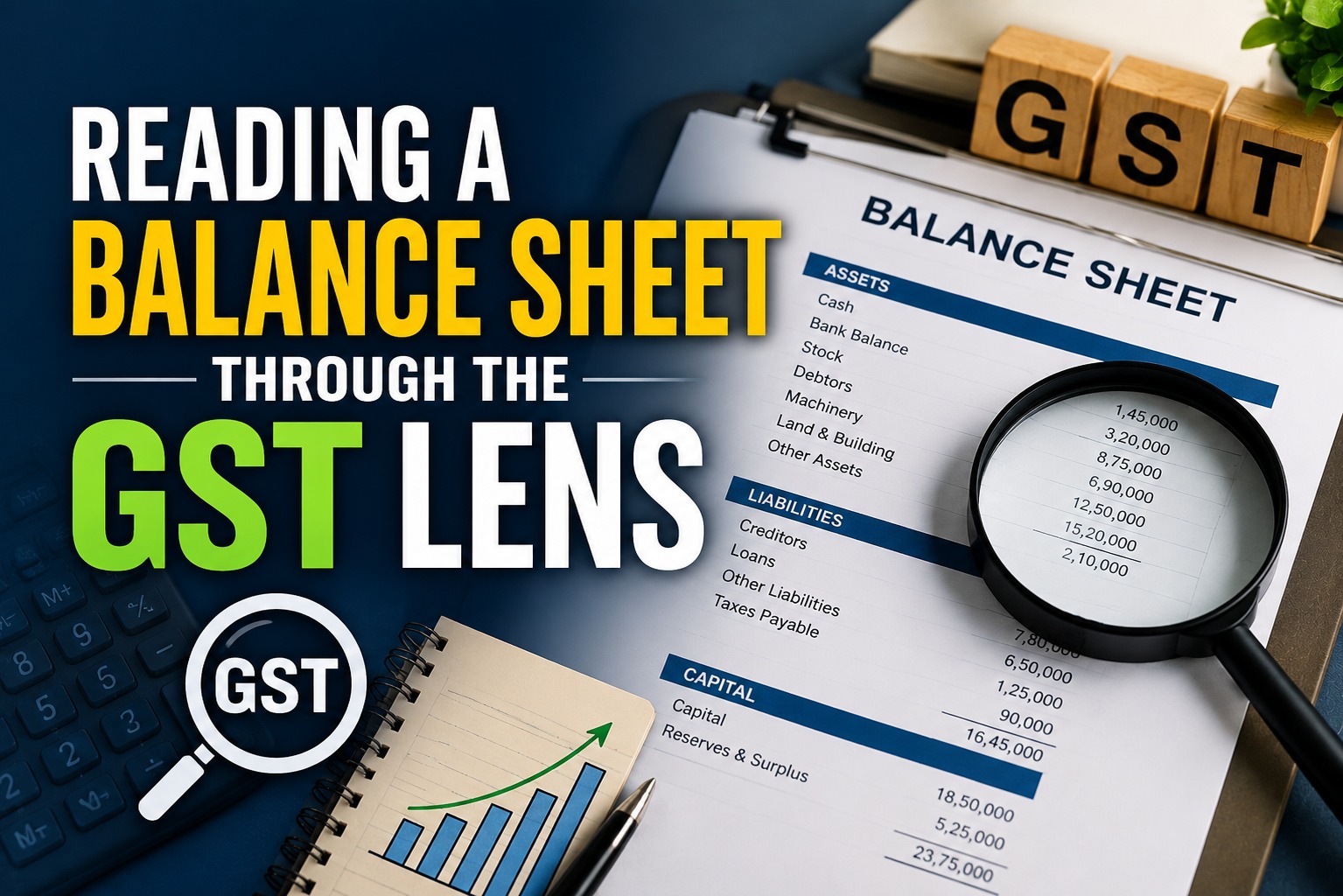
At its simplest, a balance sheet tells us what a business owns, what it owes, and what remains for the owner. It contains three main parts: assets, liabilities, and capital. Assets include cash, bank balance, stock, debtors, machinery, land, and other property. Liabilities include loans, creditors, unpaid expenses, and taxes payable. Capital shows the owner’s stake in the business.
From a GST perspective, these figures are important because they reflect the true scale and nature of business activity. GST is not concerned only with entries in a return; it is concerned with the actual supply of goods and services, the turnover earned, and the tax paid on those supplies. When the figures in the balance sheet and the GST returns do not move together, the difference may deserve a closer look.
A useful starting point is turnover. If a balance sheet or profit and loss account shows sales that are much higher than the outward supplies declared in GSTR-1 or GSTR-3B, the officer may ask for reconciliation. The same applies when the returns show more turnover than the books. Such differences may arise from timing issues, year-end adjustments, or accounting errors, but they may also indicate under-reporting or incorrect disclosure.
Stock is another important indicator. A trader or manufacturer cannot usually show large closing stock without corresponding purchases, production, or inward movement of goods. If the stock shown in the balance sheet appears unusually high or low compared to the declared business activity, the officer may seek supporting records. Stock figures often help identify unrecorded purchases, unreported sales, or differences in valuation.
Debtors and creditors also tell an important story. A very high debtor figure may suggest that sales have been made but not fully collected, while a very high creditor figure may point to heavy purchases or outstanding liabilities. If the amounts appear inconsistent with the declared turnover, the officer may ask for sales records, purchase records, invoices, and reconciliation statements. In many cases, these items provide the first clue to whether the books and returns are in harmony.
Bank balances, cash in hand, loans, advances, and capital introductions can also be useful. Sudden cash inflows, large unsecured loans, unexplained capital, or unusual advances may require explanation. These items do not automatically mean wrongdoing, but they do help the officer understand the business flow. In GST work, unexplained entries often matter because they may hide unreported sales, wrong classification, or incorrect input tax credit.
It is important to remember that a balance sheet by itself does not prove evasion. It is only a starting point. The real value lies in comparison. A GST officer generally looks at the balance sheet along with GSTR-1, GSTR-3B, annual return, purchase registers, sales registers, stock records, bank statements, and other books of account. When these documents are read together, the true position becomes clearer.
This is why reconciliation is so important. A simple comparison of turnover, purchases, closing stock, debtors, and creditors can often resolve many issues without dispute. If the taxpayer is able to explain the difference with records, the matter may end there. If the explanation is incomplete or unsatisfactory, the officer may proceed further under the law.
For the department, the balance sheet is a practical tool in tax administration. For the taxpayer, it is a reminder that financial statements and GST returns must speak the same language. Good compliance is not only about filing returns on time; it is also about ensuring that the books, the returns, and the actual business activity remain consistent.
Comments are closed.