

Syed Yunis Bukhari
‘Technology may have transformed the workplace, but it has also reduced the movement our bodies were designed for. Investing even a small amount of time each day in physical activity can reduce the risk of chronic diseases, improve mental health and ultimately save lives.”
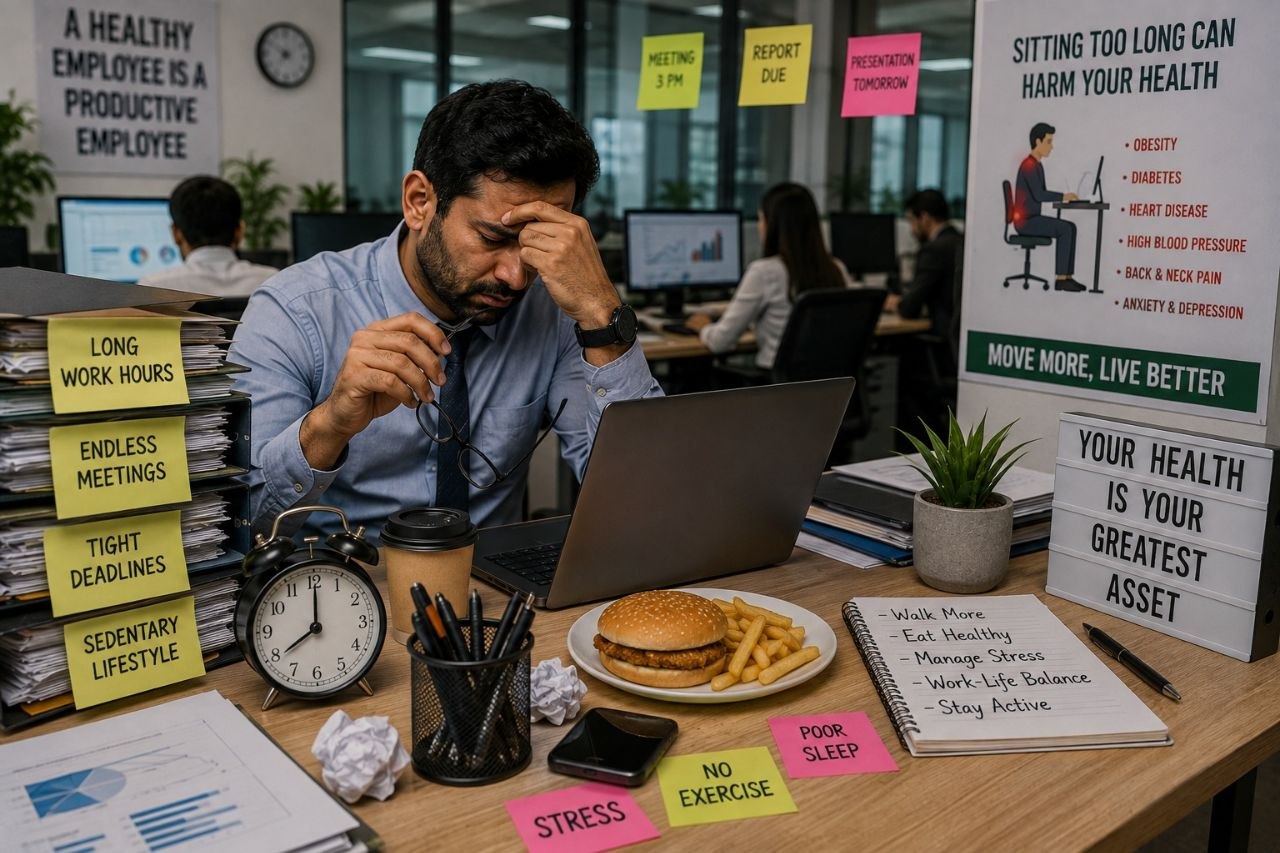
In today’s fast-paced world, success often comes at a hidden cost. Long working hours, endless meetings, screen-based jobs, and tight deadlines have become the new normal in offices, educational institutions, hospitals, and corporate organizations. While these demands may improve productivity, they are also creating a silent epidemic of sedentary lifestyles that is seriously affecting people’s physical and mental well-being.
Many professionals spend eight to twelve hours each day sitting at desks, attending virtual meetings, or working on computers. By the time they return home, exhaustion leaves little energy for exercise, sports, or even a simple evening walk. Over months and years, this lack of physical activity begins to take a toll on the body.
A sedentary lifestyle is now recognized as one of the leading risk factors for several non-communicable diseases. Physical inactivity contributes to obesity, hypertension, type 2 diabetes, high cholesterol, musculoskeletal disorders, anxiety, depression, and cardiovascular diseases. Excess body weight, particularly abdominal obesity, further increases the risk of heart attacks and strokes. Many individuals remain unaware of these risks until a serious medical event occurs.
Cardiologists around the world are reporting an increasing number of heart attacks among young and middle-aged professionals. Unlike previous generations, cardiac problems are no longer confined to older adults. Today, people in their 30s and 40s many with demanding office jobs are experiencing sudden cardiac arrests. Long periods of sitting, chronic stress, unhealthy eating habits, poor sleep, smoking, and lack of exercise together create a dangerous combination that places the heart under continuous strain.
Equally concerning is the impact of excessive workload on mental health. Constant pressure to meet targets, fear of job insecurity, lack of work-life balance, and social isolation can contribute to burnout, anxiety, and depression. While workplace stress alone does not directly cause suicide, it can worsen existing mental health conditions and become one of several contributing factors. Around the world, there have been heartbreaking reports of individuals dying by suicide after prolonged periods of overwhelming occupational stress, highlighting the urgent need for better mental health support in workplaces.
News reports have also documented tragic incidents of employees collapsing from sudden cardiac arrest during office hours or shortly after extended work shifts. In several countries, professionals have died unexpectedly after working prolonged hours with little rest. Although each case has unique medical circumstances, these incidents remind us that ignoring physical and mental health can have devastating consequences.
Educational institutions are not immune to this problem. Teachers, researchers, administrative staff, and students often spend prolonged hours sitting in classrooms, laboratories, or offices. Academic pressure, deadlines, and digital learning have significantly reduced opportunities for physical movement. Similarly, employees in banks, IT companies, call centers, government offices, and healthcare institutions frequently experience long working hours with minimal physical activity.
The good news is that many of these health risks are preventable. Small lifestyle changes can make a significant difference. Standing up every 30–60 minutes, taking short walking breaks, using stairs instead of elevators, stretching during work hours, and engaging in at least 150 minutes of moderate physical activity each week can substantially improve health. Balanced nutrition, adequate hydration, sufficient sleep, and regular health check-ups are equally important.
Organizations also have an important role to play. Employers should encourage wellness initiatives, provide opportunities for physical activity, promote flexible work practices where appropriate, and foster a culture that values employee well-being alongside productivity. Mental health counselling, stress-management programs, and supportive workplace policies should become essential components of every institution rather than optional benefits.
Health is the foundation upon which every career and every dream is built. No deadline, promotion, or financial achievement is worth sacrificing one’s physical or mental well-being. As society embraces technological advancement and professional excellence, it must also recognize that movement is not a luxury it is a biological necessity. Investing even a small amount of time each day in physical activity can reduce the risk of chronic diseases, improve mental health, and ultimately save lives.
The modern workplace should not only be a place where people earn a living, but also one where they are empowered to live healthier, longer, and more fulfilling lives.
Comments are closed.