

Shoiab Mohmmad Bhat
“History always offers another chance to choose a different path. The hope must remain simple: less conflict, more dialogue, and a future where the next generation is remembered for what it built, not for the wars it inherited.”
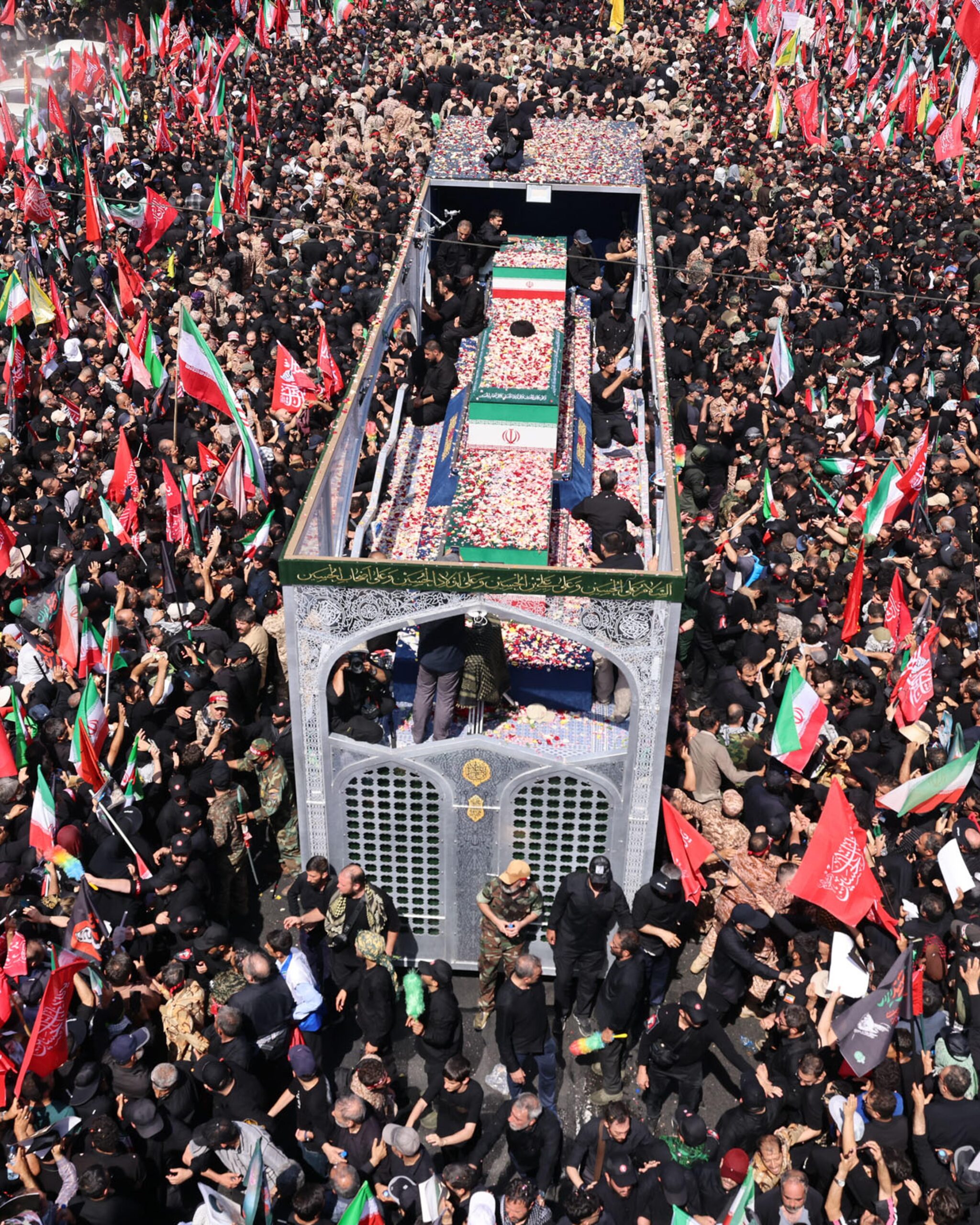
The funeral ceremonies of the late Ayatollah Ali Khamenei in Iran became much more than a moment of mourning. Millions of people came out on the streets to say goodbye to a leader who had remained at the centre of Iranian political and religious life for decades. For many, it was a deeply emotional occasion. For others watching from outside Iran, the huge gathering also raised questions about the country’s future and the changing situation in the region.
The sight of large crowds filling the streets was itself remarkable. People travelled from different places to become part of the funeral procession. Many carried photographs, flags and religious banners. There was grief, anger and uncertainty, but there was also a strong feeling of togetherness.
At difficult moments, people often forget their smaller differences and think about the larger concerns facing their country. Something similar appeared to be happening in Iran. Even some people who had earlier criticised the country’s institutions expressed solidarity during the funeral period. It did not mean that every disagreement had suddenly disappeared. Rather, the circumstances had created a moment when national concern became more visible.
Reports suggested that representatives from more than 100 countries were expected to attend the funeral ceremonies. This was also significant. Every country has its own reason for maintaining relations with Iran. Some share borders or regional concerns. Others have economic, cultural, religious or strategic connections. Therefore, it would be wrong to describe every visiting delegation as an ally of Iran.
Still, their presence carried a message. In today’s interconnected world, no major country can be ignored forever. Iran has faced sanctions, diplomatic pressure and serious economic challenges for many years. Despite all this, it continues to remain an important country in West Asia.
Its location alone gives it considerable importance. Iran is connected with the Gulf, Central Asia, Afghanistan and wider Eurasia. The Strait of Hormuz is one of the world’s most sensitive maritime routes. Any serious tension involving Iran can have consequences far beyond its borders.
This is why the funeral was closely watched across the world.
Normally, a funeral is a time when foreign representatives arrive, offer condolences and leave. In Tehran, however, the ceremonies also became a reflection of Iran’s history and identity. The prayers, processions and religious traditions showed how deeply faith and public life are connected in Iranian society.
The ideas of sacrifice, patience and resistance have long occupied an important place in Iran’s political and religious language. During difficult periods, these ideas are repeatedly recalled. For ordinary people, religious teachings may also provide comfort when they face fear and uncertainty.
There were reports and discussions about Qur’anic verses being recited in the presence of different foreign delegations. Some commentators tried to interpret these verses as political messages. Such interpretations need to be treated carefully unless there is clear official confirmation.
However, one thing is certain. Religion has a strong place in Iranian public life. A Qur’anic verse can be understood as a message of patience, hope, warning or courage, depending upon the circumstances and the listener. This is not unique to Iran. Across the world, communities often return to their religious traditions during periods of loss.
The funeral was taking place at a time when the region was again facing serious military tension. Reports of strikes and counter-strikes created fear that the conflict could spread further. U.S. Central Command said it had struck 170 targets across Iran over two days in response to Iranian attacks on commercial ships in the Strait of Hormuz.
There were also reports of strikes around Bushehr, the Iranian port city that hosts the country’s nuclear power plant. Iranian state media denied that the nuclear facility itself had been hit. Iranian reports said people had been killed and many others wounded in the latest attacks.
Iran, in turn, launched attacks towards several countries in the Gulf region. Missiles were reportedly intercepted in several places. Jordan also reported interceptions over Oman.
These developments are worrying because wars rarely remain limited to maps and military statements. Behind every report of an attack are ordinary families. Parents are waiting for their children; people are trying to reach hospitals and workers are worried about whether they can return home safely.
We often discuss war through numbers: how many missiles were launched, how many targets were hit and how much military equipment was destroyed. But the human cost is much harder to calculate.
This is why diplomacy is so important.
Only days before the latest escalation, Washington and Tehran had reportedly been engaged in talks following a memorandum of understanding signed on June 17. The hope of dialogue now appears to have suffered because of renewed tensions surrounding the Strait of Hormuz.
Whenever talks collapse, it is easy for leaders on all sides to return to strong words. Strong words may satisfy public anger for a short time, but they rarely provide long-term solutions.
The history of West Asia has already shown what prolonged conflict can do. Generations have grown up watching wars, displacement and instability. Countries have spent huge resources on military operations while ordinary people continue to struggle with unemployment, inflation and uncertainty.
Iran is also facing its own internal and economic difficulties. A large funeral gathering cannot remove those challenges. Millions of people on the streets do not mean that every Iranian agrees on every political issue. No society is that simple.
Iran has young people with aspirations. They want education, employment and a secure future. Families are concerned about rising costs and economic pressures. There are debates within Iranian society about politics, social life and the direction of the country.
These realities should not be ignored while discussing the funeral.
At the same time, the ability of a society to come together during a difficult period should also be understood. Unity does not always mean complete agreement. Sometimes it simply means recognising that the future of a country is a shared responsibility.
The international delegations attending the ceremonies also reflected the changing nature of world politics.
Pakistan’s presence showed the importance of regional relationships and neighbourhood diplomacy. China continues to see Iran as an important part of its wider economic and Eurasian engagement. Russia and Iran have developed closer relations while both face pressure from Western countries.
Countries from Central Asia, the Caucasus and the Gulf also have practical reasons to remain engaged with Tehran. Geography cannot be changed. Neighbours may disagree, but they still have to find ways to communicate.
India’s presence deserves attention as well.
India and Iran have old cultural and historical connections. In modern times, the relationship has also developed around trade, connectivity and regional interests. Chabahar Port remains important for India’s access towards Afghanistan and Central Asia.
India has generally tried to maintain relations with different countries in West Asia. It has strong ties with Gulf countries and Israel, while also continuing engagement with Iran. This approach is linked with India’s policy of protecting its own national interests and keeping diplomatic channels open.
In a divided world, such balance is becoming increasingly important.
Countries should not always be forced to choose one side or another. International relations are more complicated than social media debates, where every issue is often reduced to being either “for” or “against” someone.
A country can disagree with another government and continue diplomatic engagement. It can raise concerns while maintaining trade. It can have close relations with two countries that are themselves rivals.
Perhaps this is one of the important lessons of the present time.
The world is changing. The United States remains a major global power. China has expanded its economic influence. India is seeking a larger role in global affairs. Gulf countries are building new partnerships. Russia continues to pursue its own interests, while countries across the Global South increasingly want their voices to be heard.
This does not necessarily mean that a completely new world order has arrived. The situation is much more uncertain.
What we have before us, then, is a world where nations seek alternatives to one another. They want alliances, but they also want autonomy in their decision-making process. They seek security, but they do not want to be beholden to any single superpower.
Such a world can become more unstable if countries stop talking to each other. But it can also create opportunities for a more balanced system if diplomacy is given a genuine chance.
The funeral in Iran, therefore, can be viewed from several angles. It was a moment of grief for millions. It was a religious ceremony. It was a national gathering. It was also an international event attended by representatives with different interests and concerns. There is no need to romanticise it or turn it into a victory for one side.
The more important question is what comes next.
Iran is entering a new phase. Its leadership will face the difficult responsibility of maintaining stability while responding to economic and social challenges. It will also have to decide how to deal with the growing military tension around it.
The U.S., along with other world powers, also needs to make its decisions. Though force can help get instant results, experience has proved that stability cannot be achieved by attacking alone.
Dialogue is difficult, particularly when trust has been damaged. Yet peace has never required people to agree on everything before they begin talking. In fact, dialogue becomes most necessary when disagreements are at their worst.
As millions gathered to mourn Khamenei, the scenes from Iran carried different meanings for different people. Some saw grief. Some saw unity. Others saw political symbolism.
For me, the larger message is about the need to learn from moments of loss.
No leader remains forever. Governments change. Political situations change and even powerful countries face new realities. What remains are the people who have to live with the consequences of decisions made during moments of anger and tension.
West Asia has seen enough funerals.
The region needs opportunities for its young people, better education, economic development and a future where families do not have to live under the constant fear of another war.
The greatest strength of a country should not only be measured by its weapons or military power. It should also be measured by its ability to protect its people, create hope and find a way forward during difficult times.
Millions came to say goodbye. Foreign representatives arrived to offer condolences. Iran paused during a tense period in its history.
Now the funeral will end, the crowds will return home and the ceremonies will become part of history.
But the questions facing the region will remain.
Will anger lead to another long conflict, or will diplomacy return? Will countries continue to speak through missiles, or will they once again sit across a table? The answers will shape the future of Iran and millions of people across the region.
In the end, every moment of mourning carries a lesson. Life moves forward, and history gives societies another chance to choose their path. The hope should be simple: less conflict, more dialogue and a future where the next generation is remembered for what it built, not for the wars it inherited.
Comments are closed.