SRINAGAR, JUNE 19: Hundreds of patients suffering from respiratory illnesses are staring at mounting medical bills and treatment delays as Kashmir’s premier tertiary care hospitals—SKIMS Soura and Chest Diseases (CD) Hospital—remain without functional Diffusing Capacity of the Lungs for Carbon Monoxide (DLCO) testing facilities.
The advanced lung function assessment, critical for diagnosing and managing conditions such as interstitial lung disease (ILD), pulmonary fibrosis, chronic obstructive pulmonary disease (COPD), and pulmonary hypertension, has been unavailable at both institutions for weeks. While government hospitals charge a mere Rs 50 for the test, private diagnostic centres in the valley are fleecing patients by charging up to Rs 2,000.
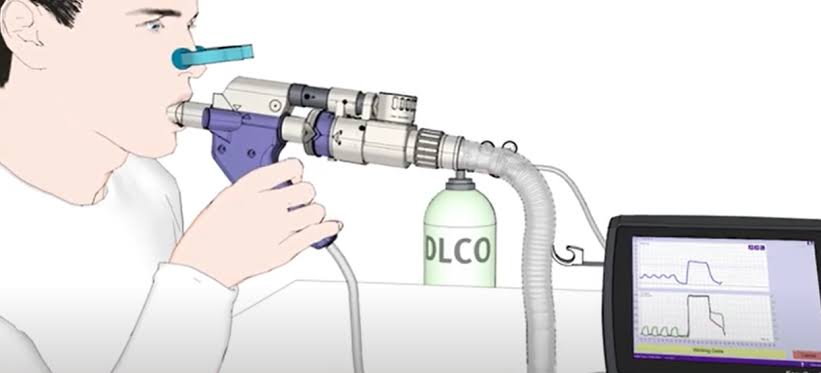
At SKIMS Soura, technicians attribute the disruption to the non-availability of a specialised gas required to conduct the procedure. “We have already informed the administration, but the requirement has not been fulfilled so far,” a technician told Kashmir Convener on condition of anonymity.
The situation is no better at CD Hospital, the valley’s primary respiratory care facility. The lone DLCO machine there has developed a “technical snag” and has remained defunct for the past fortnight.
A pulmonary function technician at CD Hospital said the equipment frequently develops issues and does not function reliably, stressing that the hospital urgently requires a replacement machine to ensure uninterrupted testing services.
Patients and attendants said the absence of the test in government tertiary hospitals has added both financial and logistical burdens.
Javid Ahmad, an ILD patient from North Kashmir, said doctors advised a DLCO assessment and he paid the fee at SKIMS, only to be informed that the gas required for the facility was unavailable. “This is not the first time. I have to usually hear this from the pulmonary technician,” Ahmad said.
Although he managed to afford the test at a private diagnostic centre, accessibility remained a major challenge as the facility was located on the fourth floor of a building on Residency Road, Srinagar. “How is an ILD patient, who already struggles to breathe and often requires oxygen support, expected to climb to the fourth floor?” he asked.
Senior doctors consider DLCO an indispensable diagnostic tool for evaluating post-COVID lung damage, pre-operative respiratory assessment, and monitoring disease progression in chronic lung conditions.
A senior doctor, speaking on condition of anonymity, said that without DLCO capability, physicians sometimes have to rely on indirect assessments or refer patients elsewhere, leading to delayed diagnosis and compromised patient care.
Healthcare observers note that respiratory illnesses are becoming increasingly common in Kashmir due to changing disease patterns, air quality concerns, smoking-related illnesses, and post-infectious complications. They argue that establishing DLCO testing at tertiary centres would strengthen early diagnosis and reduce dependence on outside referrals.
When contacted, Medical Superintendent of CD Hospital, Dr Sameena Saba, confirmed the disruption. “The DLCO machine has developed a technical snag and the test is presently not being conducted. Efforts are underway to rectify the issue, and the facility will be restored soon,” she said.
Dr Saba added that Pulmonary Function Tests are currently being conducted at the hospital and that the process for obtaining administrative approval for the proposed Biosafety Level laboratory is underway.
However, technicians and patients remain sceptical, pointing to the recurring nature of the problem. At SKIMS, the specialised gas shortage is not a one-off occurrence, they claim, forcing patients to either wait indefinitely or shell out hefty amounts at private centres.
Director, SKIMS, did not respond to phone calls despite multiple attempts. When Kashmir Convener approached the PRO at SKIMS, the official sought confirmation and then failed to respond despite repeated follow-ups.
Patients and caregivers have urged authorities to introduce the facility at both SKIMS and CD Hospital and integrate it with existing pulmonary diagnostic services. For now, those battling breathlessness continue to pay the price—literally and figuratively—for a test that should cost no more than a cup of tea at a government hospital.


Comments are closed.