SRINAGAR, JUNE 13: For decades, the conflict in Jammu and Kashmir has been narrated through political speeches, security analyses, and diplomatic cables. Rarely has it been told through the eyes of a child who watched his father being taken away by masked men.
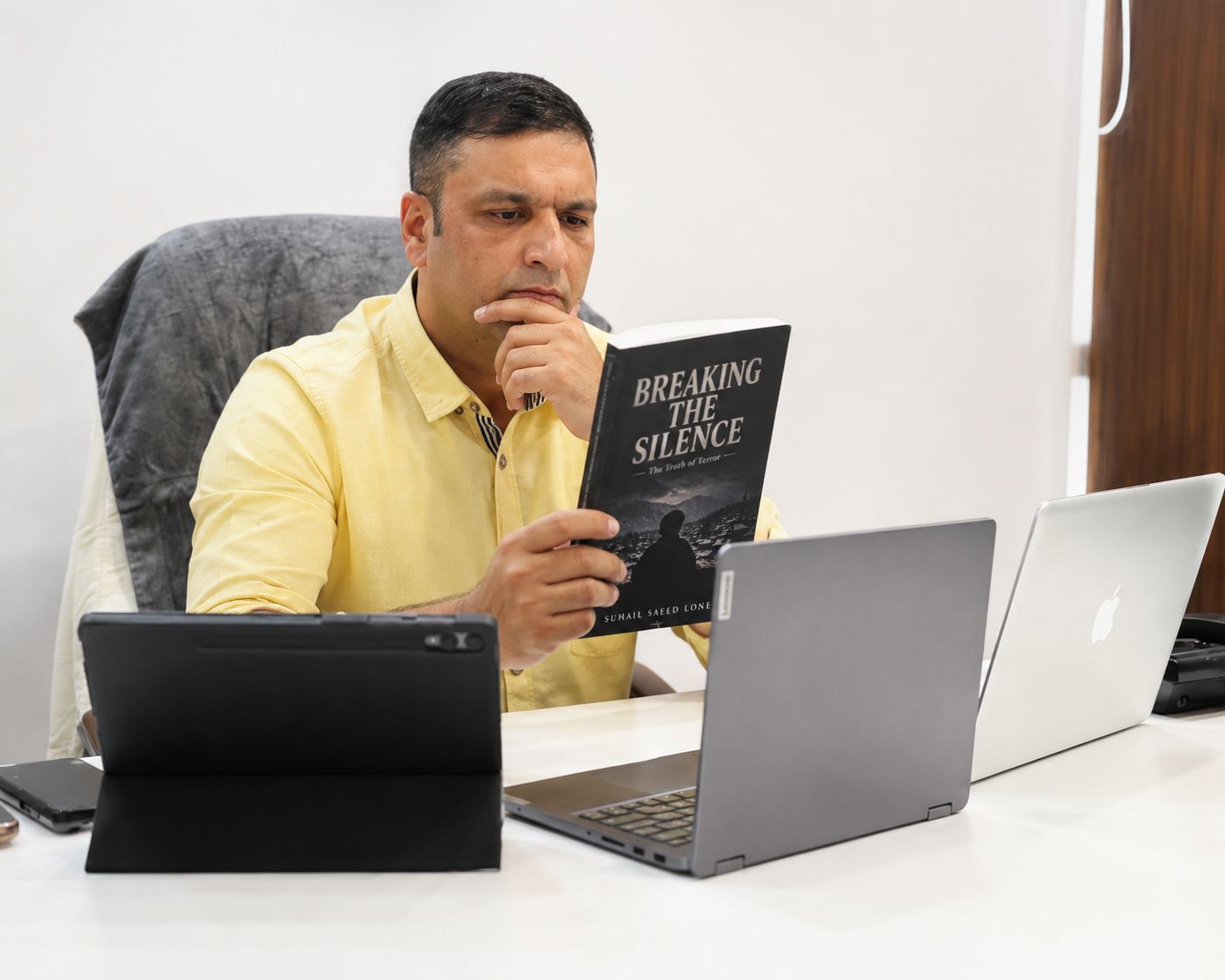
Kashmiri author Suhail Saeed Lone’s upcoming book, Breaking the Silence: The Truth of Terror, attempts to do just that. Part memoir, part indictment of radicalisation, the book traces how a November morning in 1994 changed his life forever—when his father was allegedly kidnapped by Hizbul Mujahideen militants.
“As a young boy, I did not understand politics or ideology. But I understood the fear that entered my home when my father was taken away,” Lone writes.
The book, which has already received a powerful endorsement from Brigadier Ashok Kumar Bakshi (Retd.), is not a political treatise. Instead, Lone describes it as a human story rooted in pain, survival, courage, and hope.
‘The real face of terror’
Lone recounts how days of waiting, unanswered questions, and the dread of every knock on the door became a grim routine. His family, he says, was asked to sacrifice its dignity in exchange for his father’s life—a moment that forever reshaped his understanding of militancy.
“If this is what they call jihad, then we do not want it,” he recalls thinking as a child.
That question, Lone writes, stayed with him for three decades. The book argues that terrorism does not merely end lives; it disrupts childhoods, shatters families, and leaves emotional scars that persist for generations.
According to Lone, Breaking the Silence challenges the misuse of religion and the manipulation of vulnerable individuals for violent purposes. “The reality of terror is not limited to headlines. It is reflected in the suffering of ordinary families who live through such experiences in silence,” he writes.
While the book does not flinch from documenting the human cost of conflict, it also traces Kashmir’s gradual journey towards peace and transformation. Lone highlights the resilience of Kashmiris—how communities continued to pursue education, livelihoods, and stability despite decades of bloodshed and displacement.
He argues that development, dialogue, and awareness are essential tools to counter extremism. “If even one person chooses peace over violence after reading this book, or if even one young mind begins to question hatred, then the book will have achieved its purpose,” Lone states.
The author, who describes himself not as a historian but as a witness, says his objective is not to provoke anger but to encourage reflection. “Some stories are painful to remember, but necessary to tell,” he writes in the concluding pages.
With a foreword praising its “honesty and courage” and a narrative that cuts through political binaries, Breaking the Silence: The Truth of Terror is being positioned as a rare first-person account from a region where the voices of ordinary victims have often gone unheard.


Comments are closed.