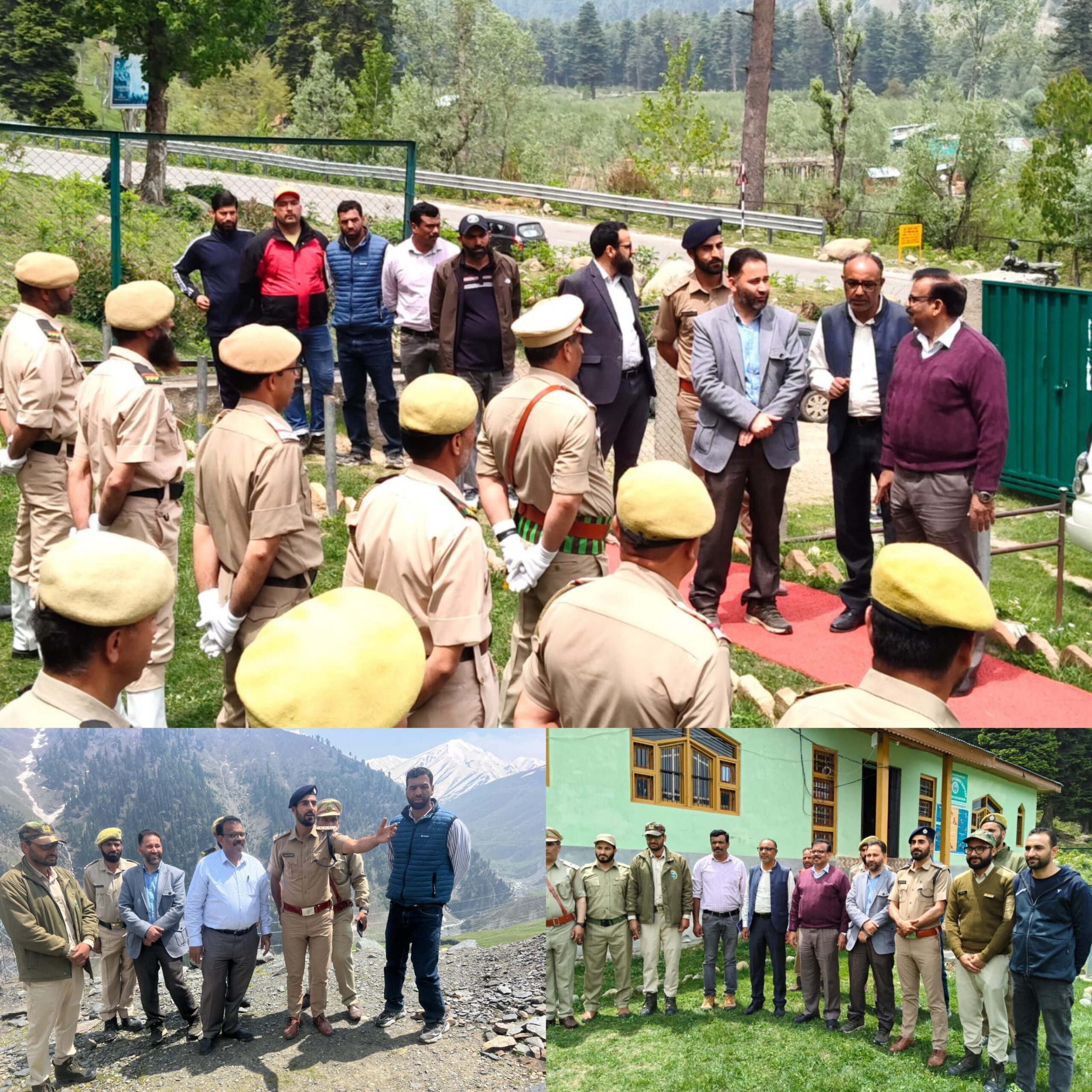
PULWAMA, MAY 11: The Chief Wildlife Warden, J&K, Chaturbhuj Behara (IFS) today visited the Wildlife Division Shopian and conducted an extensive tour and review of important wildlife conservation areas and field establishments in Pulwama and Shopian districts, with a special focus on wildlife management infrastructure, conservation measures, ecological protection, and regulation of activities affecting the fragile environment of the region.
The Chief Wildlife Warden was received at Pinglena, Pulwama by the Wildlife Warden Shopian, Sohail Ahmad Wagay. During the visit, the Chief Wildlife Warden inspected the ongoing construction work of the Wildlife Control Room being established at Pinglena.
While reviewing the progress of the project, the Chief Wildlife Warden emphasized that the Control Room should be completed at the earliest as the facility holds immense importance in view of the increasing movement of wild animals in various areas of South Kashmir. He stated that the establishment of the Control Room would significantly strengthen rapid response mechanisms and enable timely rescue operations, better coordination, efficient monitoring, and prompt mitigation of human-wildlife conflict situations. He further observed that a well-equipped and functional control room would help in minimizing response time during emergency situations involving wildlife movement, thereby ensuring safety of both human population and wildlife.
Subsequently, the Chief Wildlife Warden, accompanied by Wildlife Warden Shopian, Sohail Ahmad Wagay, proceeded towards Hirpora Wildlife Sanctuary. At the Range Office Hirpora, senior officers and officials including the Divisional Forest Officer, Deputy Director FPF, Tehsildar Shopian, representatives of the Border Roads Organisation, and officers of the Jammu and Kashmir Wildlife Protection Department were present to welcome the Chief Wildlife Warden, Chaturbhuj Behara. During the interaction, detailed discussions were held regarding ecological concerns and environmental management issues associated with the Mughal Road passing through the ecologically sensitive landscape of Hirpora Wildlife Sanctuary.
The Chief Wildlife Warden stressed that muck disposal generated from road maintenance and allied activities must be scientifically managed and disposed of strictly at designated locations so that the fragile ecosystem, natural drainage, wildlife habitat, and vegetation of the sanctuary remain protected from environmental degradation. He emphasized that improper dumping of debris and waste material in forest areas and along slopes can adversely affect biodiversity and ecological stability of the region.
The issue of uncontrolled grazing within and around the protected area also came under detailed discussion. The Chief Wildlife Warden directed that grazing activities should be properly regulated and monitored in accordance with the prescribed norms and that no violation affecting the protected area ecosystem should be allowed. He underscored the importance of coordinated action among all stakeholder departments for preserving the ecological integrity of the sanctuary and maintaining sustainable environmental practices along the Mughal Road corridor.
Thereafter, the Chief Wildlife Warden visited Peer Ki Gali, where he inspected the surrounding environment and reviewed the impact of tourist movement and developmental activities in the area. During the inspection, he issued several directions aimed at environmental protection, maintaining cleanliness, preventing ecological disturbance, and ensuring responsible tourism practices in the sensitive high-altitude landscape.
The Chief Wildlife Warden reiterated the need for inter-departmental coordination, scientific management, and active conservation efforts to safeguard the rich biodiversity and fragile ecosystems of the region. He also appreciated the efforts being undertaken by the field staff of the Wildlife Protection Department in conservation, monitoring, and management.


Comments are closed.