


Mohammad Arfat Wani
“When literature emerges from empathy and lived experience,
it becomes more than art —
it becomes a living document of society.”
In Urdu literature, the short story is not only a literary form but a mirror that reflects human consciousness, social truths, and psychological complexity. Through the medium of short stories, individuals and society can view and observe themselves in reality. The role of a short story writer is not only to write stories but to reveal the unseen aspects of life, to voice human emotions, and to keep alive issues that are often forgotten due to social apathy and indifference. Urdu short story writing has always progressed through writers who, instead of relying on their imagination and creativity, used to derive inspiration from life’s bitter and sweet experiences.
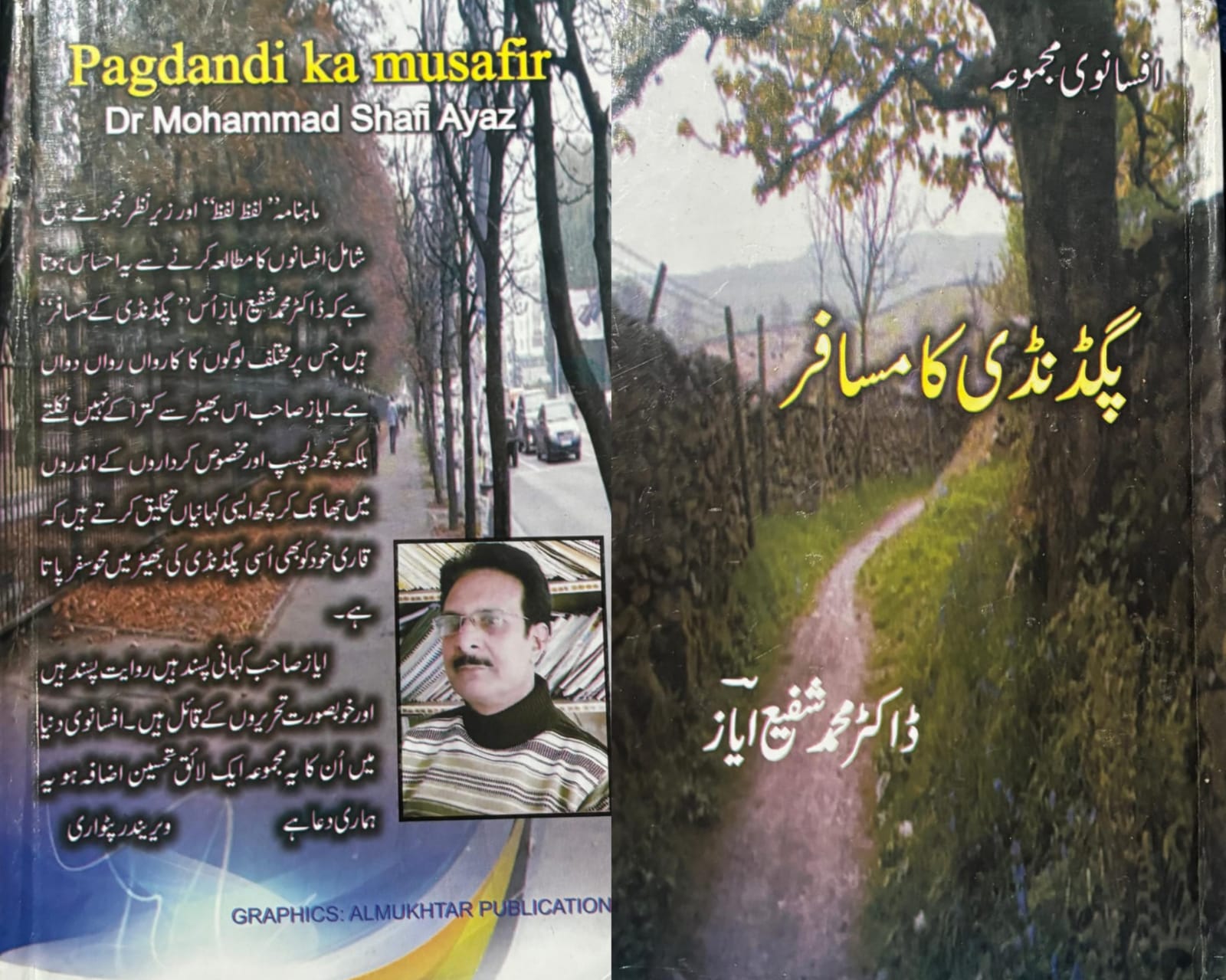
In this tradition of excellence in Urdu short stories, Dr. Mohd Shafi Ayaz’s short stories in his collection “Pagdandi Ka Musafir” are a remarkable and meaningful contribution to Urdu literature. His stories are about individuals who tread on the unseen paths of life instead of the main highways. On these paths of life, pain is silent but profound, truth is simple but touching, and life is ordinary but subtle.
This collection is based on observation rather than imagination. It is quite evident from the beginning of the book and the preface that for the author, literature is not a source of amusement and pastime but a voice for the deprived and oppressed sections of the population whose voices go unheard. Dr. Ayaz admits that this is his second collection of short stories that has been the result of five years of creative work and intellectual contemplation. The purpose of this book, according to Dr. Ayaz himself, is to give voice to silent tears that go unnoticed due to the apathy and injustices of the social system. He writes on page six that the essence of being human is to feel the pain of others and that is the soul of his work.
The title “Pagdandi Ka Musafir” is symbolic. “Pagdandi” does not imply a road but a path, and this path is generally used by people who are undertaking a tough, lonely, and less traveled journey. The title reflects the author’s social commitment and his focus on the unseen aspects of life. The book was published in 2011 by Baji Printers. The price of the book is 350 rupees. The book can be procured from Al-Mukhtar Publications Islamabad, Kitab Ghar Lal Chowk Srinagar, and directly from the author at K.P. Road, Islamabad, Kashmir.
The contents and topics of the book reveal that the author has explored every corner of life and has followed characters wherever they have gone. The table of contents reveals that there are thirty-four stories in the book. These stories include Chalay, Shanakhti Parade, Pagdandi Ka Musafir, English Medium, Dickson, Wakeel Sahab, Hina, Bhaiya, Degree, Class Felo, Ab Aur Nahin, Bhikaran, Alif Khan, Arzoo, Wafa, Bhoot, Ramu, Akela, Soz o Gaddaz, Neelami, Khairat, Wrong Number, Bais e Daam, Kashkool, Jazbaat, Najoomi, Talaq, Khat, Aurat, Zeenat, Aasmani Hoor, Diwan Khana, Abel Chor, and Rasm e Wafa. These stories together form a complete social map. These stories are not just names; they are social ills and behaviors that the author has revealed skillfully. Stories like English Medium, Degree, and Talaq challenge the contradictions in our educational and family systems.
The strongest aspect of this book is the dedication. This establishes the fact that these stories are not just fantasies but realities. Dr. Ayaz dedicates this book to the anonymous individuals whose lives are private and yet real. This establishes the fact that the writer has lived with these marginalized individuals and has observed their pain and suffering. Through his writing, he has become the advocate of these individuals. This writer has a doctorate in management, and this book establishes the fact that knowledge is not just for the purpose of employment but also helps in refining the understanding of the world and the people in it. This book, through its evidence of knowledge, characters, and writing style, has established itself as a worthy contribution to the literature of Urdu short stories.
Renowned writer Veerinderi Patwari has praised Dr. Mohd Shafi Ayaz as a traveler of the hidden paths of life and not just a member of the crowd. He watches the characters in his stories carefully and writes stories that make the reader feel as if he is also a part of the journey. Patwari has also praised Dr. Mohd Shafi Ayaz sahab as a traditionalist and a master of beautiful language. He says that the collection of short stories by Dr. Mohd Shafi Ayaz is a significant addition to Urdu literature. He further says that these stories are not only artistic but also bring a new dimension to the world of stories.
Reading the stories in “Pagdandi Ka Musafir” provides deep insights into human psychology. The story “Chhalay” reflects the selfishness and apathy of human beings, showing that hard work and loyalty do not necessarily ensure justice. “Shanakhti Parade” reflects the contrast between the beauty of nature and the oppression of human beings, thus encouraging the reader to think about the vulnerable sections of society. “Pagdandi Ka Musafir” reflects the cruelties of the powerful and the sufferings of the oppressed, with the death of the protagonist being an example of the injustices in society. “English Medium” reflects the contrast between social status and actual capacity. “Dickson” reflects simplicity and greatness, with love and sacrifice being the underlying theme. “Wakeel Sahab” reflects the ego of human beings and the hierarchy of society, with Hina reflecting the theme of betrayal and the harsh realities of human nature. “Bhaiya” reflects the significance of strong and lasting relationships as opposed to emotions.
Some other stories revolve around various themes such as deception, ethics, and contradictions in society and education. “Degree” provides insight into corruption and bribery in education, which proves that hard work is not enough to bring success. “Class Felo” revolves around the theme of friendship among individuals belonging to different castes. “Ab Aur Nahin” revolves around the theme of contrasts between the innocence of human nature and hypocrisy in society. “Bhikaran” revolves around various themes such as lust, greed, and loyalty. “Alif Khan” revolves around the theme of service to humanity and virtues that go unrecognized. “Arzoo” revolves around various themes such as selflessness and morality. “Wafa” revolves around the theme of hypocrisy in society and deception. “Bhoot” revolves around contrasts between human intelligence and supernatural occurrences.
The book also deals with human struggles, inequality in society, and exploitation. “Ramu” describes simplicity in the lives of poor laborers and exploitation by those in power. “Akeela” describes loneliness and psychological complexity. “Soz O Gaddaz” describes the conflict of an artist with life by showing readers the bitter experiences of life that lead to genuine creativity. “Neelami” describes human vulnerability and indifference of financial systems. “Khairat” describes human simplicity and deception in society. Rang Number describes unexpected coincidences in life and complexity in human relationships. “Baais E Daam” describes pressure in human social appearances. “Kashkool” describes inequality in society and poverty. “Jazbaat” describes religious and social conflicts in human relationships.
These stories leave an impression on human values, morality, love, and societal norms. “Najoomi” focuses on the difference between hard work and destiny and explains the concept of consequences. “Talaq” focuses on parental concerns and harsh realities of life. “Khat” focuses on love and regret. “Aurat” is philosophical in nature as it discusses the existence of women in society. “Zeenat” focuses on human emotions and relationship complexities. “Aasmani Hoor” focuses on moral purity and high character. “Diwan Khana” focuses on empathy and changing hardships of village life. “Abel Chor” focuses on patience and contentment, while “Rasm E Wafa” focuses on unfulfilled desires in relationship dynamics.
Overall, “Pagdandi Ka Musafir” proves that Urdu short story writing is still an effective medium of exploring human psychology and societal realities. Dr. Mohd Shafi Ayaz has created characters who encourage readers to think deeply rather than following the story. The greatest strength of these stories is that they encourage readers to think and question their own lives.
This collection also shows that if a writer looks at the world around him with sincerity, empathy, and insight, literature can be more than just art, literature can be a living document of society. “Pagdandi Ka Musafir” is a very important and meaningful addition to Urdu literature, and this work will remain important for many years to come. I, Wani Arfat offer my heartfelt congratulations to Dr. Mohd Shafi Ayaz Sahab on this thoughtful and creative work of literature, and pray that he may continue to enrich Urdu literature with his insightful, observant, and meaningful works.
Comments are closed.