
Hospitals — A Place of Healing or a Test of Endurance?

Usuf Mir

“We do not ask for special treatment. We ask for dignity, understanding, and respect — because every patient is someone’s entire world.”

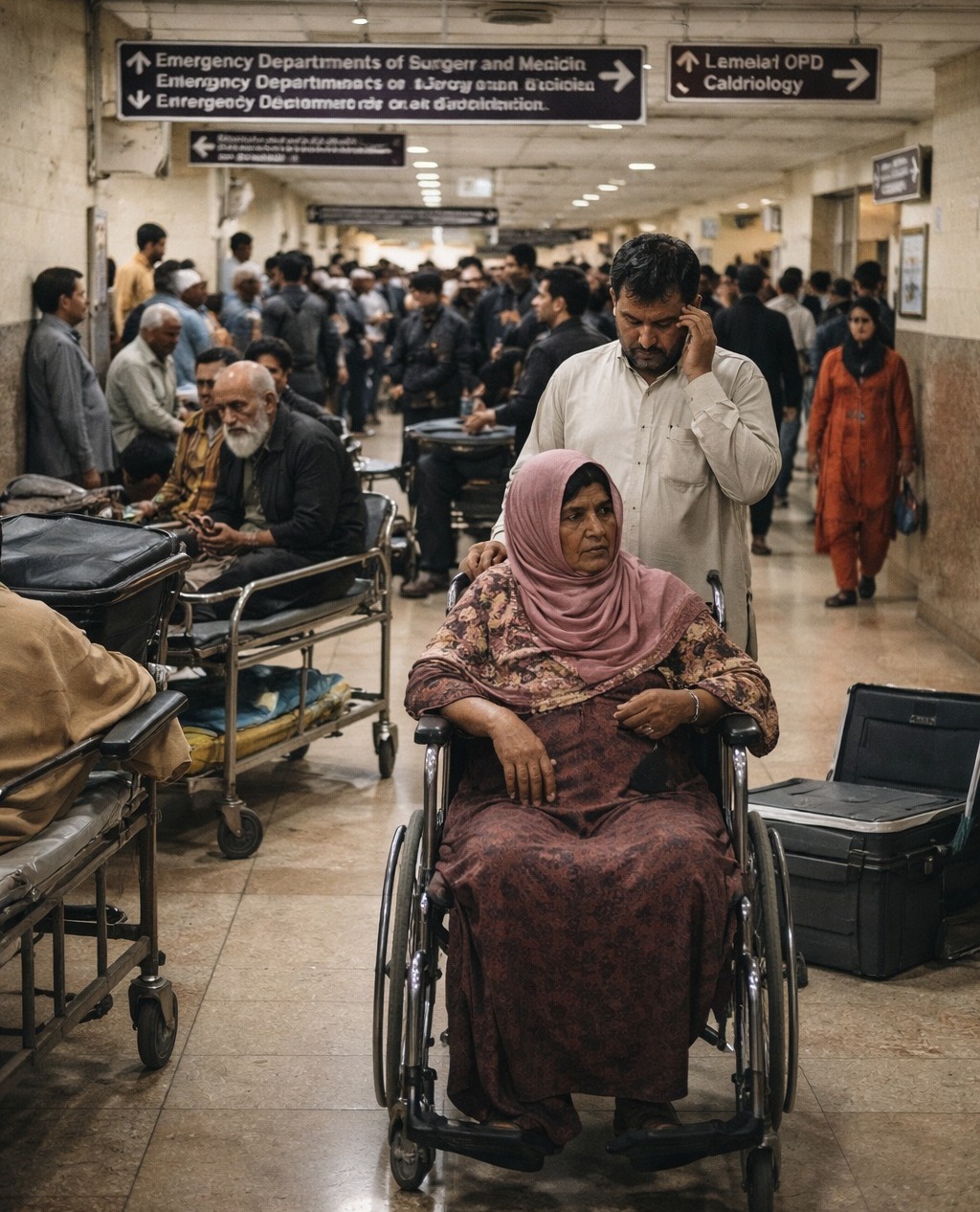
A hospital is a place where people arrive with their last hope. Ideally, it is meant to provide medical care, relief, and compassion. Yet, in many cases, the reality appears quite different. This is not an issue confined to a single institution, but a widespread concern.

However, city hospitals need special attention, particularly major referral centres such as SMHS Srinagar, SKIMS Soura, and JVC Srinagar, where patients are referred from tertiary, district hospitals, and Primary Health Centres (PHCs).

        These hospitals face an overwhelming rush of patients. At any given time, hundreds wait anxiously for treatment. In the absence of a well-organized system, disorder becomes common—long queues, shortage of staff, and lack of proper guidance make the situation more difficult. A patient who is already suffering finds himself further burdened by confusion and helplessness.

          It is important to acknowledge that the government is making efforts in the healthcare sector—improving infrastructure, introducing new facilities, and expanding services. However, considering the increasing flow of patients, much more still needs to be done. Strengthening management systems, increasing manpower, and ensuring efficiency are essential to meet the growing demand.

            One of the most practical and immediate need is  installation of clear and visible signboards at every corridor, crossing, and department. Many patients and attendants face unnecessary stress simply because they are unable to find the right place in time.

          At the same time, issues like recommendation-based access in some cases affect fairness. Along with this, improving staff behaviour, training security personnel, and ensuring active administrative supervision are equally important so that hospitals truly function as places of healing rather than hardship.

Responsibility also lies with the public. People need to adopt precautionary measures, maintain hygiene, and follow a healthy lifestyle. This will not only reduce the risk of illness but also help in decreasing the burden on hospitals.

In the end, a hospital is not just a building—it is a responsibility and a trust. Every action within it can affect a human life. The government, administration, and society must work together to improve the system.

We do not ask for special treatment. We simply ask to be treated with dignity, to be understood in our pain, and to be given the respect every human deserves—because every patient is not just a number, but someone’s entire world.

Author can be mailed at yousufmir555@gmail.com

Comments are closed.