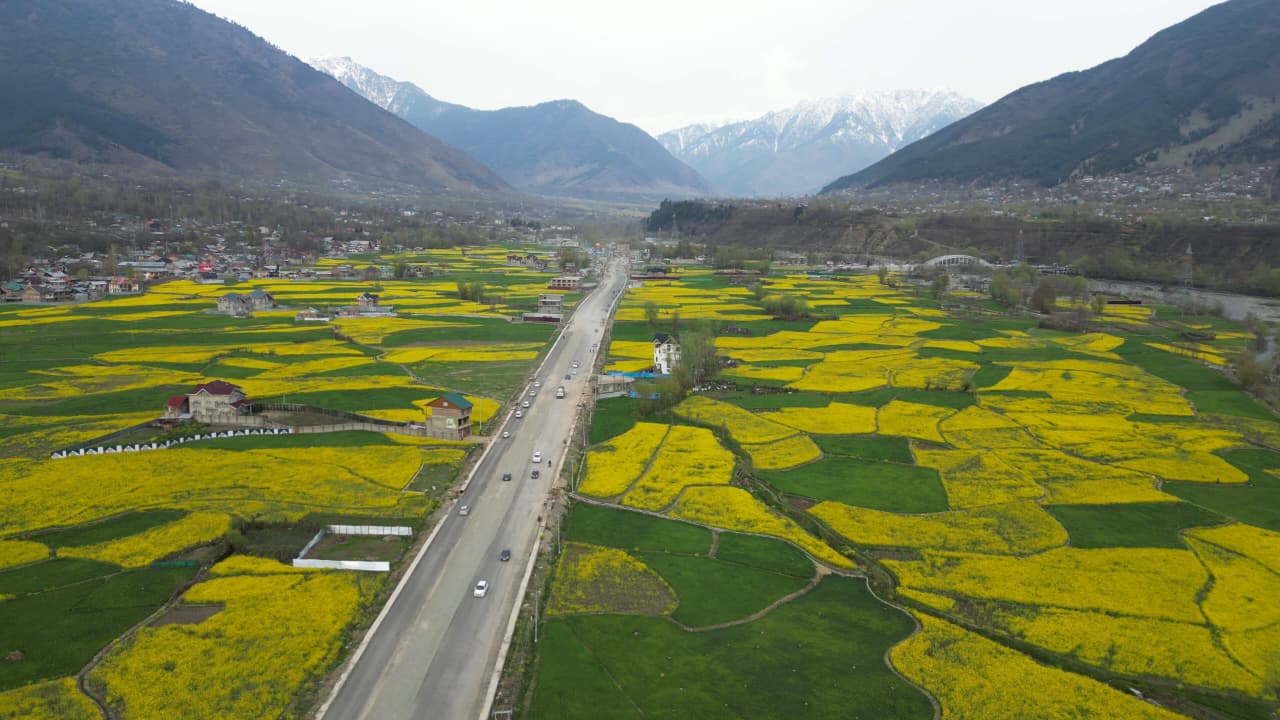
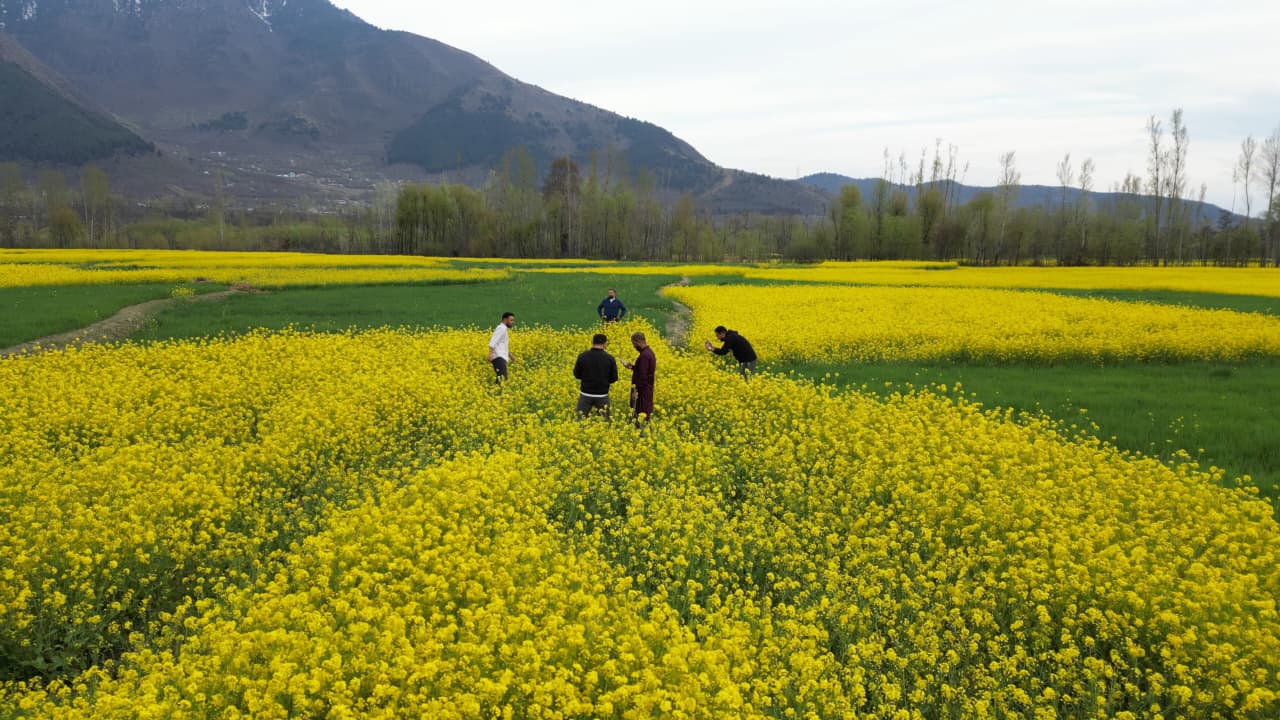
Srinagar, March 25: If the tulip gardens mark the official start of spring in Kashmir, the mustard fields have become its most viral heartbeat. Across the valley, vast tracts of land bursting into bright yellow blooms have replaced the usual tourist backdrops, emerging as the season’s most sought-after locations for everything from pre-wedding shoots to social media reels.
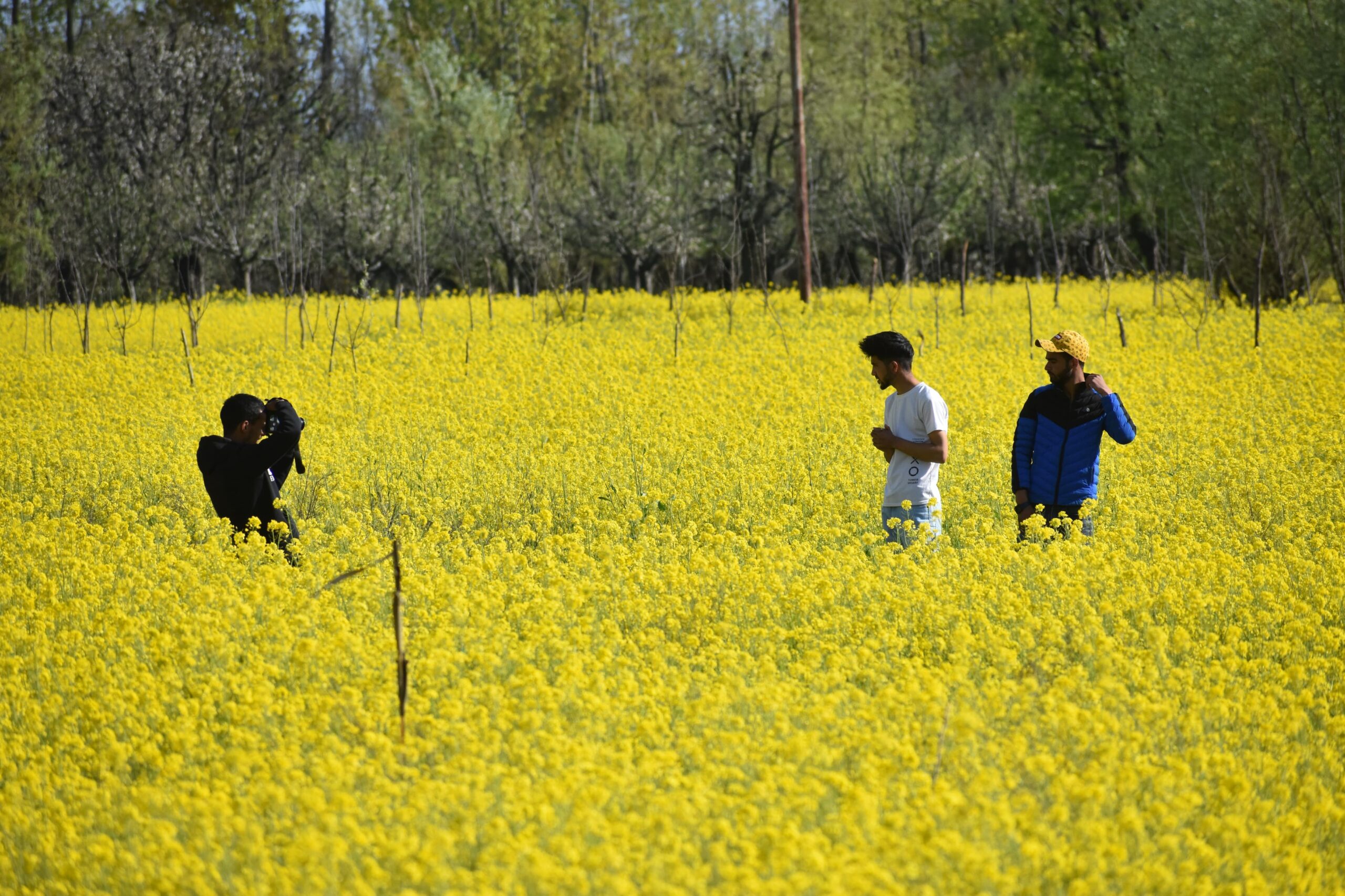
For Sopore-based cinematographer Bilal Ahmed Dar, the trend has translated into a business rush. “After Ramzan, I have been in the field constantly. Most of my clients are couples who want a shoot in the mustard fields—whether in Pampore or Ganderbal,” Dar told Kashmir Convener. “I am getting back-to-back bookings, especially for drone work. For the next week, I am fully booked.”
Dar, who has been capturing the valley’s changing seasons through his lens, said that while Kashmir’s beauty endures year-round, spring and autumn are his most lucrative windows. “Both seasons last for a limited period, but they sustain my business for almost six months. Personally, I love the colour palette of this season—it is vibrant and cinematic.”
The phenomenon is not just visual but economic. The highway stretch from Srinagar to Pahalgam, along with routes to Gulmarg and Sonamarg, is now dotted with tourists stepping out of vehicles to walk into the fields. Locals say the mustard bloom is drawing crowds that once flocked exclusively to Dal Lake or the saffron fields of Pampore.
“These fields are now as popular as Dal Lake,” said Mohammad Sultan, a local from Awantipora. “Every day, we see tourists stopping, walking into the fields, taking pictures, and just enjoying the calm.”
Shahid, a resident of Aishmuqam in Anantnag district, described the almost surreal quality of the experience. “There’s something very peaceful about standing in the middle of these flowers. Tourists say it’s like walking through a painting.”
Sanjay, a tourist from Gujarat, said the mustard fields have redefined the idea of a Kashmir visit. “This is my first time here in spring, and the mustard fields have been the highlight. I felt a deep sense of peace here. This is now my favourite season to visit,” he said.
Priya Sharma, a tourist from Delhi, told Kashmir Convener, “Everyone talks about the snow or the tulips, but this—this feels like Kashmir’s best-kept secret. It’s not just a photo; it’s an emotion standing here. You see these reels on Instagram, but when you actually stand here, the colours are ten times brighter. My husband didn’t want to leave. It felt like we were inside a Van Gogh painting.”
Nadia, a solo traveler from Bangalore, said, “I was worried about crowds, but here, there is so much space. You can find your own corner of yellow and just sit in silence. It’s therapeutic.”
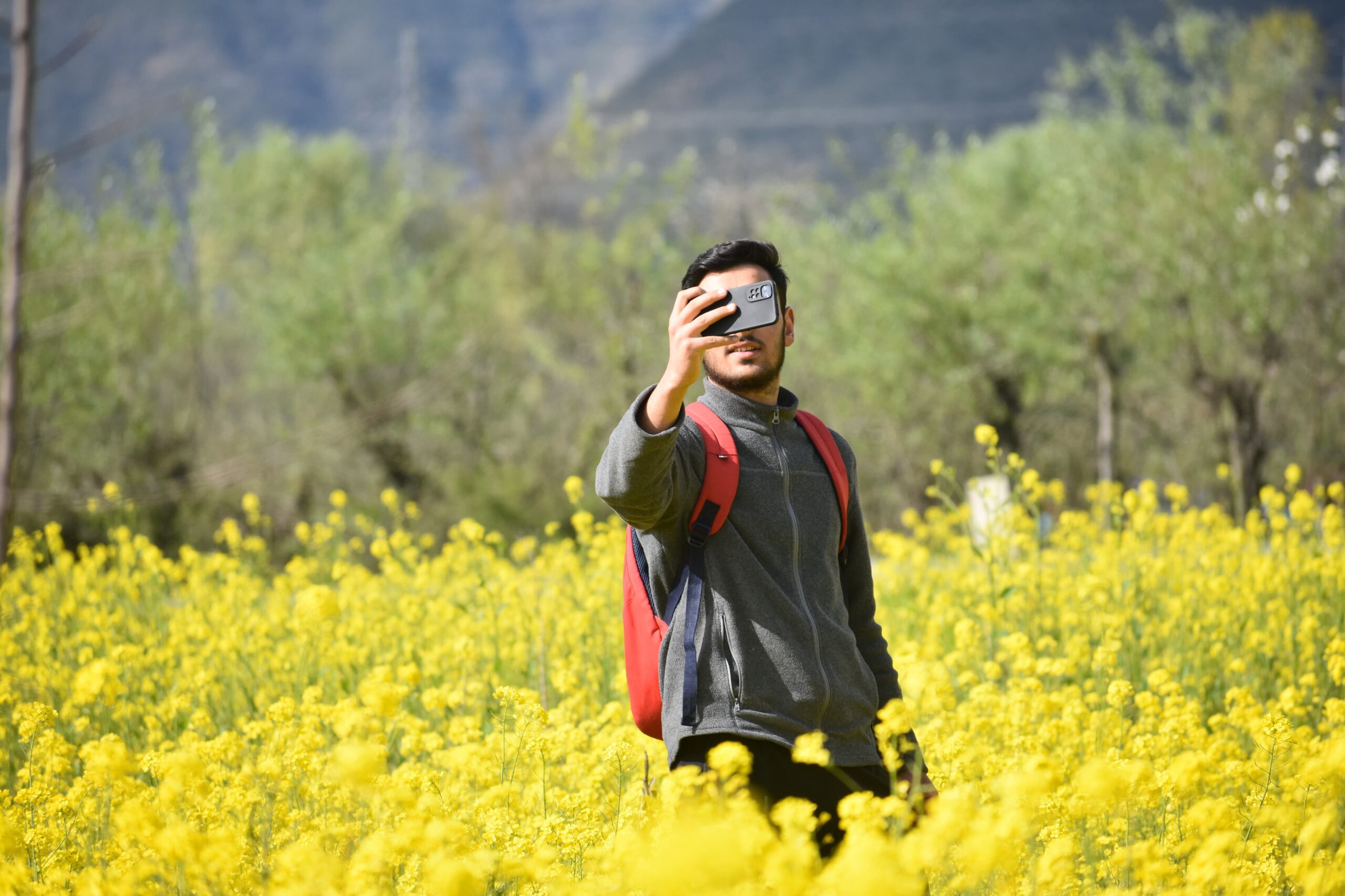
The visual appeal of the yellow-and-green landscapes has also taken over Instagram and YouTube, with visitors and local creators posting reels and drone shots that further amplify the destination’s reach.
Speaking to Kashmir Convener, a senior tourism official said the trend aligns with efforts to promote agro-tourism—a model that merges agriculture with travel. “We are seeing how natural beauty and local agriculture can come together to attract visitors,” the official said. “The mustard bloom is not only beautiful but also showcases the growing success of Kashmir’s farming sector,” he added.
Another official speaking on condition of anonymity, said the mustard bloom presents an opportunity to address the seasonality challenge that has long plagued Kashmir tourism. “We are heavily dependent on the summer and winter seasons. Spring has always been a shoulder season, but this trend shows there is appetite for nature-based experiences beyond snow and tulips. If we can build on this, we could see a more evenly distributed tourist footfall throughout the year,” the official said.
The official added that the corporation is considering incorporating mustard field visits into existing tour packages. “We are in preliminary discussions with travel trade associations to include a stop at select mustard-growing areas in itineraries for spring tourists. This is low-cost, high-impact tourism that benefits everyone—visitors get a unique experience, and locals get a share of the tourism economy,” he said.


Comments are closed.