New Delhi, Feb 24: The Cabinet Committee on Economic Affairs, chaired by Prime Minister Narendra Modi, on Monday approved a ₹1,677-crore expansion of the civil enclave at Srinagar International Airport, a project aimed at ramping up passenger capacity to 10 million annually and easing peak-hour congestion in the Kashmir Valley.
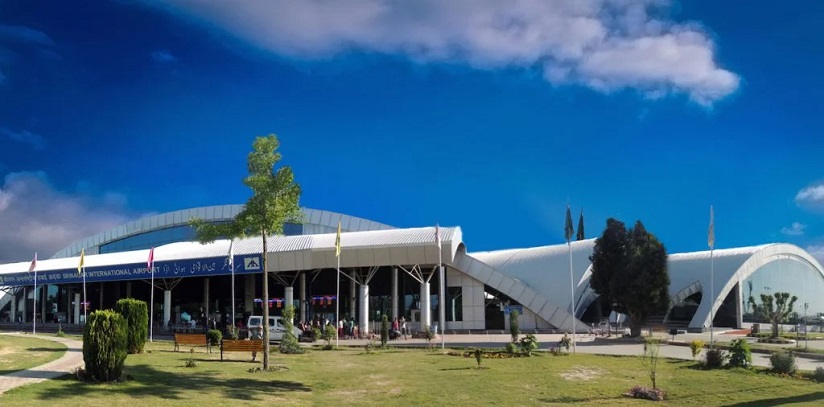
The airport, operated by the Airports Authority of India within the Budgam airbase of the Indian Air Force, was designated an international airport in 2005 and is located about 12 km from Srinagar city.
According to an official statement, the new civil enclave will come up over 73.18 acres and include a terminal building spread across 71,500 square metres — of which 20,659 sq m is existing structure — designed to handle 2,900 passengers during peak hours.
The expanded apron will have 15 aircraft parking bays, including one Code E wide-body bay — nine existing and six proposed — while the 3,658-metre runway will continue to be operated by the IAF. A multi-level car parking facility for 1,000 cars is also part of the project. Barracks for security personnel will be constructed under the approved plan.
Officials said the new terminal is being designed to blend modern architecture with traditional Kashmiri elements, including woodwork and locally inspired motifs, while integrating upgraded security, check-in and passenger processing systems.
The project is targeted to achieve a five-star GRIHA sustainability rating, with provisions such as water harvesting systems, maximised natural lighting and use of locally sourced materials to reduce carbon footprint.
The expansion comes amid a steady rise in air traffic to the Valley over the past few years, driven by tourism and improved connectivity. Government sources said the enhanced capacity is expected to support future growth in passenger traffic, reduce congestion during peak seasons and strengthen Srinagar’s position as a key aviation hub in northern India.
Officials also linked the project to broader economic gains, citing improved access to major tourist destinations such as Dal Lake, Shankaracharya Temple and the Mughal Gardens, and potential employment generation during construction and operations. (PIB)


Comments are closed.