


Rayees Ahmad Kumar
“In just a decade, social media has transformed from a novelty into a defining force of modern life. It has reshaped communication, redefined relationships, and revolutionized the way information travels.”
In the span of just a decade, social media has transformed from a digital novelty into a defining force of modern life. It has reshaped communication, redefined relationships, and revolutionized the way information travels. Distances that once separated people have virtually disappeared, allowing voices from the remotest corners of the world to be heard instantly. Today, an ordinary individual can influence global conversations, build communities, and even create livelihoods—all from a small device held in the palm of their hand.
At its best, social media is nothing short of extraordinary. It has democratized expression, empowered marginalized voices, enabled businesses to flourish, and made knowledge more accessible than ever before. Students learn through online platforms, entrepreneurs build brands without physical stores, and social movements gain momentum through digital solidarity. In many ways, social media has become a powerful instrument of change—one that can educate, inspire, and connect humanity on an unprecedented scale.
Yet, like every powerful tool, it carries within it a paradox.
Behind the polished images and curated stories lies a more complex and often troubling reality. Social media is not merely a reflection of life; it is often a carefully edited version of it. People showcase their happiest moments—the celebrations, achievements, and highlights—while concealing their struggles, failures, and vulnerabilities. This selective representation creates an illusion of perfection, leading many viewers to believe that others are living flawless, fulfilled lives.
The psychological consequences of this illusion are profound. Constant exposure to seemingly perfect lives fosters comparison, and comparison breeds dissatisfaction. Individuals begin to measure their worth against unrealistic standards, often leading to feelings of inadequacy, anxiety, and low self-esteem. What begins as casual scrolling gradually turns into a silent emotional burden.
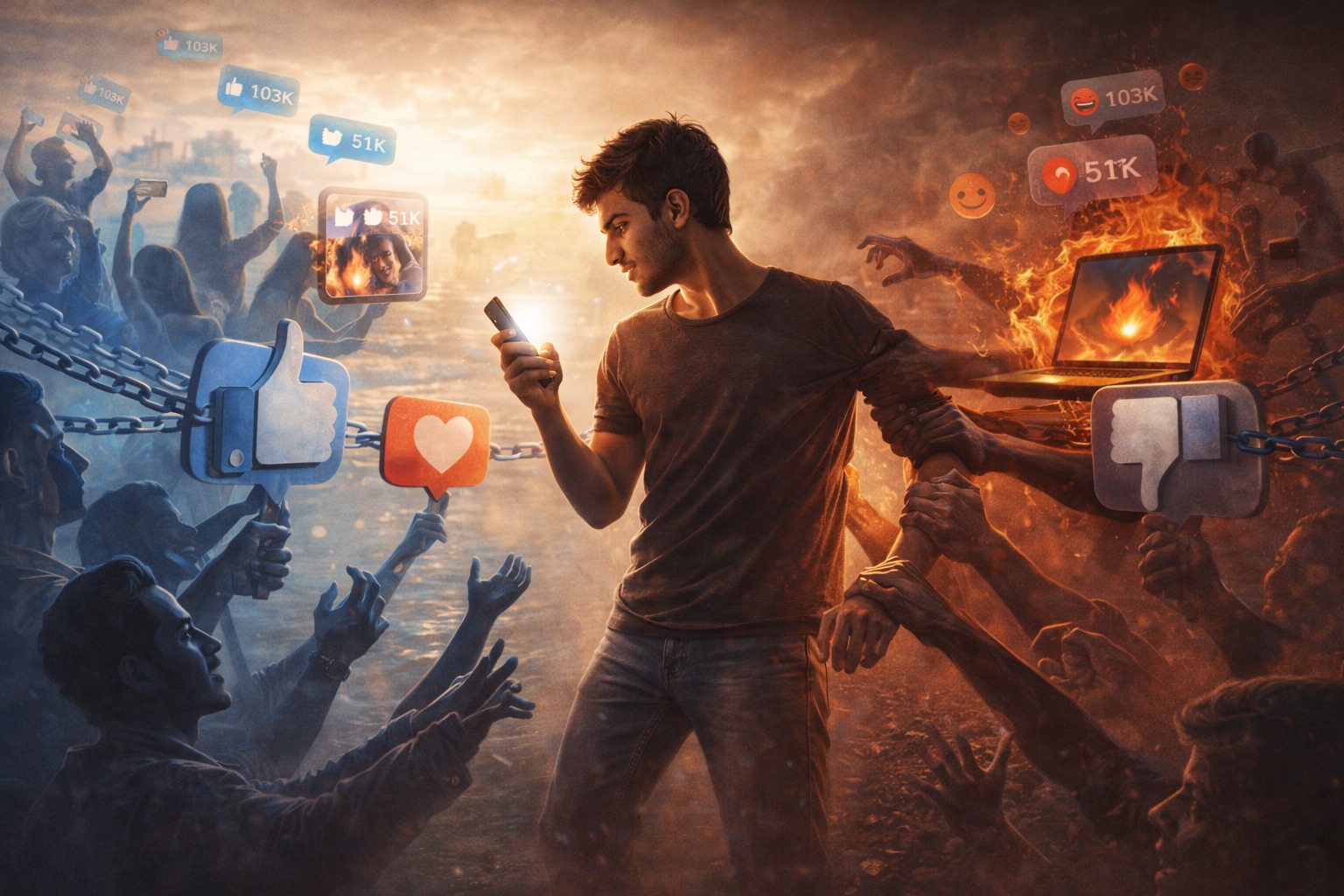
Equally concerning is the growing dependence on digital validation. In today’s online culture, approval is quantified in likes, comments, and followers. Happiness is no longer entirely internal—it is increasingly outsourced to external metrics. A post that gains attention brings momentary satisfaction, while one that goes unnoticed can trigger disappointment. Over time, this creates a cycle where individuals begin to shape their identities not based on their true selves, but on what garners approval from others. Authenticity is sacrificed at the altar of popularity.
Another pressing issue is the silent theft of time. Hours are spent scrolling through endless content—much of it trivial, repetitive, or meaningless. The time that could have been invested in personal growth, meaningful relationships, or creative pursuits is gradually consumed by digital distractions. What makes this loss more alarming is that it often goes unnoticed until its effects become visible in missed opportunities and unfulfilled potential.
Beyond personal impact, social media has also altered the moral fabric of communication. The anonymity and distance provided by screens have made it easier for individuals to express harsh opinions, engage in online hostility, and disregard basic human empathy. Words are typed without reflection, criticism is delivered without sensitivity, and respect is often overshadowed by the urge to react. In this environment, it is easy to forget that behind every profile is a real human being with emotions, struggles, and dignity.
From a moral and spiritual perspective, social media presents an even deeper challenge. While it has enabled the spread of knowledge and positive messages, it has also blurred the line between sincerity and showmanship. Acts of kindness and devotion, once private and deeply personal, are sometimes displayed publicly for recognition. This raises an uncomfortable question: are we doing good for its inherent value, or for the acknowledgment it brings? True virtue lies in intention, not in visibility.
However, it would be simplistic to label social media as entirely harmful. The truth is far more nuanced. Social media, in itself, is neither good nor bad—it is a tool. Its impact depends entirely on how it is used. Like fire, it can illuminate or destroy.
The responsibility, therefore, lies with us.
We must learn to engage with social media consciously rather than compulsively. This means setting boundaries, valuing our time, and being mindful of what we consume and share. It means resisting the urge to compare, choosing authenticity over performance, and remembering that digital approval does not define our worth. It also requires us to practice empathy, respect, and responsibility in our online interactions.
Most importantly, we must not lose sight of reality. The digital world is temporary and often superficial, while real life—with its relationships, experiences, and responsibilities—holds lasting value. The moments we live, the people we connect with, and the actions we take in the real world are what truly shape our lives.
In the end, a sobering truth remains: one day, all of this will fade. The posts, the likes, the followers—they will not accompany us beyond this life. What will remain are our actions, our character, and the sincerity with which we lived.
Social media is, ultimately, a mirror. It reflects what we bring to it. If we use it with purpose, discipline, and integrity, it becomes a powerful ally. If we surrender to its temptations, it can quietly take control.
The question, then, is not whether social media is good or bad. The real question is: are we using social media, or is social media using us?
Comments are closed.