

Aiyan Gulzar
“Women in South Kashmir are emerging as powerful symbols of economic and social transformation by building businesses, entering professional fields, and redefining traditional expectations.”
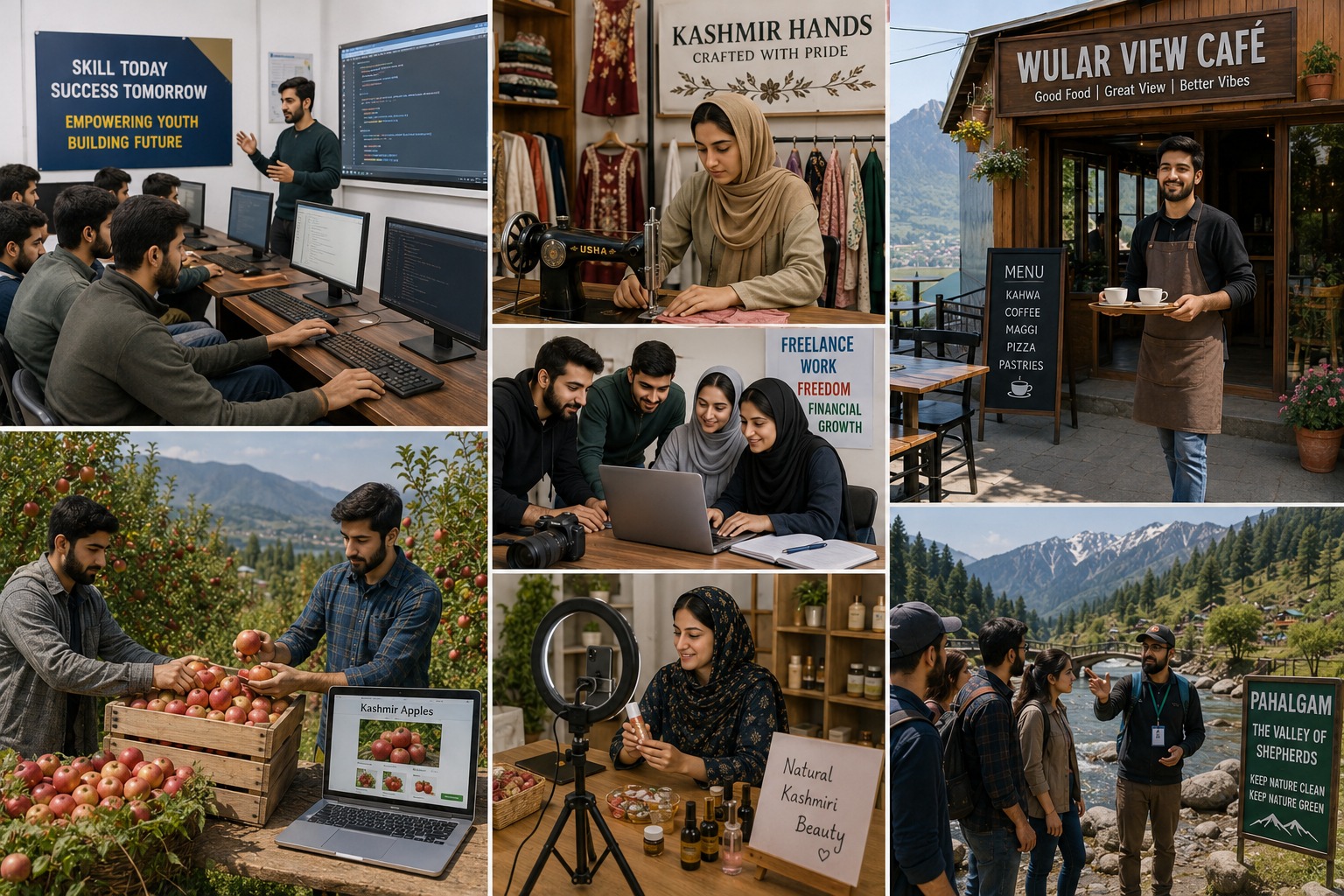
For many years, the youth of South Kashmir lived within a narrow understanding of success where government employment was seen as the only stable and respected career path, and this mindset shaped the ambitions of thousands of students across districts like Anantnag, Pulwama, Shopian, and Kulgam, where families invested their hopes into competitive examinations while alternative professions received little social acceptance, but over the last few years a visible transformation has started emerging as young people are slowly moving beyond traditional expectations and exploring fields connected with technology, entrepreneurship, tourism, agriculture, freelancing, and digital services, which has created a new atmosphere of ambition and self belief among educated youth who no longer want to spend years waiting for limited vacancies, because they now understand that economic independence can also come through innovation, practical skills, and self employment, and this shift in thinking is gradually changing the social fabric of South Kashmir where conversations among young people are no longer restricted to examinations and government recruitment but now include discussions about startups, online businesses, digital marketing, photography, software development, and creative industries that were once considered unrealistic career choices within conservative social settings.
The increasing focus on skill development has become one of the strongest factors behind this change because many young people in South Kashmir are realizing that degrees alone cannot guarantee employment in a rapidly changing economy where practical knowledge and adaptability matter more than theoretical qualifications, and because of this awareness training centers offering courses in computer applications, coding, graphic designing, video editing, communication skills, tailoring, web development, and digital marketing are attracting students from both urban and rural backgrounds who want to build independent careers instead of depending entirely on uncertain job markets, while educational institutions have also started encouraging students to participate in workshops and career programs that expose them to opportunities outside conventional professions, and although many challenges still exist including limited infrastructure and financial difficulties, the willingness among youth to learn new skills reflects a major psychological shift because earlier generations often viewed vocational or technical education as secondary options whereas today’s students increasingly see such skills as powerful tools for financial stability, confidence, and personal growth in a society where employment opportunities continue to evolve rapidly with technology and changing market demands.
Entrepreneurship is also gaining momentum across South Kashmir where many young people are now entering business sectors that previously attracted very little local participation, and while large scale industries remain limited in the region, small businesses and startups have started creating meaningful economic activity that is changing perceptions regarding self employment among educated youth who once believed that business carried too much social and financial risk, because now students and graduates are launching cafés, bakeries, clothing brands, online stores, photography studios, travel agencies, and digital service platforms with the help of social media and growing internet awareness, which has allowed even small ventures to reach customers beyond local markets, while some young entrepreneurs are combining traditional Kashmiri products with modern branding techniques to create businesses connected with handicrafts, organic food, spices, dry fruits, and local art that appeal to wider audiences, and despite difficulties related to investment and market access these initiatives are important because they create employment opportunities for others as well, proving that youth in South Kashmir are slowly moving from the mindset of job seekers toward becoming job creators capable of contributing directly to the local economy and social development.
The rise of freelancing and online work has opened another important chapter in the lives of Kashmiri youth because digital platforms now allow skilled individuals to work with clients from different cities and countries without leaving their homes, which has become especially significant in South Kashmir where limited private sector growth previously restricted career options for talented students who possessed creative and technical abilities but lacked access to broader employment markets, and today many young people are earning through content writing, graphic designing, coding, video production, online tutoring, and social media management after learning these skills independently or through local institutes, while some students use freelancing income to support their education and reduce financial pressure on their families, which has increased confidence among youth who once felt disconnected from global economic opportunities, and this growing digital culture has also encouraged young Kashmiris to become more technologically aware, professionally disciplined, and connected with modern work environments where communication, innovation, and consistency matter greatly, showing that internet based employment can play a major role in reducing unemployment and encouraging self reliance in regions where traditional industries alone cannot absorb the rising educated population.
Women in South Kashmir are also becoming active participants in this changing economic landscape where increasing educational awareness and social exposure have encouraged many young women to pursue careers and business opportunities that earlier generations often struggled to access because of social restrictions and limited professional freedom, and today girls from both towns and villages are running boutiques, beauty salons, online craft stores, baking businesses, tuition centers, and tailoring units while also entering fields like healthcare, teaching, journalism, and digital services with growing confidence, which reflects a gradual but meaningful transformation within society where families are beginning to support the idea of financial independence and professional identity for women, while social media has further helped many young women market their products and services directly to customers without depending entirely on traditional business networks, and although challenges connected with mobility, social pressure, and financial limitations still affect many aspiring female entrepreneurs, the determination shown by these young women is creating powerful examples for future generations because their success proves that empowerment is not limited to education alone but also includes the ability to participate actively in economic and social decision making within communities that are steadily adapting to modern realities.
Agriculture and tourism continue to hold enormous employment potential for the youth of South Kashmir because these sectors remain deeply connected with the region’s natural resources, cultural identity, and economic structure, and unlike earlier generations many educated young people are now approaching these traditional sectors with modern ideas focused on innovation, technology, branding, and sustainable growth that can increase profitability while creating local employment opportunities, especially in horticulture where apple farming supports thousands of families and young growers are experimenting with better packaging systems, cold storage facilities, direct online marketing, and organic cultivation methods that help them compete more effectively in larger markets, while tourism destinations such as Pahalgam, Kokernag, Daksum, Verinag, and Aharbal continue attracting visitors and generating opportunities in hospitality, guiding services, photography, transportation, and travel management for local youth who possess communication skills and cultural knowledge valuable within the tourism industry, and if proper infrastructure, investment, and promotional efforts continue developing these sectors responsibly they can significantly reduce unemployment in South Kashmir while also strengthening local economies, preserving cultural heritage, and encouraging youth to build careers connected with the resources and beauty already present within their own homeland.
Comments are closed.