


Mohammad Hanief
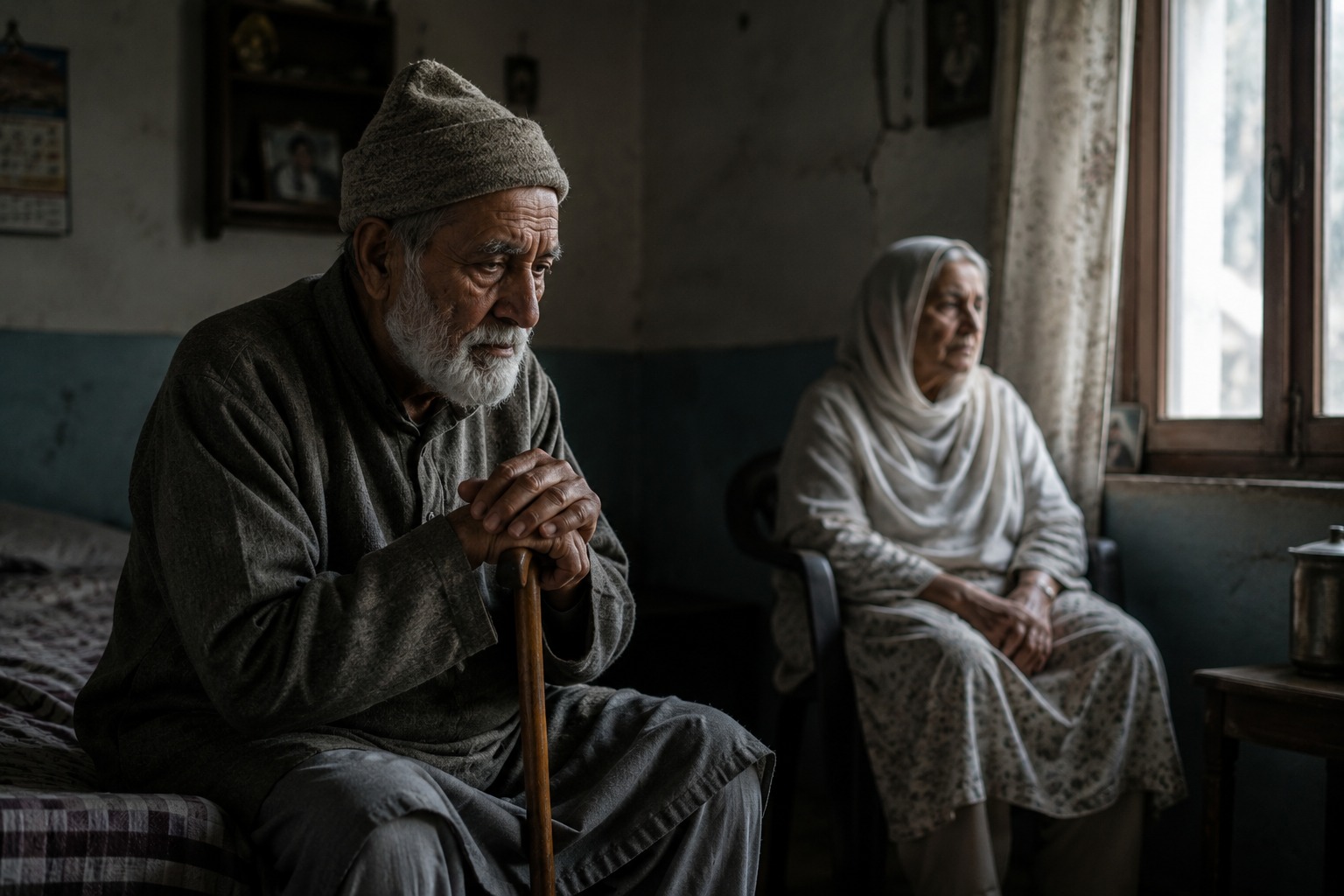
“In Jammu and Kashmir, where elders were once regarded as the emotional and spiritual backbone of the household, the increasing loneliness of aging parents reflects a painful transformation in social and family life.”
At a time when the world is witnessing rapid technological advancement, economic competition, social unrest, and changing lifestyles, one silent crisis is steadily emerging within families and societies across the globe — the neglect of elderly parents. Despite modern comforts and material progress, millions of senior citizens today are living in loneliness, emotional pain, insecurity, and neglect. This painful reality is no longer limited to distant societies or developed nations alone; it is increasingly becoming visible within our own communities, including Jammu and Kashmir, where respect for elders and strong family bonds have historically formed the foundation of social life.
The care of elderly parents is not merely a personal obligation or cultural tradition. It is a moral duty, a spiritual responsibility, and one of the truest measures of humanity. The way a society treats its elderly reflects the strength of its values, compassion, and moral conscience. Parents dedicate their entire lives to raising their children, sacrificing their comfort, ambitions, and happiness so the next generation can live with dignity and opportunity. Tragically, many parents today find themselves emotionally abandoned at the stage of life when they need support and companionship the most.
Traditionally, Kashmiri society was deeply rooted in collective living, mutual respect, and intergenerational harmony. Joint family systems ensured that elderly parents remained emotionally secure, socially respected, and actively involved in family affairs. Elders were regarded as the emotional and spiritual backbone of the household — a source of wisdom, guidance, experience, and blessings. Their advice was valued in important family decisions, and their presence brought stability, warmth, and unity to the home.
Children grew up under the affectionate care and supervision of grandparents and elderly family members, learning lessons of patience, discipline, compassion, and humanity. Caring for aging parents was never considered a burden; rather, it was viewed as an honor and a natural responsibility.
However, the social fabric of modern society has changed significantly over the years. The rise of nuclear families, migration for education and employment, increasing financial pressures, and the growing influence of materialistic lifestyles have weakened traditional family structures. Young people increasingly move to distant cities or foreign countries in search of opportunities, leaving their aging parents behind in villages, towns, and urban homes where silence and loneliness often replace companionship.
In Jammu and Kashmir, this issue carries even deeper emotional significance because the elderly generation has already spent decades enduring difficult social, political, and economic circumstances. Many aging parents in the region lived through years of uncertainty, emotional stress, conflict, and financial hardship. Despite these challenges, they struggled tirelessly to educate their children, support their families, and secure a better future for the next generation.
Today, many of these same parents are spending their old age in emotional isolation.
Some wait endlessly for a phone call or visit from their children. Others silently suppress their pain because they do not wish to become a burden on their families. Their suffering often remains hidden behind patience, prayers, and quiet endurance. Many elderly people continue to live with dignity despite carrying deep emotional wounds caused by neglect and loneliness.
One of the greatest tragedies of the modern age is that material success has increasingly replaced emotional responsibility. Children may provide financial support, medicines, or comfortable living arrangements, yet fail to provide what elderly parents truly need most — emotional presence, compassion, respect, and genuine human connection.
Old age is not merely a period of physical weakness; it is also a deeply sensitive emotional phase of life. As parents grow older, they become more vulnerable to loneliness, anxiety, fear, and emotional insecurity. They seek affection, companionship, reassurance, and the comforting feeling that they still matter within the family they once sacrificed everything for.
A few moments of sincere conversation, sitting beside them during meals, listening patiently to their stories, asking about their health, or involving them in family discussions can provide immense emotional comfort. Such gestures may appear small, yet for elderly parents they hold enormous emotional value. Emotional care cannot be replaced by money or expensive gifts; it requires time, patience, affection, and genuine concern.
The changing global situation further highlights the importance of family bonds and elder care. Across the world, societies are facing increasing mental health crises, loneliness, social fragmentation, and the collapse of traditional family systems. In many countries, elderly people spend their final years in care homes, separated from children and grandchildren. Economic progress has often failed to provide emotional peace and stable family relationships.
These realities should serve as a warning for societies like ours. When family values weaken, society itself begins to weaken from within.
In Jammu and Kashmir, where religion and culture strongly emphasize respect and compassion towards parents, neglecting elderly parents represents not only a social problem but also a moral and spiritual crisis. Islamic teachings repeatedly stress kindness, humility, and patience towards parents, especially during their old age. Serving one’s parents is regarded among the greatest acts of virtue and a source of blessings in both this world and the hereafter. The prayers of parents hold immense value, and their satisfaction is considered a path toward divine mercy.
Unfortunately, modern lifestyles, social competition, and digital distractions have created emotional distance even among family members living under the same roof. Today, many people spend hours on mobile phones and social media while ignoring the emotional needs of elderly parents sitting quietly beside them. This silent neglect leaves deep psychological scars. Many elderly individuals suffer from depression, loneliness, anxiety, and feelings of worthlessness, yet rarely express their pain openly.
Healthcare challenges further intensify the hardships of old age. Aging naturally brings physical complications such as arthritis, diabetes, heart disease, hearing problems, vision loss, and reduced mobility. In Jammu and Kashmir, harsh winters, difficult terrain, limited healthcare facilities in remote areas, and rising medical expenses make life even more difficult for senior citizens.
Therefore, caring for elderly parents requires far more than occasional financial support. It demands continuous emotional involvement, compassion, patience, and responsibility. Children must ensure proper healthcare, nutritious food, emotional companionship, safe living conditions, and above all, dignity and respect for their parents.
Elderly parents do not seek luxury or sympathy. Most simply desire love, attention, inclusion, and reassurance that they are not forgotten. They are the same people who stayed awake during their children’s illnesses, worked tirelessly during difficult times, sacrificed personal dreams, and silently endured hardships for the happiness and success of their families.
Society as a whole must also play its role. Educational institutions, religious centres, social organizations, and community leaders should actively promote awareness regarding elder care and family responsibilities. Schools must teach children the importance of respecting parents and valuing elderly family members from an early age. Governments and institutions should strengthen welfare systems for senior citizens through improved healthcare access, pension support, and community canters where elderly individuals can remain socially active and emotionally connected.
Technology, when used wisely, can help reduce emotional distance. Video calls, digital communication, and online healthcare consultations can help children living far away remain connected with their parents. However, technology should strengthen human relationships — not replace them.
A society that honours its elders preserves its humanity, culture, and moral identity. A society that neglects them gradually loses its soul.
In Jammu and Kashmir, where traditions of spirituality, compassion, and family honour still survive despite changing times, there remains hope that communities can revive and strengthen the culture of caring for elderly parents with sincerity, dignity, and responsibility.
Ultimately, every individual must remember one unavoidable reality: old age is the destiny of all human beings. The compassion, respect, and care we offer our parents today will shape the kind of society we ourselves will inherit tomorrow.
Comments are closed.