


Mudasser Wani
“Nature has gifted Bandipora what many regions across the world spend billions trying to create—an enormous water body surrounded by breathtaking landscapes, rich biodiversity and picturesque villages. If developed with vision and planning, Bandipora can become a model of sustainable tourism development for the entire region.”
Tourism Development Holds the Key to Employment Generation and Economic Revival in Bandipora. For decades discussions about tourism in Kashmir have largely revolved around a few established destinations such as Gulmarg, Pahalgam, Sonamarg and Dal Lake. While these places have undoubtedly contributed to the tourism economy of Jammu and Kashmir there exists another region with immense and largely untapped tourism potential that has remained on the margins of developmental priorities despite possessing extraordinary natural, ecological, historical and religious assets. That region is the Bandipora District of Kashmir. Nestled on the banks of the majestic Wullar Lake and surrounded by forests, mountains, historical sites and religious shrines, Bandipora possesses all the ingredients required to emerge as one of the most attractive eco-tourism and cultural tourism destinations not only in Jammu and Kashmir but across South Asia. Yet, despite its tremendous potential, tourism development in Bandipora has remained far below expectations, depriving thousands of local youth of employment opportunities and limiting the district’s economic growth.
At a time when unemployment continues to be one of the biggest challenges facing the younger generation, tourism stands out as perhaps the most promising industry capable of creating sustainable livelihoods while preserving the region’s unique environmental and cultural heritage. If developed with vision and planning Bandipora can become a model of eco-tourism driven development that benefits local communities, protects natural resources and generates large scale employment.
The biggest asset of Bandipora is undoubtedly the world famous Wullar Lake, the largest freshwater lake in India and one of the largest freshwater lakes in Asia. Nature has gifted Bandipora what many regions across the world spend billions trying to create an enormous water body surrounded by breathtaking landscapes, rich biodiversity and picturesque villages. Wullar Lake is not merely a water resource, it is a natural wonder with immense tourism potential.
The lake offers opportunities for Boating tourism, Water sports activities, Bird watching tourism, Eco-tourism circuits, Photography tourism, Nature trails, Waterfront recreational zones, Floating restaurants and cafes, Cultural tourism festivals, Lakefront accommodation facilities and what not if explored with vision.
Despite possessing these advantages, tourism infrastructure around Wullar remains inadequate compared to its potential. The lake has the capability to attract domestic and international tourists throughout the year if properly marketed and developed. Many world famous tourist destinations owe their economic success to lake based tourism as I have personally witnessed in Hyderabad like in the case of Hussain Sagar Lake, an artificial Lake in Hyderabad City. Bandipora possesses a natural resource of similar significance, yet its economic benefits remain largely unrealized.
Recent developments such as Nishat Park and Wullar Vintage Park have demonstrated the public’s growing interest in visiting Bandipora. These recreational spaces have become popular destinations for families and visitors seeking natural beauty and leisure activities on weekends and in evening time. However these parks should be viewed not as isolated projects but as the foundation of a broader tourism strategy. Around these attractions authorities can develop adventure tourism facilities, Children’s entertainment zones, Heritage interpretation centers, Food courts featuring local cuisine, Craft villages showcasing local artisans, Cycling tracks,
Cultural performance venues. Such integrated development would encourage tourists to spend more time in Bandipora thereby increasing local spending and creating employment opportunities.
Chattarnar Forest Campus, A Hidden Gem of Ecological Tourism. Among Bandipora’s lesser known treasures is the historic Kashmir Forest Training School established in 1911. This institution stands among the oldest forestry training establishments in the country and represents an important chapter in the environmental history of Jammu and Kashmir. The school is located within the beautiful Chattarnar Forest Campus, a serene landscape covered by lush forests and rich biodiversity. The campus serves not only as a training center for foresters from different parts of Jammu and Kashmir but also as a living laboratory for environmental research and forest conservation.
With proper planning Chattarnar can emerge as a major eco-tourism destination through forest interpretation centers, Nature education camps, Biodiversity parks, Guided forest walks, Environmental awareness programs, Student tourism initiatives, Research tourism, Wildlife observation points .
Globally forest tourism has become a major contributor to rural economies. Bandipora possesses a ready-made destination that can be transformed into a premier ecological tourism hub while maintaining environmental sustainability.
Religious Tourism, An Underutilized Opportunity.
Bandipora is blessed with several revered religious sites that attract devotees from various parts of Kashmir. Prominent among them are Aham Sharief Zaarayat , Shrine of Kousar Afghan, Baba Shukur-ud-Din Shrine, Baba Sahib Malangam, Dade-Mooj Bathoo, Shardha Temple Kaloosa, peer Baba Razdan Top Bandipora. These shrines carry immense spiritual, historical and cultural significance. Religious tourism is one of the fastest-growing segments of the tourism industry worldwide. Every year millions travel to spiritual destinations, generating substantial economic activity.
With improved infrastructure such as Better roads, Parking facilities, Tourist information centers, Accommodation facilities, Sanitation infrastructure, Heritage conservation projects Bandipora can significantly expand its religious tourism sector and create year round economic opportunities.
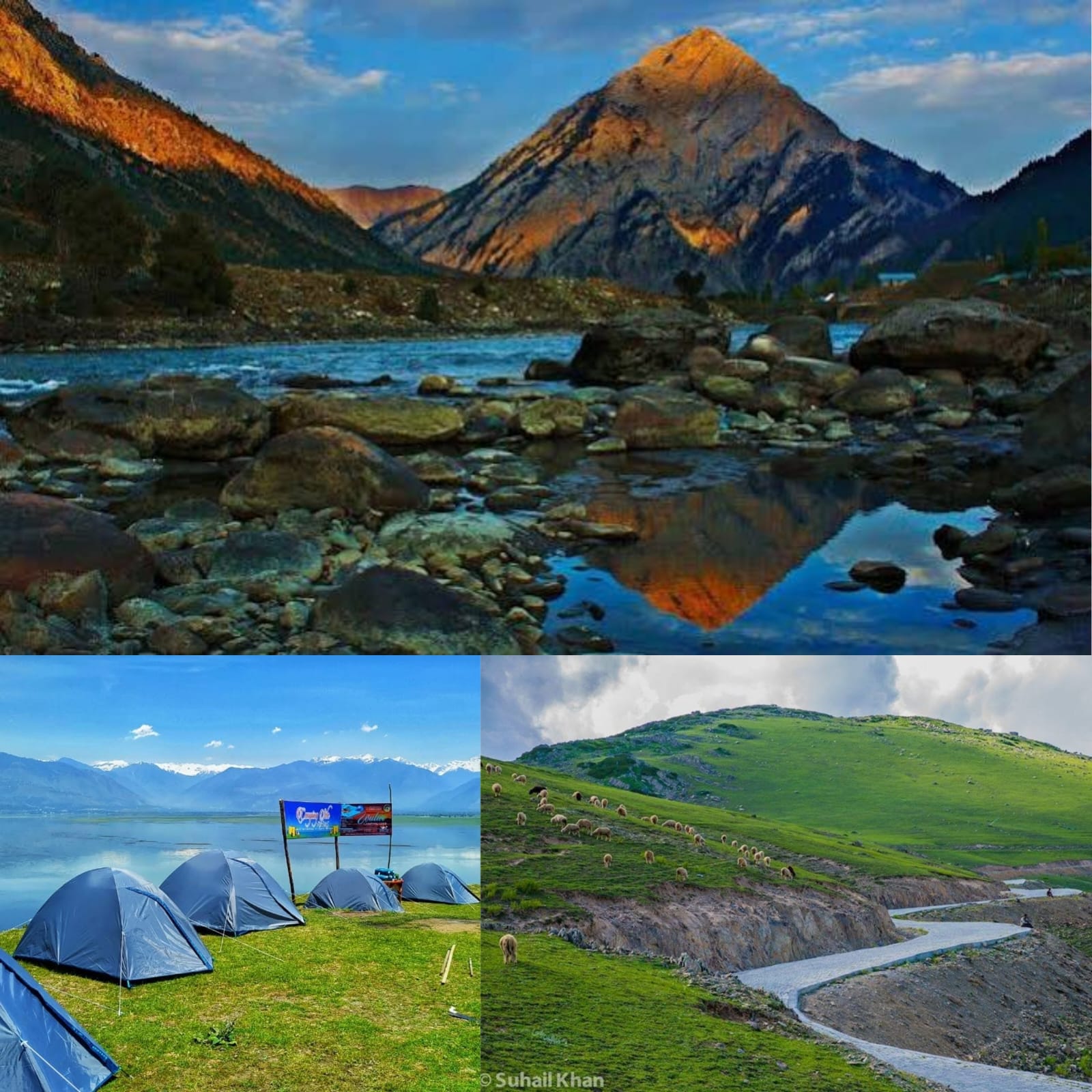
Authwatoo the Recent Tourism Declared Destination : The Emerging Tourism Destination Athwatoo has already been identified and declared as a tourist destination. The area offers magnificent natural beauty, tranquil surroundings and panoramic views that appeal to both local visitors and tourists from outside the region. However, declaration alone is insufficient. Development must be accompanied by investment in infrastructure, marketing and visitor facilities. Athwatoo can become a hub for Eco-tourism, Camping, Trekking, Family recreation, Nature photography, Rural tourism experiences.
The site has the potential to complement Wullar tourism and become part of a larger tourism circuit within Bandipora district.
Learning from the Success Story of Gurez
The remarkable transformation of Gurez Valley provides a valuable lesson. A few years ago, Gurez was relatively unknown outside Jammu and Kashmir. Through focused promotion, improved connectivity and strategic tourism planning, Gurez has emerged as one of India’s most admired offbeat tourist destinations. The valley has received national recognition and has become a source of livelihood for many local residents. Hotels, guest houses, homestays, restaurants, transport services and tourism related businesses have flourished.
The success of Gurez demonstrates that tourism can become a powerful engine of economic development when pursued with commitment and vision. However while Gurez has rightly received attention, Bandipora town and the vast Wullar region have not witnessed similar levels of focused development despite possessing equally significant tourism resources. The time has come to replicate and expand the Gurez model across Bandipora.
Tourism as the Most Effective Employment Generator, One of the strongest arguments for tourism development in Bandipora is its potential to create employment. Unlike many industries that require large-scale investments and specialized infrastructure, tourism creates jobs across multiple sectors simultaneously.
A thriving tourism economy generates employment for Hotel workers, Tour guides, Boat operators, Taxi drivers, Restaurant owners, Photographers, travel agencies, Event managers, Handicraft sellers, Local artisans, Cultural performers, Adventure tourism operators, Homestay owners, Food vendors, Digital content creators. Every tourist visiting Bandipora contributes directly or indirectly to the local economy. Even small-scale tourism initiatives can support hundreds of families, while large-scale development can create thousands of jobs.
For a district facing growing unemployment and limited industrial opportunities tourism offers perhaps the most practical and environmentally sustainable solution. Bandipora Needs a Comprehensive Tourism Master Plan as Bandipora’s tourism development cannot rely on isolated projects. What is needed is a comprehensive tourism master plan covering Infrastructure Development, Lakefront development, Roads and connectivity, Parking facilities, Tourist amenities, Signage systems, Public transport, Eco-Tourism Development, Conservation-based tourism, Sustainable visitor management, Environmental protection measures, Heritage Conservation Preservation of historical sites, Documentation of cultural heritage, Restoration projects, Skill Development, Hospitality training, Tourism management courses, Language training, Entrepreneurship programs, Marketing and Promotion, National tourism campaigns, Digital marketing, Tourism festivals, private Sector Participation, Investment incentives, public-private partnerships and Tourism entrepreneurship schemes.
Environmental Conservation and Tourism Can Go Together Some may argue that tourism could threaten the fragile ecology of Wullar and surrounding forests. However, modern tourism planning emphasizes sustainability. Eco-tourism models across the world demonstrate that conservation and tourism can complement one another. In fact tourism often provides the financial resources necessary for environmental protection. With proper regulations, visitor management systems and conservation measures, Bandipora can develop tourism without compromising its natural heritage.
A Vision for the Future !!
Imagine a Bandipora where thousands of tourists visit every week to experience the beauty of Wullar Lake, explore Chattarnar Forests, visit historical and religious sites, enjoy eco-tourism activities and experience the warmth of local hospitality.
Imagine local youth employed as guides, entrepreneurs, hospitality professionals, conservation workers and tourism operators.
Imagine thriving markets, flourishing businesses and increased household incomes.
Imagine Bandipora emerging as one of South Asia’s most admired eco-tourism destinations. This vision is not unrealistic. Natural resources already exist. The heritage already exists. The tourism assets already exist. What is required is political will, administrative commitment, strategic planning and sustained investment.
Bandipora today stands at a critical crossroads. The district possesses some of the most extraordinary tourism resources in Jammu and Kashmir including the majestic Wullar Lake, the historic Kashmir Forest Training School, the beautiful Chattarnar Forest Campus, Athwatoo, numerous religious shrines and a rich cultural heritage. Yet these assets remain underutilized. For a district that is largely landlocked and has limited industrial opportunities, tourism represents the most viable pathway towards economic growth, employment generation and social development.
The success of Gurez has shown what focused planning can achieve. There is no reason why Bandipora cannot achieve even greater success.
If given the attention it deserves, if tourism infrastructure is developed on priority and if eco-tourism is promoted scientifically and sustainably, Bandipora has the potential not only to become one of the leading tourist destinations in Jammu and Kashmir but also to emerge as a globally recognized model of sustainable tourism development.
The future of Bandipora does not lie merely in preserving its natural treasures, it lies in transforming those treasures into opportunities that create jobs, strengthen the local economy and improve the quality of life for generations to come.
Comments are closed.