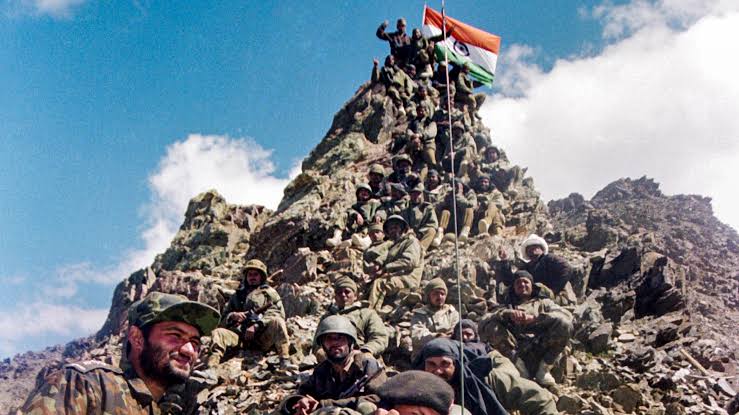
Twenty-seven years after the guns fell silent in the icy heights of Kargil, the conflict remains far more than a chapter in military history. It continues to shape India’s strategic thinking, defence planning and national security doctrine. Every Kargil Vijay Diwas is rightly an occasion to honour the extraordinary courage of soldiers who climbed near-vertical cliffs under enemy fire to reclaim Indian territory. But remembrance alone does not capture Kargil’s true legacy. The war fundamentally altered how India understands preparedness, deterrence and military modernisation.
The official narrative released ahead of the 27th Kargil Vijay Diwas appropriately highlights this evolution. It traces the journey from the battlefield lessons of 1999 to an increasingly integrated, technology-driven and self-reliant defence ecosystem. Beyond commemorating heroism, it presents Kargil as the catalyst for structural reforms that continue to redefine India’s military capabilities.
The Kargil conflict exposed uncomfortable truths. Intelligence gaps allowed Pakistani intrusions across the Line of Control to go undetected until local shepherds raised the alarm. The armed forces displayed unmatched courage, but victory came at enormous human cost because soldiers were compelled to assault heavily fortified enemy positions located on commanding heights. While India ultimately prevailed without crossing the LoC, the war revealed deficiencies in surveillance, joint planning, logistics and higher defence management.
Instead of treating these shortcomings as temporary failures, successive reforms sought to institutionalise the lessons.
Perhaps the most significant outcome has been the gradual move towards integrated military planning. The creation of the Chief of Defence Staff (CDS) and the Department of Military Affairs represented long-pending reforms aimed at improving coordination between the Army, Navy and Air Force. For decades, India’s armed services largely operated through parallel command structures. Kargil demonstrated that future conflicts would demand seamless jointness rather than service-specific responses.
Today, integrated doctrines, theatre-level planning and unified procurement processes are increasingly becoming central to India’s defence architecture. While the transition remains incomplete, the institutional direction is unmistakable.
Equally important has been the transformation of India’s defence industrial policy.
For years after independence, India’s military strength depended heavily on imported platforms. Kargil reinforced the strategic risks of external dependence during periods of conflict. The response over the past decade has been an unprecedented push towards indigenous defence manufacturing under the broader framework of Atmanirbhar Bharat.
The numbers reflect this shift. Defence production has reportedly risen from ₹46,429 crore in 2014-15 to ₹1.78 lakh crore in 2025-26, while defence exports have expanded dramatically, reaching over ₹38,000 crore. Positive indigenisation lists, the Srijan portal, defence industrial corridors in Uttar Pradesh and Tamil Nadu, and greater private sector participation all represent attempts to convert India from one of the world’s largest arms importers into a significant defence manufacturing nation.
This transition is about more than economics. Indigenous capability enhances strategic autonomy, shortens supply chains during crises and strengthens long-term national security.
Military modernisation has also accelerated across every domain.
The induction of indigenous platforms such as INS Vikrant, Arjun Mk IA tanks and advanced naval vessels reflects steady improvements in domestic capability. Simultaneously, acquisitions like Rafale fighters, Apache attack helicopters and Chinook heavy-lift helicopters have substantially enhanced operational readiness.
However, perhaps the most profound transformation lies in the changing character of warfare itself.
Kargil was fought with infantry assaults, artillery barrages and conventional air operations. Contemporary conflicts increasingly involve drones, cyber operations, artificial intelligence, space-based surveillance and precision-guided weapons.
India has responded by investing heavily in emerging technologies.
The successful development of anti-satellite capabilities under Mission Shakti, progress in hypersonic missile technologies, AI-enabled battlefield systems, advanced air defence networks, long-range precision missiles and indigenous drone capabilities demonstrate an expanding technological horizon. These investments acknowledge an important strategic reality: future wars will be won not merely by numerical superiority but by technological advantage and decision-making speed.
The growing emphasis on multi-domain warfare reflects this understanding.
Equally notable is India’s evolving operational doctrine.
Kargil itself was characterised by considerable strategic restraint. India consciously chose not to cross the Line of Control despite significant provocation, earning widespread international support for its measured response.
In the decades since, however, India’s approach to cross-border terrorism has visibly evolved.
The 2016 Surgical Strikes, the 2019 Balakot air strikes and, more recently, Operation Sindoor following the Pahalgam attack represent a doctrine that increasingly favours calibrated, intelligence-driven and time-bound military responses against terrorist infrastructure while attempting to manage escalation.
Whether one analyses these operations from a strategic or political perspective, they indicate that India’s security establishment has become more willing to employ military options below the threshold of conventional war.
The evolution reflects changing assessments of deterrence rather than simple shifts in political rhetoric.
Another enduring lesson from Kargil concerns logistics and infrastructure.
The conflict demonstrated that roads, tunnels, advanced landing grounds, communication systems and high-altitude logistics are as critical as weapons themselves. Since then, border infrastructure has received unprecedented investment through expanded road networks, strategic tunnels, forward airfields and improved surveillance systems.
Infrastructure development in border regions now serves both civilian and military purposes, enhancing mobility while reducing deployment times during emergencies.
Human capital has also remained central to reform.
The Agnipath recruitment model represents one of the most debated recent initiatives. Supporters argue that it creates a younger, technologically adaptable force while reducing long-term pension liabilities and improving military agility. Critics raise legitimate concerns regarding post-service employment, regimental cohesion and operational continuity.
Regardless of where one stands in this debate, it illustrates a broader willingness to rethink traditional military structures in response to changing strategic requirements.
The Kargil legacy is therefore not static remembrance but continuous adaptation.
Yet military strength alone cannot guarantee national security.
Kargil also reaffirmed the importance of intelligence integration, diplomatic credibility and political decision-making. Modern conflicts increasingly blur the boundaries between conventional warfare, cyber threats, information operations, economic resilience and technological competition.
India’s expanding investments in intelligence coordination, surveillance capabilities, cyber security and defence diplomacy suggest an appreciation that national security today extends far beyond the battlefield.
The country’s growing partnerships across the Indo-Pacific, participation in strategic technology collaborations and emphasis on resilient supply chains all form part of this wider security architecture.
Perhaps the greatest tribute to the soldiers of Kargil lies not only in memorial ceremonies or commemorative expeditions but in ensuring that the institutional lessons of their sacrifice continue to shape national policy.
Military history offers few guarantees. Every generation confronts new forms of conflict requiring new responses. The battlefields of tomorrow will almost certainly differ from the icy heights of Dras, Tololing and Tiger Hill. Artificial intelligence, autonomous systems, quantum technologies and cyber warfare may define future conflicts more than mountain infantry assaults.
But the underlying principles remain unchanged: preparedness, adaptability, technological innovation, professional leadership and unwavering national resolve.
Kargil demonstrated that courage can recover lost ground. The decades that followed have sought to ensure that institutional preparedness prevents similar vulnerabilities from emerging again.
That remains the war’s most enduring legacy—and India’s continuing strategic challenge.
Building a Future-Ready Military for a Changing Security Landscape
If the first lesson of Kargil was that bravery can overcome impossible odds, the second is that courage alone is never enough. The modern battlefield rewards preparation as much as sacrifice, technology as much as tenacity, and institutions as much as individual heroism. India’s defence transformation over the past two decades reflects this understanding. The country’s military modernisation today is not simply about acquiring new weapons but about reshaping the entire ecosystem of national security—from indigenous manufacturing and technological innovation to strategic doctrine and geopolitical positioning.
One of the defining features of this transformation has been the pursuit of defence self-reliance. For decades, India remained one of the world’s largest importers of military equipment, making its armed forces vulnerable to supply-chain disruptions, geopolitical pressures, and delays in procurement. Kargil itself underscored the risks associated with excessive dependence on foreign suppliers during periods of conflict. Over time, this experience strengthened the conviction that strategic autonomy could only be achieved through indigenous capability.
The government’s emphasis on Aatmanirbhar Bharat has therefore acquired a strategic dimension beyond industrial policy. According to the official backgrounder, India’s defence production reached an all-time high of ₹1.78 lakh crore in 2025–26, almost four times the level recorded in 2014–15. Defence exports have risen even more dramatically—from ₹686 crore in 2013–14 to ₹38,424 crore in 2025–26, with Indian defence products now reaching more than 80 countries. Nearly 65 per cent of defence equipment is now produced domestically, marking a significant shift from the earlier dependence on imports.
Behind these numbers lies a broader restructuring of India’s defence-industrial ecosystem. The Srijan Defence Portal, Positive Indigenisation Lists, Defence Public Sector Undertakings, private manufacturers, MSMEs and start-ups are increasingly being integrated into a single production network. The establishment of Defence Industrial Corridors in Uttar Pradesh and Tamil Nadu seeks to build regional manufacturing clusters capable of supporting long-term innovation and employment. While many of these initiatives are still evolving, they indicate a policy shift from procurement-driven defence planning towards capability-driven industrial development.
Technology, however, is rapidly becoming the defining determinant of military power.
The Kargil conflict was fought with artillery, infantry assaults and conventional air support. Future wars are unlikely to resemble those battles. Autonomous systems, cyber operations, artificial intelligence, space-based assets, electronic warfare and precision-guided munitions increasingly shape contemporary conflict. The official backgrounder reflects this transition by highlighting India’s investments across a wide spectrum of emerging technologies.
Mission Shakti demonstrated India’s anti-satellite capability, placing the country among a small group of nations possessing such strategic assets. Artificial intelligence has begun finding applications in surveillance, logistics, cybersecurity and battlefield support. Indigenous hypersonic missile research, advanced air defence systems, long-range precision strike capabilities and next-generation missile programmes indicate that defence planning is increasingly oriented towards high-technology deterrence. Recent developments such as the successful testing of the Kusha Long Range Surface-to-Air Missile, the Long Range Land Attack Cruise Missile and the operational clearance of the indigenous Netra Airborne Early Warning and Control system further reinforce this technological trajectory.
Equally transformative is the growing role of drones and unmanned systems.
The widespread use of drones in recent conflicts around the world—from Ukraine to West Asia—has fundamentally altered military planning. India has recognised this changing reality by integrating drone warfare into surveillance, reconnaissance and precision operations. Modern battlefields increasingly demand persistent intelligence, real-time situational awareness and rapid targeting, capabilities that unmanned platforms are uniquely positioned to provide. The emphasis on indigenous drone development also aligns with the broader objective of reducing dependence on imported technologies.
Naval modernisation represents another crucial pillar of India’s future security architecture.
Commissioning INS Vikrant, India’s first indigenously built aircraft carrier, marked a historic milestone not only for maritime capability but also for indigenous engineering. Programmes such as Project 17A stealth frigates, Sandhayak-class survey vessels and Arnala-class anti-submarine warfare ships indicate sustained efforts to strengthen India’s maritime posture in the Indian Ocean Region. As geopolitical competition increasingly shifts towards the Indo-Pacific, naval capability assumes growing strategic significance.
Air power, too, has undergone significant modernisation.
The induction of Rafale fighter aircraft, Apache attack helicopters and Chinook heavy-lift helicopters has expanded India’s operational flexibility across varied theatres. Advanced airborne surveillance through systems such as Netra AEW&C enhances early warning, battle management and network-centric warfare capabilities. Modern air operations increasingly rely not merely on superior aircraft but on integrated information systems capable of linking sensors, shooters and commanders across multiple domains.
Perhaps the most profound transformation, however, lies in the concept of integrated warfare itself.
The official backgrounder repeatedly emphasises jointness across the Army, Navy and Air Force. The establishment of the Chief of Defence Staff and the Department of Military Affairs reflects a long-recognised need for unified planning and coordinated military operations. Contemporary warfare no longer respects service boundaries. Land operations depend upon air superiority, naval surveillance supports missile defence, cyber capabilities influence battlefield communications, while space assets provide intelligence across all theatres. Institutional integration therefore becomes as important as technological acquisition.
India’s evolving response to terrorism also illustrates changing strategic thinking.
The backgrounder situates the 2016 Surgical Strikes, the 2019 Balakot Air Strikes and Operation SINDOOR in May 2025 within a broader evolution of India’s operational doctrine. These actions reflect an increasingly proactive approach towards cross-border terrorism while emphasising intelligence-driven and precision-based military operations. The document argues that India’s response has become more calibrated, technologically sophisticated and operationally integrated over time.
Beyond military hardware and operational doctrine lies another equally important dimension: national memory.
Kargil continues to occupy a unique place in India’s collective consciousness because it represents not only military success but also the extraordinary courage of individual soldiers under impossible conditions. The commemorative initiatives described in the official backgrounder—from the Shaurya Vijay Yatra and Tiger Hill expeditions to veterans’ commemorations and educational outreach—serve an important civic purpose. They ensure that the sacrifices of 1999 remain connected to younger generations who know the conflict only through history.
Yet commemorating sacrifice should never become a substitute for critical reflection.
The greatest tribute to those who fought in Kargil lies not merely in ceremonial observances but in sustained investment in military preparedness, institutional reform and technological innovation. Every conflict presents new challenges. Future threats may emerge through cyber networks rather than mountain passes, through autonomous systems rather than infantry columns, or through information warfare rather than conventional battles. Defence policy must therefore remain adaptive rather than retrospective.
India’s security environment is becoming increasingly complex. Traditional territorial disputes now intersect with technological competition, maritime security, cyber vulnerabilities, space capabilities and global supply-chain resilience. Military strength alone cannot address all these challenges, but neither can diplomacy succeed without credible deterrence. The relationship between economic capacity, technological innovation and military preparedness is becoming progressively inseparable.
The enduring lesson of Kargil is therefore not confined to a single military victory. It is the recognition that national security demands continuous preparation, institutional learning and strategic foresight. The courage displayed on the icy heights of Tololing, Tiger Hill and Batalik will forever inspire the nation. But preserving that legacy requires more than remembrance. It requires ensuring that India’s armed forces remain equipped, integrated, technologically advanced and institutionally prepared for challenges that future generations cannot yet fully foresee.
Twenty-seven years later, Kargil is no longer only a story of war. It is a reminder that vigilance is permanent, preparedness is indispensable, and peace ultimately rests upon credible strength. That remains the most enduring legacy of Operation Vijay—and perhaps the most important responsibility inherited by every generation that follows.
The article is based on the inputs and background information provided by the Press Information Bureau (PIB). Author is Writer, Policy Commentator. He can be mailed at kcprmijk@gmail.com


Comments are closed.