
Robots to Ease Farmer Burden in Pampore’s Saffron Fields
Cutting-Edge Robotic Technology promises to reduce manual labor, improve saffron yield

Bilal Habib
PAMPORE, November 01: Cutting-Edge Robotic Technology promises to reduce manual labor, improve saffron yield
In Pampore’s famous saffron fields, scientists from Ministry of Electronics and Information Technology (MeitY), Government of India and SKUAST-Kashmir’s Advanced Research Centre for Saffron and Seed Spices has introduced new robotic machines designed to make saffron farming easier and more efficient.
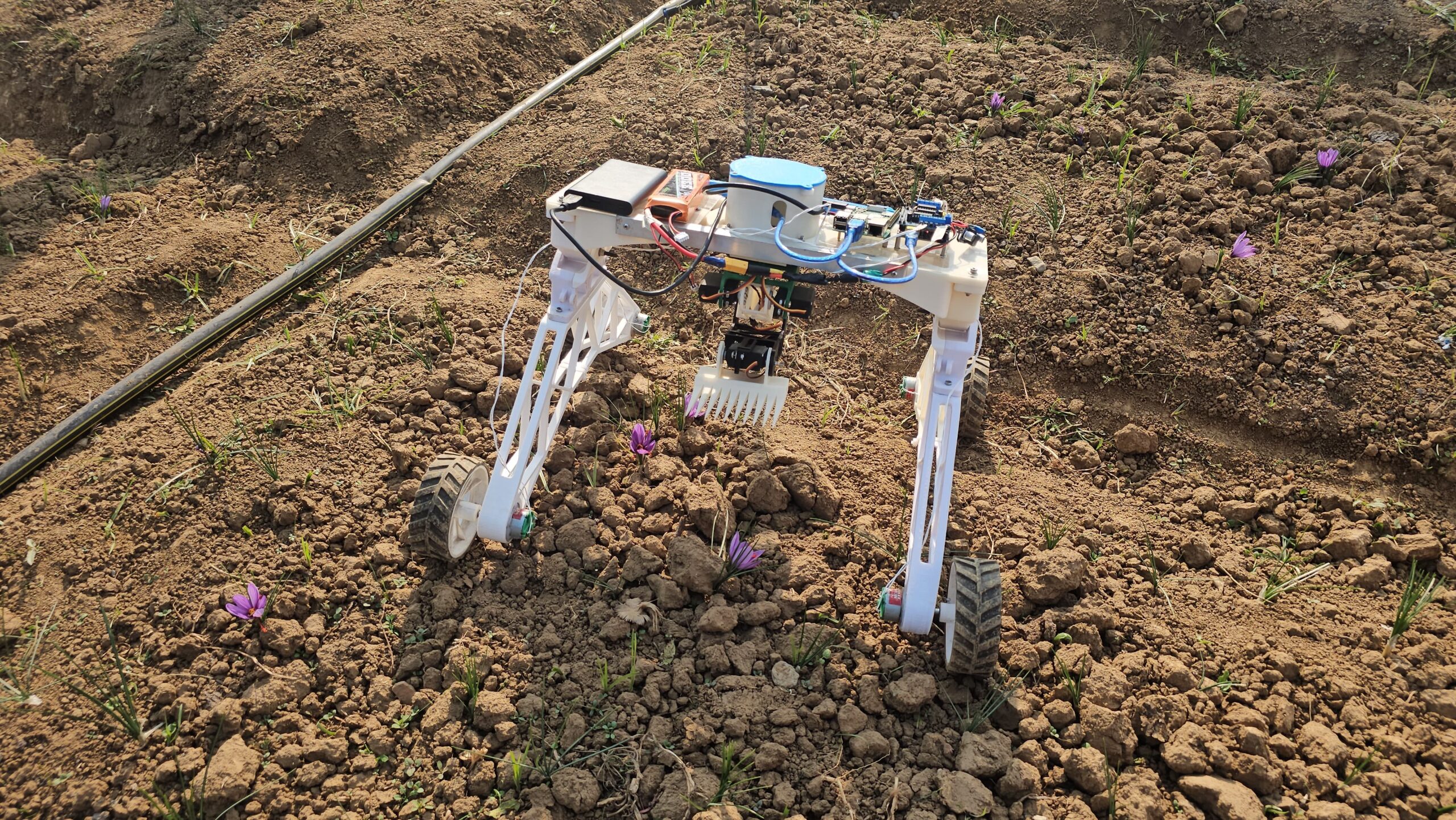
According to scientists, these machines can automatically handle tough jobs like removing weeds, picking delicate saffron flowers, and separating the tiny red stigmas that give saffron its value — all tasks that normally require long hours of manual labor.
The project, supported by the Government of India and SKUAST-Kashmir, aims to bring modern technology into traditional saffron farming, helping farmers save time, cut costs, and increase their income while preserving Kashmir’s world-renowned saffron heritage
In this connection, SKUAST-K and MeitY Saturday conducted a live field demonstration of innovative robotic machines in Pampore — the heartland of Kashmir’s world-famous saffron.
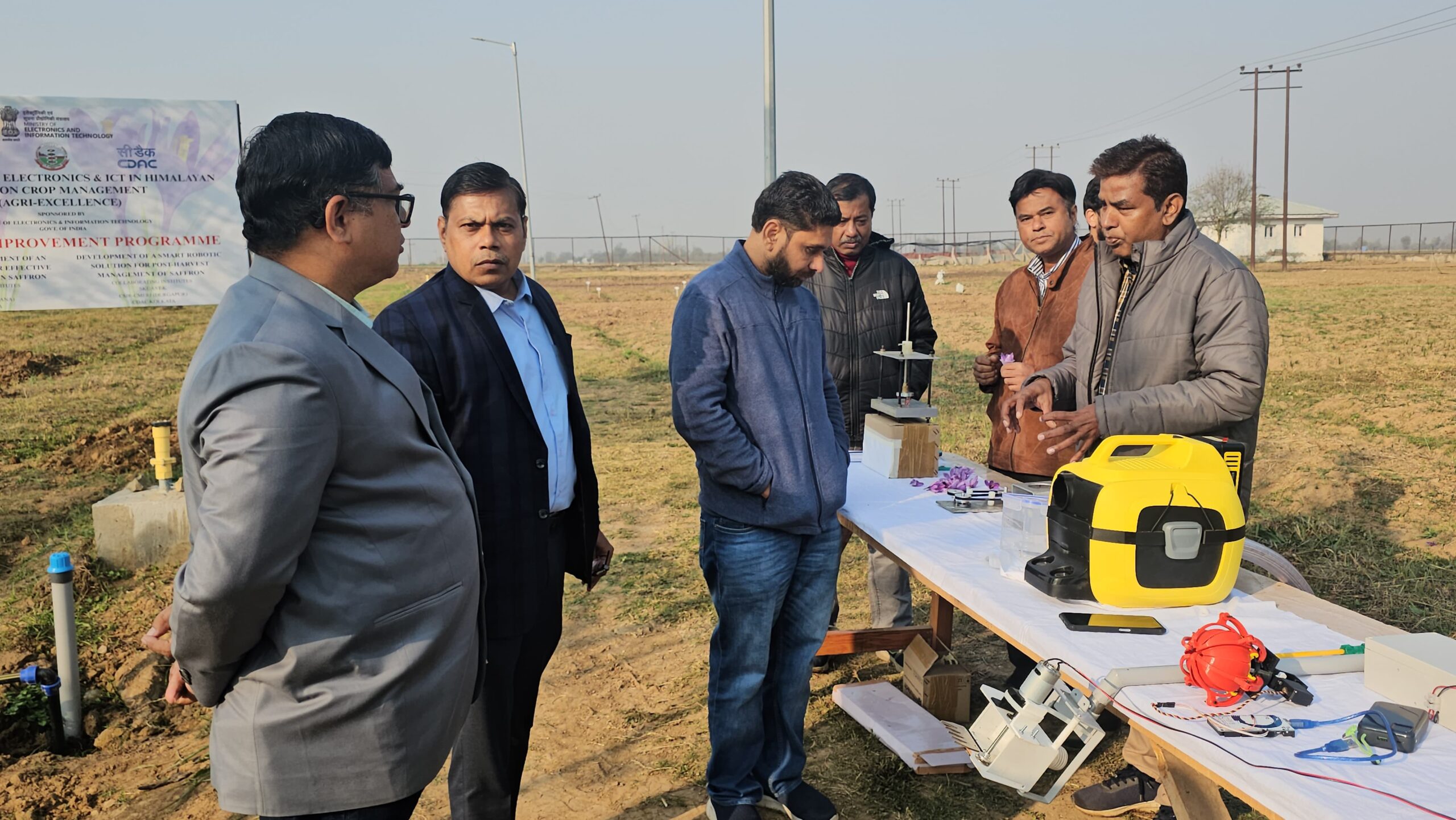
An official spokesperson told Kashmir Convener that scientists and experts from both MeitY and SKUAST-Kashmir, led by Sunita Verma, Chief Scientist and Group Coordinator (R&D–E/IT/CCBT), Ministry of Electronics and Information Technology, Government of India participated in the event.
He said the initiative aims to introduce state-of-the-art automation in saffron cultivation, improving efficiency, reducing manual labor, and empowering farmers with advanced tools to enhance productivity and profitability.
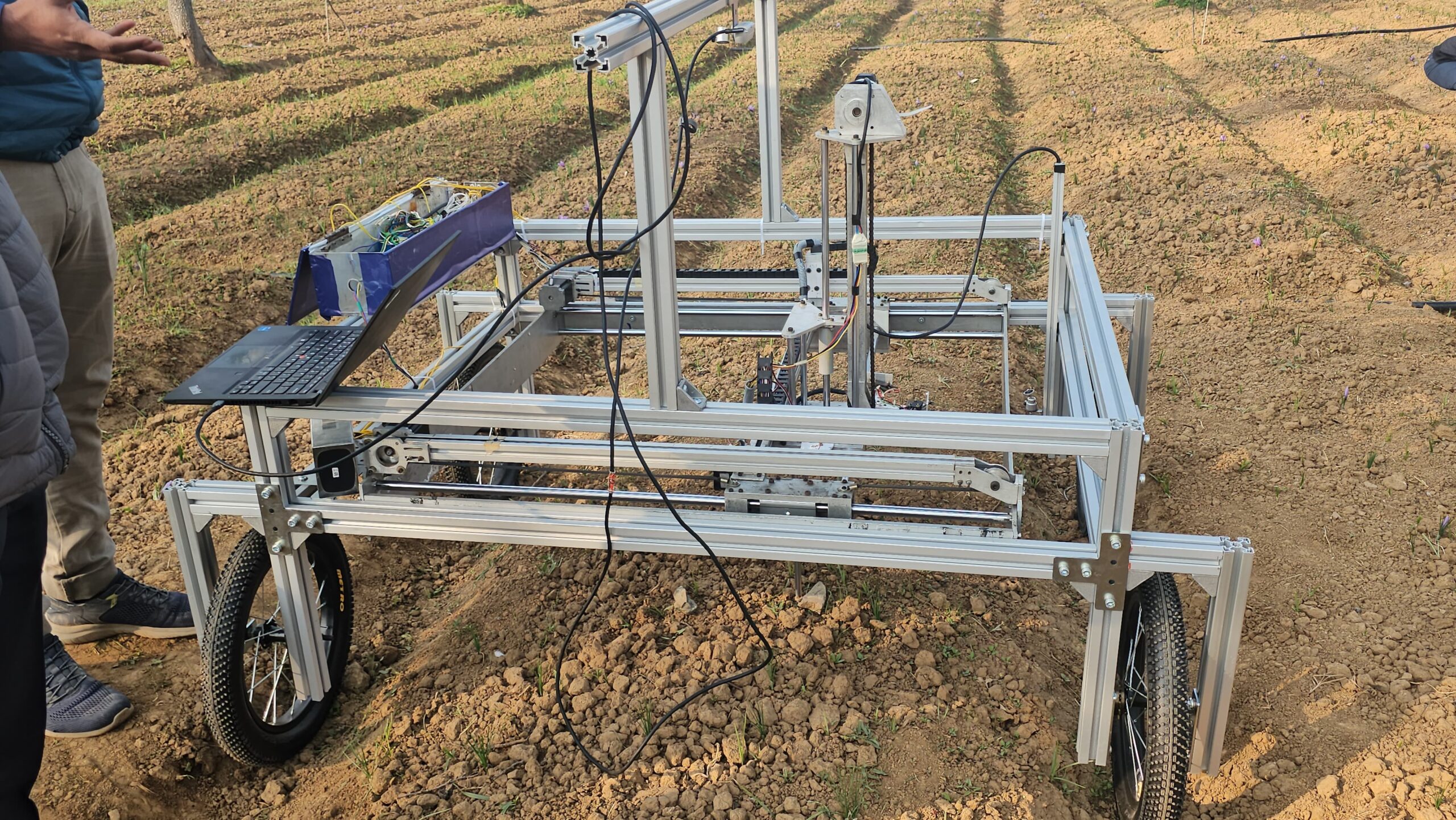
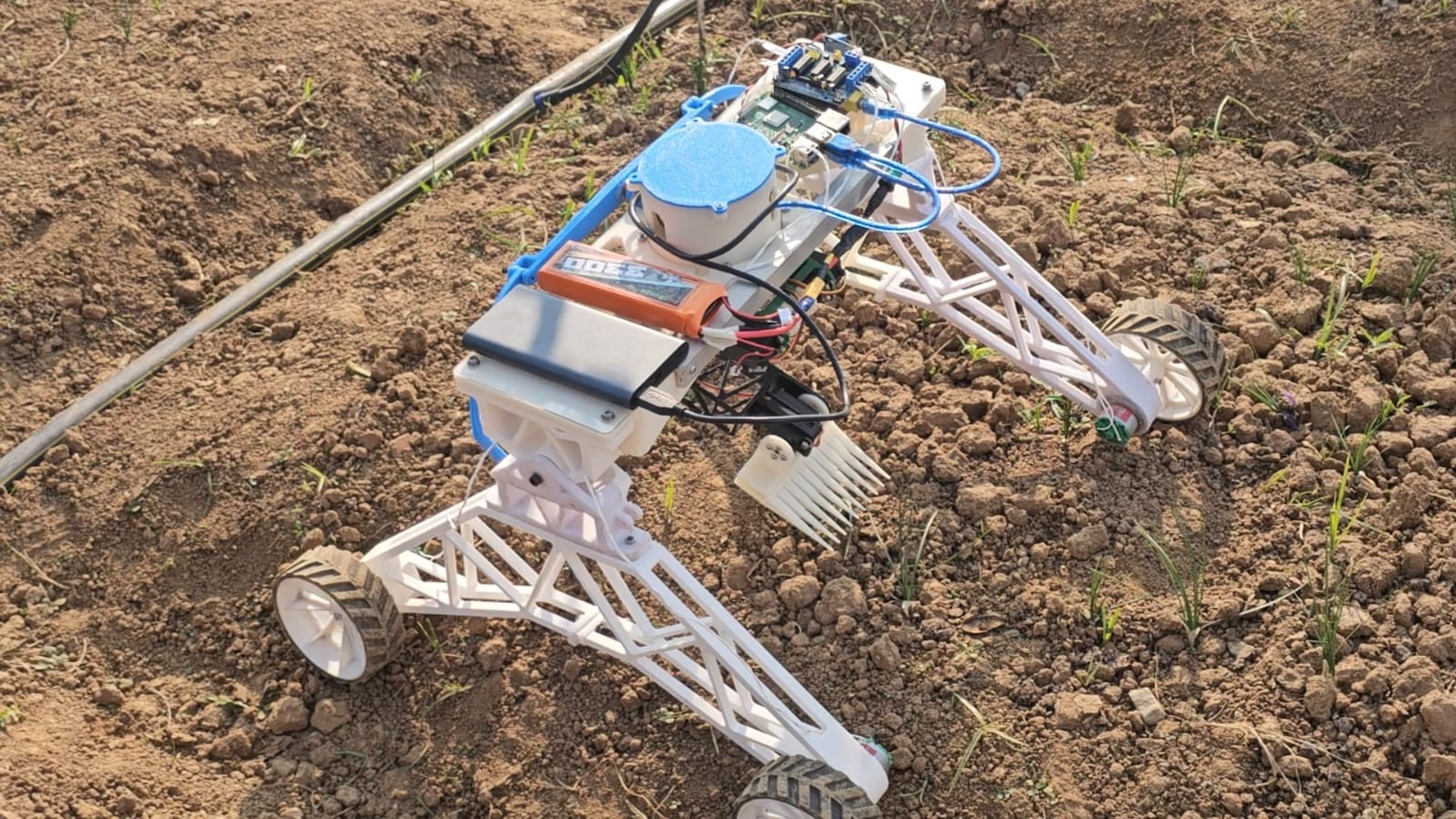
During the demonstration, experts showcased a range of innovative robotic systems, including a Saffron Harvester, a Weed Management System, and an Automated Saffron Stigma Separation Unit—all designed to revolutionize the saffron industry through precision and technology.
Speaking to Kashmir Convener, Prof. Syed Zameer Hussain, Scientist at SKUAST-Kashmir, said that saffron has been cultivated in this region for a long time, but the level of mechanization in its production is still very limited. “In this context, we are addressing two or three major issues”.
He said the first issue is weed management in saffron fields, which is currently done manually and is very hectic for the growers. “To solve this, we are developing a robotic system for weed management that will make the process fully automated”.

Comments are closed.