

Shivraj Singh Chouhan
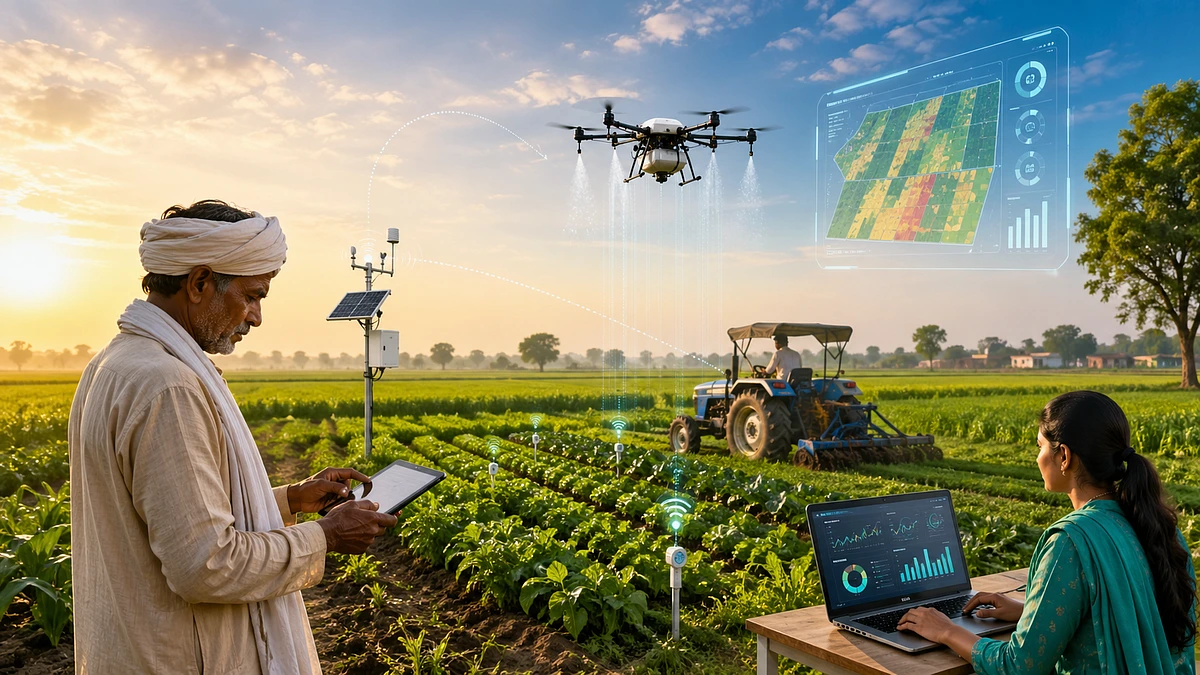
The Green Revolution secured India’s food future. The next agricultural transformation must secure India’s prosperity, nutrition, natural resources and global leadership. The Honorable Prime Minister has given the nation a clear direction: Indian agriculture must become an important pillar of Viksit Bharat. Our task is to turn that vision into action through science, innovation, infrastructure, markets, institutions and, above all, by placing the Indian farmer at the centre of every agricultural policy.
When the Honorable Prime Minister assumed office in 2014, agriculture and farmer welfare were placed at the heart of India’s development agenda. Since 2015, this commitment has increasingly translated into a broader transformation from improving production and farm incomes to building an agriculture sector that is productive, resilient, technology-driven and sustainable.
The Prime Minister has repeatedly emphasised that “For a Viksit Bharat, Indian agriculture must also be developed.” He has also called for India not merely to meet its own food requirements but to emerge as a global food supplier. Adding to Lal Bahadur Shastri’s call of “Jai Jawan, Jai Kisan” and Atal Bihari Vajpayee’s “Jai Vigyan”, the Prime Minister gave the nation “Jai Anusandhan”.
With that phrase he placed research and innovation at the heart of India’s farm future. Those words were more than a statement of policy direction; they embodied a pragmatic vision whose wisdom and foresight were unmistakably vindicated by the evidence that emerged a decade later.
From Food Security to a New Agricultural Paradigm
This vision represents a decisive shift in the way we must look at Indian agriculture. The Green Revolution gave India food security. Today, our responsibility is to build the foundations of nutritional security, farmer prosperity, resource security and global competitiveness. India’s agricultural journey is one of remarkable achievements. From a country once dependent on food imports, India became self-sufficient in staple cereals within a few decades.
Comments are closed.