
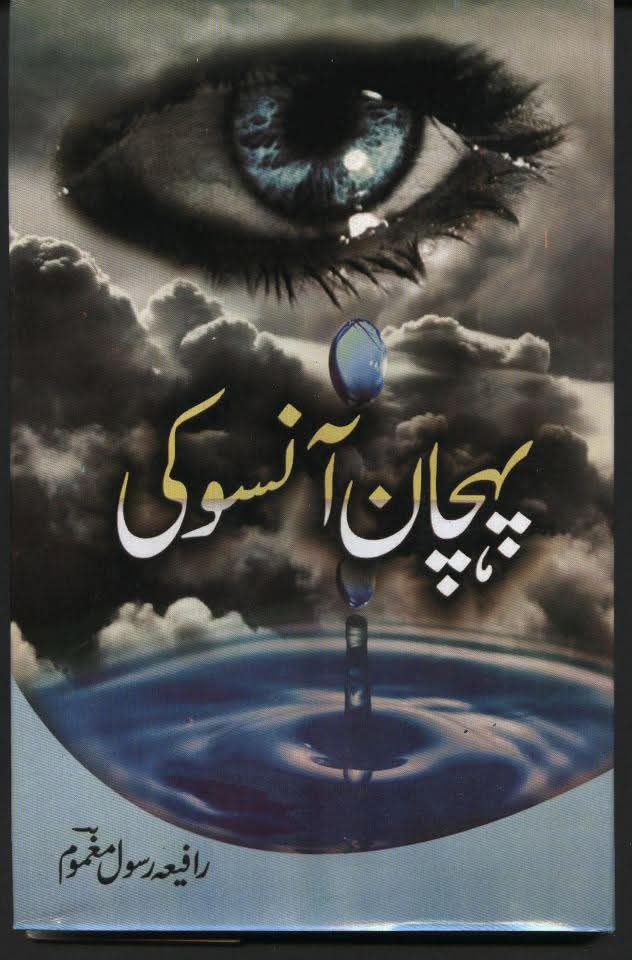
Pehchan Aansoo Ki: A Moving Tale of Love, Loss and Human Resilience
A Review of Rafia Rasool Magmoom's Debut Novel


Rayees Ahmad Kumar
“Rafia Rasool Magmoom’s debut novel weaves together love, loss, loneliness, and hope with remarkable sensitivity. Beneath its emotional narrative lies a powerful reflection on modern society, fading human values, and the quiet struggles that shape the human condition.”
Rafia Rasool Magmoom is among the emerging women writers of Kashmir who have carved a distinct place for themselves in the literary world within a relatively short span of time. Known primarily as a cartoonist and journalist, she has successfully ventured into fiction and earned recognition in contemporary Urdu literature. A resident of Buchwara, Dalgate, Srinagar, Rafia once aspired to become a doctor, but destiny led her towards journalism, cartooning, and eventually creative writing.
Her debut novel, Pehchan Aansoo Ki, comprising 96 pages, is a poignant and emotionally charged work dedicated to cancer patients who lost their battle with the disease and to the cherished memory of her late father. The publication of the book was financially supported by the Jammu and Kashmir Academy of Art, Culture and Languages. In the introductory note titled Harf-e-Chand, noted writer Dr. Farid Parbati praises the novel’s simple, fluent, and engaging language, which reflects the style of contemporary Urdu fiction.
The author also shares glimpses of her personal journey in a section titled Apne Bare Mein, where she recounts her educational experiences and professional struggles. Through these reflections, readers gain insight into how life’s circumstances transformed a young woman with dreams of studying medicine into a respected journalist, cartoonist, and author.
At the heart of the novel lies the story of two close friends, Qainat and Ghazala, whose friendship begins in school and continues through college. Though united by companionship, their personalities are strikingly different. Ghazala, blessed with extraordinary beauty and raised in comfort and luxury, is proud, self-centered, and accustomed to admiration. Qainat, on the other hand, is compassionate, intelligent, and emotionally mature. Having lost her parents in a tragic road accident and been raised by her maternal uncle, she develops a deep sense of empathy and dreams of becoming a doctor.
The narrative takes a dramatic turn when Salim, a brilliant and hardworking senior student, falls deeply in love with Ghazala. Gathering courage, he proposes marriage to her, only to face humiliation and rejection. Ghazala dismisses him harshly, questioning his social status and leaving him heartbroken. Despite Qainat’s advice to move on, Salim remains unable to erase his feelings for Ghazala.
As the years pass, the three characters follow different paths. Salim becomes a successful doctor, Qainat fulfills her dream of joining the medical profession, and Ghazala pursues engineering. Time and distance gradually separate them until fate unexpectedly reunites them under tragic circumstances.
Working in a hospital, Dr. Qainat is astonished when a critically ill woman is admitted to her ward. The patient turns out to be Ghazala, but the confident and proud young woman she once knew has been transformed by suffering and hardship. Upon regaining consciousness, Ghazala narrates the painful story of her life.
During her engineering studies, she had fallen deeply in love with a fellow student named Wasim. Their friendship blossomed into romance, and both envisioned a future together. However, after completing his studies, Wasim abruptly withdrew from her life. His silence and indifference shattered Ghazala’s dreams. Despite her family’s efforts and medical consultations, she remained emotionally devastated and rejected every marriage proposal that came her way.
The greatest blow arrives when she learns through Wasim’s friend Aamir that Wasim had married a close relative under family pressure. The revelation crushes her spirit. Soon afterward, the death of her parents leaves her completely alone. The combined burden of heartbreak, loneliness, and grief gradually destroys her emotional and physical well-being.
While caring for Ghazala, Dr. Qainat discovers that Salim has never married and still harbors affection for the woman who once rejected him. She begins to hope that fate may offer Ghazala a second chance at happiness. Yet destiny has other plans. During a hospital visit, Ghazala unexpectedly comes face to face with Wasim once again. The encounter reopens old wounds and sets the stage for the novel’s tragic conclusion.
A month later, when Dr. Salim visits Dr. Qainat, he learns that Ghazala has succumbed to cancer. Standing silently beside her grave, he reflects on the cruel unpredictability of life. Dreams, love, regret, and unfulfilled hopes all seem buried beneath the silent earth.
What makes Pehchan Aansoo Ki noteworthy is that it goes beyond the conventional framework of a love story. Beneath its emotional narrative lies a deeper commentary on modern society, materialism, fading human values, loneliness, and the psychological struggles that define contemporary life. Through Ghazala’s journey, the author explores how pride, emotional vulnerability, and life’s unforeseen tragedies can shape human destiny.
Rafia Rasool Magmoom demonstrates remarkable narrative maturity in her debut work. Her characters are believable, her storytelling is engaging, and her language remains simple yet emotionally effective throughout the novel. She succeeds in maintaining the reader’s interest while addressing themes of love, loss, sacrifice, and resilience.
The novel also serves as a reminder of the creative depth and literary talent possessed by Kashmiri women writers. Through her graceful prose and sensitive treatment of human emotions, Rafia Rasool Magmoom has made a meaningful contribution to contemporary Urdu fiction.
Pehchan Aansoo Ki is a touching and thought-provoking novel that deserves appreciation from readers and critics alike. Works of this nature not only enrich literature but also encourage emerging writers to explore the complexities of human relationships and social realities through creative expression.
Comments are closed.