Goa, November 26: A person’s holiday destination can be another person’s home and livelihood. This contrast between privilege and survival forms the central theme of A Few Days in the Sun, a bilingual film screened in the Cinema of the World section of the 57th International Film Festival of India (IFFI).
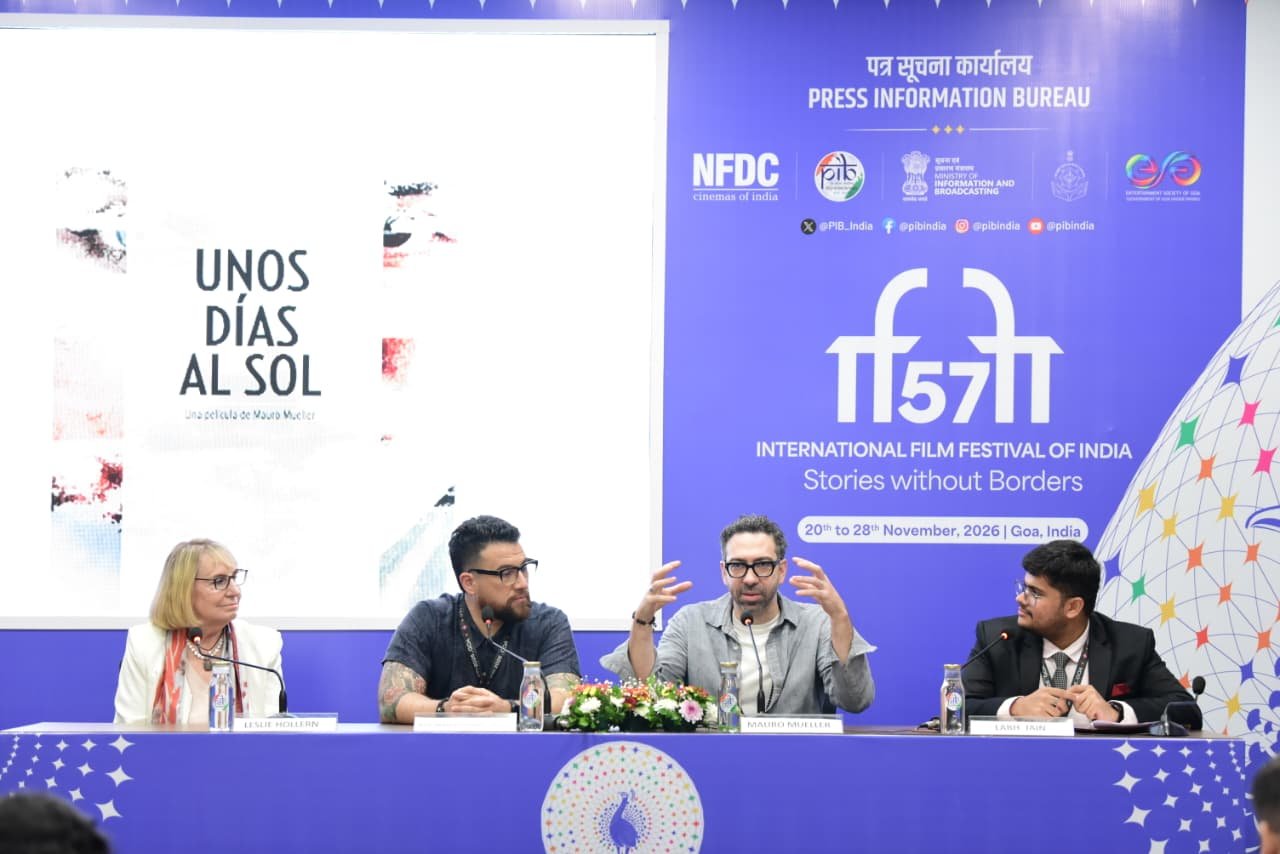
Director Mauro Mueller, writer José David Figueroa García and producer Leslie Holleran discussed the film’s themes, production and creative vision at a press conference on Thursday. The session was moderated by Labh Jain.
Set in Mexico’s Riviera Maya, the film follows two couples from sharply different economic backgrounds. A wealthy European couple uses illegal means to displace a local community for a development project, while a working-class Mexican family strikes a risky deal with a corrupt police officer to keep a teenager out of prison. Their lives intersect through a violent kidnapping that spirals out of control.
The film is an international co-production involving Mexico, the Dominican Republic, Germany, the United States and Switzerland, and is made in English and Spanish.
Mueller said his experiences of growing up in Switzerland and living in Mexico and the United States had shaped the film’s perspective. Travelling and living in different countries, he said, helped develop empathy and an understanding that people make different choices within different social and institutional systems.
He said the film seeks to explore the circumstances behind morally complex decisions rather than judge the people making them.
Writer García highlighted the contrast in how people from different economic classes face the consequences of their actions. While the wealthy characters are able to avoid serious repercussions, similar choices have far more damaging consequences for the working-class family.
Producer Holleran said even a small mistake can have devastating consequences for someone living in poverty. She observed that both those holding the captives and the captives themselves are, in different ways, imprisoned by their circumstances.
García also discussed the different forms of corruption portrayed in the film, from direct bribery at the local level to the use of wealth and political influence to displace communities. The film, he said, places these forms of corruption alongside each other to examine how power operates across society.
Mueller described the film as a character-driven thriller that seeks to reach audiences beyond the traditional art-house space while exploring social inequality and moral dilemmas.
Holleran said women’s choices and relationships in the two families play a significant role in driving the story. She also spoke about the challenges and opportunities of producing a film across five countries, describing international collaboration and exposure to unfamiliar cultures as among the most rewarding aspects of the process.
The speakers also stressed the importance of travel and cultural exchange in developing empathy, understanding diversity and recognising the shared desire for equality and representation. (PIB)


Comments are closed.