
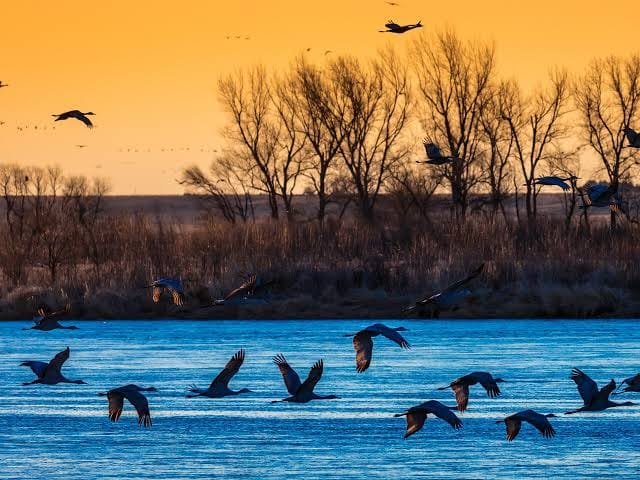


Migratory Birds and Kashmir Winters: When Wings Meet Wetlands

A.R. Matahanji


Let the migratory birds find refuge in Kashmir. Let its wetlands remain alive, its waters remain welcoming and its skies remain free. For when we protect these winged visitors, we protect not merely a species, but the ecological soul of Kashmir itself. 

As winter approaches Kashmir, the arrival of migratory birds transforms its wetlands into living landscapes of movement, music and mystery. But behind this magnificent seasonal spectacle lies a deeper story of survival, ecological balance and humanity’s responsibility towards nature.

There is something profoundly poetic about the arrival of winter in Kashmir. As the mountains begin to embrace their snowy crowns, temperatures descend, and the familiar landscapes gradually surrender to the cold, another extraordinary spectacle begins to unfold across the Valley. The skies become pathways of migration, the wetlands turn into sanctuaries of life, and thousands of winged travellers begin arriving from distant lands, bringing with them a timeless story of instinct, endurance and survival.

The arrival of migratory birds is not simply an annual wildlife occurrence; it is one of nature’s most remarkable demonstrations of resilience and interconnectedness. From the freezing expanses of Siberia and Central Asia to the distant regions of China and parts of Europe, these birds undertake incredible journeys across geographical boundaries, mountains, rivers and continents. Guided by instinct, environmental cues and an extraordinary sense of direction, they travel thousands of kilometres in search of comparatively favourable climatic conditions, food and suitable habitats.

And Kashmir, with its remarkable network of wetlands, becomes their winter home.

According to the latest reports, migratory birds have started arriving at several important wetlands of the Valley, including Hokersar, Wular, Shallabugh, Hygam and Mirgund. Their numbers are expected to increase in the coming weeks, marking the gradual unfolding of another winter migration season. The Wildlife Department is also preparing to conduct a census to assess the population, species diversity and distribution of these seasonal visitors across different wetlands.

Among the commonly recorded winter visitors are mallards, pintails, teals, coots, greylag geese, pochards, gadwalls, wigeons, shovellers and tufted ducks. Each species carries its own ecological significance, behavioural characteristics and migratory story. Together, they contribute to the extraordinary biodiversity that makes Kashmir’s wetlands internationally significant natural assets.

If the mountains are Kashmir’s crown, its wetlands are undoubtedly among its greatest ecological treasures. They are Nature’s Hostel.

Hokersar, often celebrated for its extraordinary birdlife, Wular Lake, one of the largest freshwater lakes in Asia, and the wetlands of Shallabugh, Hygam and Mirgund represent much more than beautiful geographical features. They are indispensable ecological systems that sustain countless forms of life. For migratory birds, these wetlands function as feeding grounds, resting stations and temporary winter habitats. Their shallow waters, aquatic vegetation, marshlands and surrounding ecosystems provide essential resources during a demanding phase of the birds’ annual life cycle.

The significance of these wetlands extends far beyond the birds themselves. They contribute to water regulation, support biodiversity, help maintain ecological balance and provide essential environmental services to surrounding communities. Their health is closely connected with the health of the Valley’s broader natural environment.

In a world increasingly challenged by environmental degradation and climate uncertainty, these wetlands stand as reminders that nature’s most valuable contributions are often those that remain unnoticed until they begin to disappear.

Imagine a bird beginning its journey from a distant, freezing landscape. It crosses unfamiliar territories, navigates changing weather conditions and negotiates countless natural challenges, all while following an extraordinary migratory instinct.

For these birds, migration is not tourism; it is survival. It is a Journey written in the Language of Survival. Their arrival in Kashmir represents the successful completion of an arduous journey and the beginning of another chapter in their natural cycle. They feed, rest, regain strength and prepare for their eventual return to their breeding grounds when climatic conditions become favourable.

There is an inspiring lesson in this annual movement. Nature does not recognise the artificial boundaries that divide nations, states or continents. The same bird that spends its summer in one country may find refuge in another during winter. Its journey connects distant geographical regions through a shared ecological dependence.

In this sense, migratory birds are ambassadors of nature, reminding humanity that environmental protection cannot be confined within political borders. The survival of these species depends upon the collective health of habitats spread across several countries.

However, beneath the beauty of this seasonal phenomenon lies a serious environmental concern. Wetlands across the world face mounting pressures from habitat degradation, pollution, encroachment, changing water regimes and other human-induced disturbances. Kashmir’s wetlands are no exception. Their ecological integrity requires continuous attention, scientific management and responsible public participation. Poaching remains another significant concern, particularly in vulnerable water bodies and areas outside adequately protected wetland reserves. The illegal hunting of migratory birds is not merely an offence against wildlife; it is an assault on the ecological heritage that belongs to present and future generations.

A bird arriving after travelling thousands of kilometres deserves a place of safety, not a threat to its existence.

The Wildlife Department’s efforts to monitor vulnerable areas, deploy field staff and watchers, maintain suitable water levels, improve water channels and create pools for feeding and movement are important measures in this direction. However, conservation cannot succeed through departmental efforts alone. It requires a collective commitment involving government institutions, local communities, environmental organisations, educational institutions, researchers, nature enthusiasts and responsible citizens.

The protection of migratory birds must become a shared social responsibility rather than an occasional administrative exercise.

The proposed migratory bird census is particularly important because its significance goes beyond determining how many birds have arrived in Kashmir. A scientifically conducted census can provide valuable information about species diversity, population trends, distribution patterns and the condition of different wetland habitats. When conducted systematically over successive years, such assessments can help identify changes in migratory behaviour and highlight areas requiring immediate conservation attention. Beyond Counting Birds, Measuring Ecological Health is also important.

However, the real value of a census lies in what follows it. The figures must translate into effective conservation strategies, habitat restoration, stronger monitoring mechanisms and evidence-based policy decisions. Population data should be used to understand whether wetlands are becoming healthier or more vulnerable, whether certain species are declining and whether existing management interventions are producing meaningful results. A successful conservation policy must not simply count the birds that arrive; it must ensure that the wetlands remain capable of welcoming them year after year.

There is also a social and educational dimension to this seasonal arrival that deserves greater attention. The winter migration season offers an exceptional opportunity to introduce younger generations to biodiversity, ecological awareness and environmental responsibility. Schools and colleges can organise nature walks, birdwatching activities, awareness programmes and wetland education initiatives. Local communities can become active partners in reporting illegal hunting, discouraging disturbances and maintaining the cleanliness of water bodies.

Responsible birdwatching and nature-based tourism can also create opportunities for environmental education and sustainable livelihoods, provided that the natural habitats and the birds themselves are not disturbed.

We must understand that the beauty of migratory birds does not lie in possessing them, capturing them or disturbing them for photographs. Their true beauty lies in watching them live freely, move naturally and continue their extraordinary journeys.

Perhaps the greatest tribute we can offer these seasonal visitors is to allow them the freedom and security they need to survive.

Kashmir’s natural beauty has always been celebrated through its mountains, gardens, rivers, lakes and changing seasons. Yet its wetlands and the migratory birds they sustain deserve an equally prominent place in our collective understanding of the Valley’s identity.

These birds are temporary residents, but their ecological importance is permanent. They arrive with winter and depart with the changing seasons, leaving behind a powerful reminder of the delicate balance that sustains life on our planet.

Their annual return is also a reflection of hope. Despite the challenges of an increasingly uncertain natural world, these birds continue to follow ancient migratory pathways, returning to habitats that generations before them may also have visited.

But for how long will these journeys remain possible if the wetlands that sustain them are neglected? That is a question we must confront with honesty and urgency. The arrival of migratory birds should inspire more than admiration. It should awaken a sense of responsibility towards our natural heritage. Government institutions must strengthen conservation efforts, scientific organisations must contribute research, communities must become vigilant guardians of wetlands, and every citizen must recognise that protecting biodiversity is an investment in the future.

As the first flocks descend upon Hokersar, Wular, Shallabugh, Hygam and Mirgund, Kashmir once again becomes part of a magnificent international natural phenomenon.

The skies are filling with wings, the wetlands are preparing to welcome their winter guests, and nature is silently reminding us of a truth that humanity often forgets: we are not owners of this planet but temporary custodians of its extraordinary diversity.

Let the migratory birds find refuge in Kashmir. Let its wetlands remain alive, its waters remain welcoming and its skies remain free. For when we protect these winged visitors, we protect not merely a species, but the ecological soul of Kashmir itself. The true measure of a civilisation is not merely what it builds for itself, but also what it preserves for the voiceless creatures with whom it shares the Earth.


Author, hailing from Wular fringe village of Bandipora, is a writer and columnist and can be reached at saltafrasool@yahoo.com

Comments are closed.