Pampore, November 9: The Jammu and Kashmir government is working on a comprehensive policy to revive saffron cultivation, with particular emphasis on addressing irrigation deficiencies, Agriculture Minister Javid Ahmad Dar said on Monday, acknowledging that shortcomings in the implementation of the Saffron Mission had prevented it from achieving its intended objectives.
Speaking to Kashmir Convener on the sidelines of a mega Khet Bachao Abhiyaan-cum-Kissan Mela at the India International Saffron Trade Centre (IIKSTC), Dusoo, Pampore, Dar said the government was examining fresh proposals, including a suggestion to install one borewell for every 10 to 15 kanals of saffron land.
The proposal, he said, had come from farmers willing to take responsibility for maintaining the borewells, unlike the earlier arrangement under which the government was expected to maintain common irrigation infrastructure.
“We will explore all available provisions and consult experts from SKUAST-Kashmir, the Agriculture Department, progressive farmers and MLA Pampore, retired Justice Hasnain Masoodi. After consultations with all stakeholders, we will certainly come up with a suitable policy to address irrigation-related issues and strengthen saffron cultivation,” Dar said.
The minister said saffron cultivation currently covered approximately 2,600 hectares in Jammu and Kashmir, of which 1,100 hectares had been brought under rejuvenation initiatives through the Jammu and Kashmir Competitiveness Improvement of Agriculture and Allied Sectors Project (JKCIP).
He said the government was extending support to farmers under the project to restore saffron fields and improve production.
Dar attributed the decline in saffron production over recent years primarily to inadequate irrigation and unfavourable weather conditions, including prolonged dry spells and drought-like situations.
He said saffron growers generally required around four irrigations during the cultivation season, making reliable water availability crucial for sustaining production.
Acknowledging implementation difficulties under the earlier Saffron Mission, Dar said the scheme had envisaged irrigation infrastructure covering 600 kanals of land, but its implementation faced coordination and management challenges.
A single farmer generally did not own such a large landholding, while some projects involved 50 to 80 families, making coordination among beneficiaries and maintenance of infrastructure difficult, he said.
The government had been trying since last year to reorganise the scheme and address these shortcomings, but several challenges remained, Dar added.
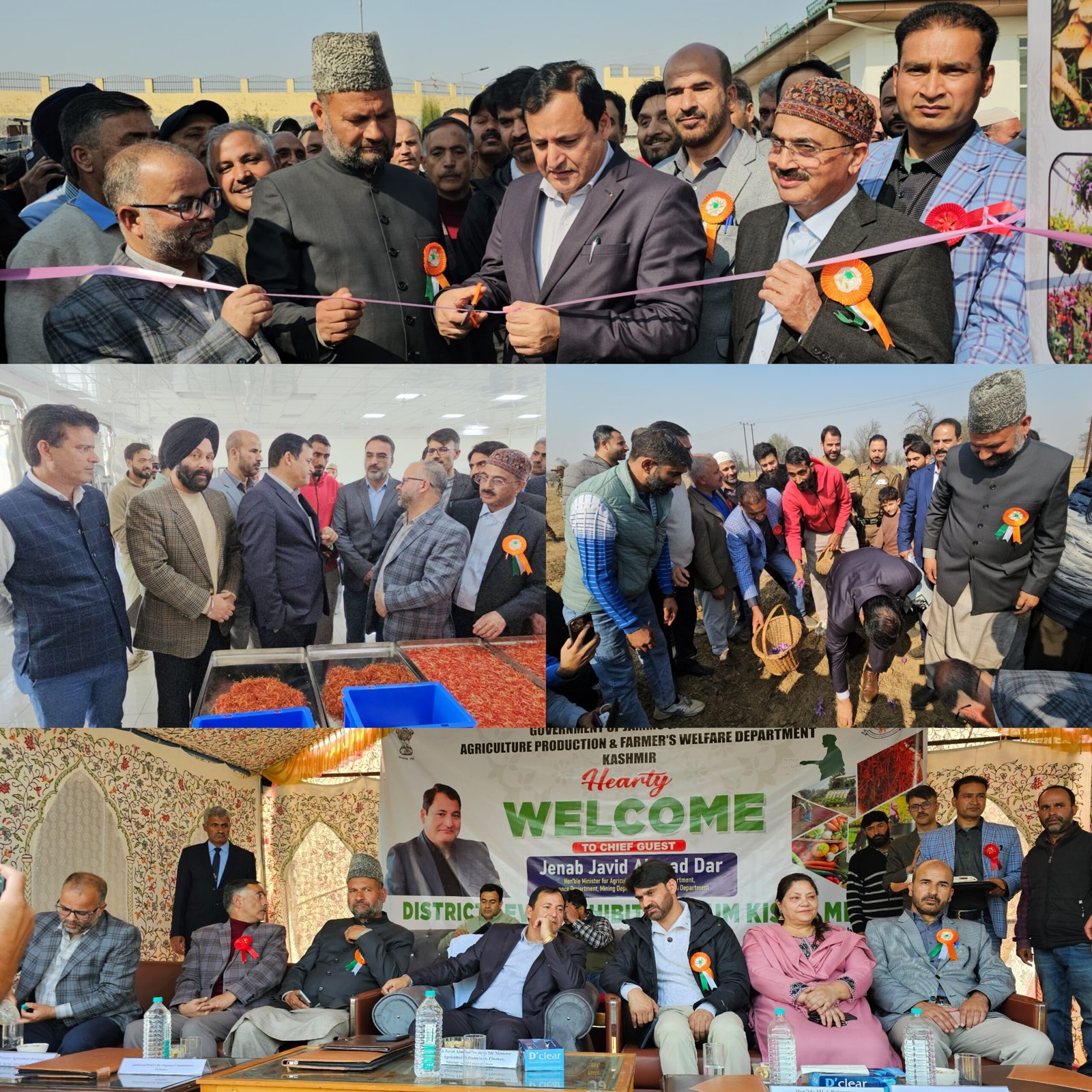
The minister was speaking after inaugurating the mega Khet Bachao Abhiyaan-cum-Kissan Mela organised by the Department of Agriculture Kashmir at IIKSTC, Dusoo, Pampore. The programme focused on protecting agricultural land, promoting sustainable farming practices and strengthening the saffron industry.
PDP MLA Waheed-ur-Rehman Para, Tral MLA Rafiq Ahmad Naik, Additional Deputy Commissioner Awantipora Mushtaq Ahmad Lone, Director Agriculture Kashmir Sartaj Ahmad Shah and Director Extension SKUAST-Kashmir Prof. Rihana Habib Kant were among those present.
Addressing the gathering, Dar said the government was committed to reviving the saffron industry, which holds economic and cultural significance for Kashmir, particularly Pampore.
He urged farmers to reduce the indiscriminate use of chemical fertilisers and pesticides and gradually adopt organic farming practices, saying excessive chemical use adversely affected soil health and fertility.
The minister also visited the saffron processing facilities at IIKSTC, including the drying, grading and packaging sections, where officials briefed him about the infrastructure and services available to growers.
He said the government was in consultation with SKUAST-Kashmir, the Agriculture Research Department and other experts to identify shortcomings in the existing revival initiatives and formulate measures to improve saffron production.


Comments are closed.