
India Leads the Wilderness in Tiger Conservation: From Saving a Species to Securing an Ecosystem

S Ahmad
“The future of the tiger is inseparable from the future of India’s forests.”
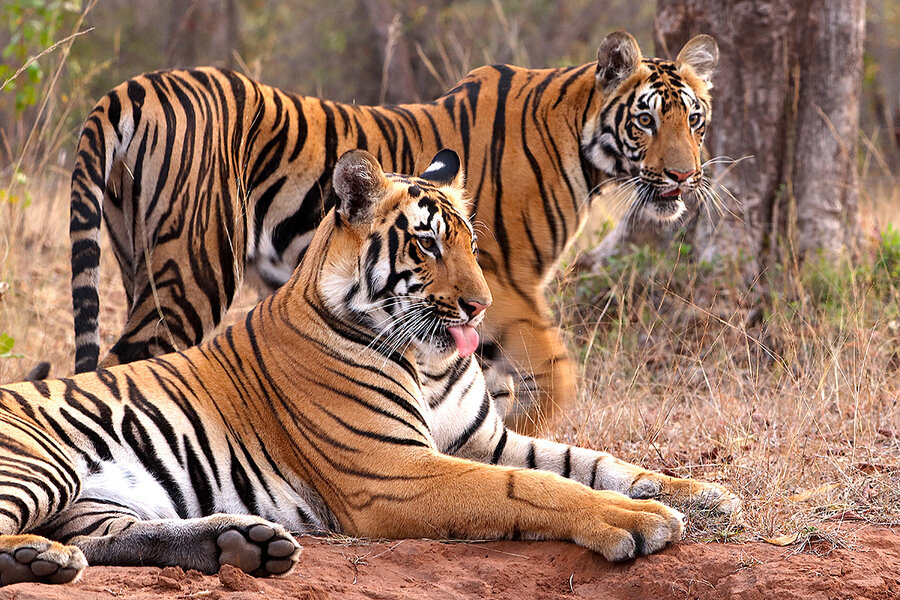
Few conservation stories in the modern world rival India’s success in protecting the tiger. Once standing on the brink of extinction, the Royal Bengal Tiger has become the centrepiece of one of the world’s most remarkable wildlife recovery programmes. Today, India is home to nearly 70 per cent of the world’s wild tigers, making it the undisputed global leader in tiger conservation. This achievement is not merely about increasing the number of a charismatic species; it reflects decades of sustained political commitment, scientific management, institutional reform and community participation that have collectively transformed India’s conservation landscape.
International Tiger Day, observed annually on July 29, is therefore more than a symbolic occasion. It is an opportunity to examine how India moved from a period of alarming decline in tiger populations to becoming the world’s most successful tiger conservation model. At a time when biodiversity loss, climate change and habitat degradation threaten wildlife across continents, India’s experience offers important lessons for the world.
The story begins with a crisis. During the decades following Independence, rapid deforestation, unregulated hunting, expanding human settlements and declining prey populations brought the tiger perilously close to extinction. By the early 1970s, concerns over dwindling numbers prompted the Government of India to declare the tiger the country’s National Animal and launch Project Tiger in 1973. What started as an ambitious conservation experiment has since evolved into one of the largest and most sophisticated wildlife protection programmes anywhere in the world.
Today, according to the All India Tiger Estimation 2022, India’s tiger population stands at 3,682, more than doubling since the first scientific estimation in 2006. Equally significant is the scale of scientific effort behind these figures. The latest assessment covered 20 states, involved foot surveys spanning over 6.4 lakh kilometres, and used thousands of camera traps and digital monitoring tools, making it the world’s largest wildlife estimation exercise.
This remarkable recovery demonstrates that conservation succeeds when supported by strong institutions rather than isolated campaigns. India’s tiger policy rests on three mutually reinforcing pillars: habitat protection, scientific monitoring and legal enforcement.
At the centre of this framework is Project Tiger, now implemented through the National Tiger Conservation Authority (NTCA). Over five decades, the programme has expanded into a network of 58 tiger reserves across 18 states, covering nearly 84,500 square kilometres, or approximately 2.56 per cent of India’s geographical area. These reserves are carefully designed with core areas, where wildlife receives the highest level of protection, and buffer zones, where conservation coexists with sustainable livelihoods and regulated human activity.
This landscape approach represents a major shift in conservation thinking. Earlier efforts often focused on protecting individual animals. Modern conservation recognises that tigers cannot survive without healthy forests, abundant prey, functional wildlife corridors and cooperation from local communities. Protecting the tiger therefore automatically protects thousands of other species that share the same habitat.
Ecologists frequently describe the tiger as an umbrella species because conserving it safeguards entire ecosystems. Dense forests that support tiger populations also preserve rivers, regulate groundwater recharge, prevent soil erosion, store vast amounts of carbon and provide livelihoods for millions of people living around forest landscapes. In many ways, tiger conservation has become synonymous with ecological security.
India’s policy framework also illustrates how conservation has become increasingly science-driven. The establishment of the National Tiger Conservation Authority after amendments to the Wildlife (Protection) Act in 2006 strengthened institutional oversight and standardised conservation practices nationwide. Every tiger reserve is now required to prepare detailed Tiger Conservation Plans, outlining habitat management, anti-poaching strategies, prey conservation, conflict mitigation and community engagement.
Such structured governance has helped move tiger conservation beyond reactive measures towards long-term ecosystem planning.
Another major strength of India’s model is its emphasis on rigorous monitoring. Reliable conservation depends not on assumptions but on evidence, and India has invested heavily in building one of the world’s most sophisticated wildlife monitoring systems.
India has emerged as a global leader in tiger conservation through science based policies and strong institutional support. The country is now home to nearly 70% of the world’s wild tigers. Technology driven monitoring, effective governance and community participation have strengthened conservation outcomes. India is also advancing global cooperation to secure the future of tigers and their habitats.
The All India Tiger Estimation (AITE) has become the gold standard in wildlife population assessment. Conducted every four years, it combines traditional field observations with advanced technologies including camera traps, GPS-based surveys and statistical modelling. Unlike earlier methods that relied largely on pugmarks, today’s estimates are based on photographic identification of individual tigers using their unique stripe patterns, greatly improving accuracy and credibility.
Scientific monitoring extends beyond counting tigers. Surveys simultaneously assess prey populations, habitat quality, forest health and the distribution of co-predators such as leopards, wild dogs and bears. This ecosystem-wide assessment enables policymakers to identify emerging threats before they become irreversible.
Technology has further revolutionised conservation management. India’s M-STrIPES (Monitoring System for Tigers – Intensive Protection and Ecological Status) integrates GPS-enabled patrols, remote sensing, digital mapping and real-time data collection. Forest guards now upload geo-tagged observations directly from the field, reducing errors while improving surveillance and accountability.
Artificial intelligence has added another dimension. Platforms such as the Camera Trap Data Repository and Analysis Tool (CaTRAT) automatically classify wildlife photographs, while software like ExtractCompare identifies individual tigers through stripe pattern recognition. These innovations significantly reduce manual analysis and enable faster, more reliable population assessments.
Perhaps nowhere is India’s scientific leadership more evident than in its Guinness World Record for conducting the world’s largest camera-trap wildlife survey.
Yet technology alone cannot explain India’s success. Conservation ultimately depends upon people.
The Tiger Task Force, constituted to review India’s conservation strategy, recognised that sustainable protection requires local participation alongside ecological expertise. Its recommendations shifted policy away from fortress conservation towards a more inclusive model that acknowledges the role of communities living around protected areas.
This approach reflects an important lesson. Villages situated around forests are not merely stakeholders; they are often the first line of defence against illegal activities such as poaching, encroachment and timber smuggling. Conservation becomes more durable when local communities perceive forests as shared assets rather than restricted territories.
The landscape approach has also highlighted the importance of wildlife corridors. Tigers require vast territories, and isolated reserves cannot sustain genetically healthy populations indefinitely. Corridors connecting protected forests enable animals to disperse, maintain genetic diversity and adapt to changing ecological conditions. As infrastructure expands across India, securing these ecological linkages will become one of conservation’s greatest challenges.
The significance of tiger conservation extends well beyond biodiversity. Forest ecosystems supported by healthy tiger populations perform critical ecological functions that directly affect agriculture, water security and climate resilience.
India’s tiger reserves protect several major river systems that supply water to millions of people downstream. Forests regulate rainfall patterns, reduce flood intensity, prevent landslides and act as major carbon sinks. Consequently, investments in tiger conservation generate environmental dividends far beyond wildlife protection.
This ecological perspective has become increasingly relevant in the era of climate change. Healthy forests enhance resilience against extreme weather events while supporting India’s commitments under international climate agreements. Protecting tiger habitats therefore contributes simultaneously to biodiversity conservation, carbon sequestration and sustainable development.
India’s remarkable recovery in tiger numbers demonstrates that ambitious conservation goals can be achieved when political commitment, scientific research, legal frameworks and public participation reinforce one another. However, rising tiger populations also introduce new challenges, including human-wildlife conflict, habitat fragmentation and increasing pressure on forest landscapes.
These emerging issues demand equally innovative policy responses.
Technology, Community and the Next Conservation Frontier
India’s tiger conservation story is no longer confined to increasing tiger numbers. The next phase is about ensuring that this remarkable recovery remains sustainable in the face of rapid economic growth, climate change and expanding human settlements. The challenge today is not merely protecting individual tigers but securing entire landscapes where wildlife and people can coexist.
The country’s conservation strategy has increasingly shifted from reactive protection to scientific ecosystem management. Modern technology, stronger institutions, community participation and international cooperation are now shaping what many conservationists regard as one of the world’s most sophisticated wildlife management systems.
Technology Transforming Conservation
One of the defining features of India’s tiger programme has been the extensive use of technology in wildlife monitoring. Traditional pugmark tracking, once the principal method of estimating tiger numbers, has largely been replaced by evidence-based scientific techniques that provide far greater accuracy.
The All India Tiger Estimation (AITE) has become the world’s largest biodiversity survey. Conducted every four years by the National Tiger Conservation Authority (NTCA) in collaboration with the Wildlife Institute of India, it combines extensive field surveys, camera trapping, satellite mapping and statistical modelling to estimate tiger populations and assess habitat quality.
The scale of this exercise is unprecedented. During the 2022 estimation, field personnel surveyed over 6.41 lakh kilometres, covering forests across 20 states, while simultaneously documenting prey species, vegetation health and other wildlife. Such comprehensive monitoring allows conservation planners to understand not only tiger numbers but also the health of entire ecosystems.
Equally significant has been the adoption of digital monitoring platforms. The Monitoring System for Tigers – Intensive Protection and Ecological Status (M-STrIPES) enables forest guards to record patrol routes, wildlife sightings, evidence of illegal activities and habitat conditions using GPS-enabled devices. The system creates real-time databases that improve patrol planning and resource allocation while reducing gaps in surveillance.
Artificial Intelligence is adding another dimension to conservation. Camera trap images collected from thousands of locations are processed through AI-enabled software capable of identifying species and even recognising individual tigers through their unique stripe patterns. These innovations reduce manual errors, improve speed of analysis and strengthen confidence in scientific estimates.
Technology is also proving valuable in addressing human-wildlife conflict. Remote sensing, satellite imagery and GIS-based mapping help identify wildlife corridors, monitor habitat fragmentation and guide infrastructure planning. Such information is increasingly being incorporated into environmental assessments for highways, railways and development projects.
Did You Know?
International Tiger Day traces its origins to the Saint Petersburg Tiger Summit held in November 2010. Leaders from 13 tiger-range countries, including India, adopted the ambitious Tx2 goal to double the global wild tiger population by 2022. Today, it serves as a global platform to review conservation progress, strengthen international cooperation and raise awareness. In 2010, only about 3,200 wild tigers were estimated to remain globally. By 2022, improved conservation and scientific monitoring increased the estimate to around 4,500, with a plausible range of 3,700–5,600 tigers. According to recent global estimates, approximately 5,711 wild tigers remain worldwide, representing an increase of around 78% since 2010.
Evaluating Protected Areas
Monitoring tiger numbers alone cannot guarantee conservation success. The quality of management inside tiger reserves is equally important.
India’s Management Effectiveness Evaluation (MEE) framework provides an independent assessment of reserve management. The evaluation examines protection measures, habitat improvement, scientific monitoring, staff capacity, community participation and administrative effectiveness.
By 2022, 51 tiger reserves had undergone evaluation. Twelve received an “Excellent” rating, while the overall average management score reached 78 percent, reflecting improvements in institutional capacity across the protected area network.
Such periodic assessments encourage accountability and help identify areas requiring additional support, whether through increased staffing, better infrastructure or stronger community engagement.
Communities at the Centre of Conservation
The history of wildlife conservation has often been marked by tension between environmental protection and local livelihoods. India’s evolving tiger policy increasingly recognises that long-term conservation cannot succeed without community participation.
Millions of people live around forests that support tiger populations. These communities depend on forests for fuelwood, fodder, minor forest produce and seasonal livelihoods. Conservation policies that ignore these realities risk creating conflict rather than cooperation.
Buffer areas surrounding tiger reserves have therefore acquired greater importance. Unlike strictly protected core areas, buffer zones seek to balance conservation with sustainable economic activities. Eco-development programmes, alternative livelihood initiatives and community-based tourism have emerged as important components of this strategy.
Eco-tourism, when carefully regulated, has created employment opportunities for local youth as guides, drivers, hospitality workers and nature interpreters. Many villages surrounding tiger reserves now derive direct economic benefits from conservation, creating stronger local support for wildlife protection.
Compensation mechanisms for crop loss, livestock depredation and human casualties have also improved over time, although delays and procedural hurdles continue to remain challenges in several states.
International Leadership
India’s achievements have increasingly positioned it as a global leader in wildlife conservation.
The country actively collaborates with neighbouring nations such as Nepal and Bhutan on transboundary landscape conservation. Wildlife does not recognise political boundaries, making regional cooperation essential for maintaining genetic diversity and securing migratory corridors.
India also collaborates with countries including Russia, Myanmar, China, Kenya, South Africa and Namibia on various aspects of wildlife management, scientific research and anti-poaching initiatives.
Perhaps the most significant recent development has been the establishment of the International Big Cat Alliance (IBCA). Approved by the Union Cabinet in 2024, the alliance seeks to promote international cooperation for conserving seven major big cat species, including tigers, lions, leopards, snow leopards, cheetahs, jaguars and pumas.
Headquartered in India, the alliance reflects the country’s growing role in shaping global conservation policy beyond its own borders.
India also continues to play a central role in the Global Tiger Forum, the world’s only intergovernmental organisation dedicated exclusively to tiger conservation. Through scientific collaboration, technology sharing and regional capacity building, these initiatives reinforce collective efforts to protect tiger landscapes across Asia.
Persistent Challenges
Despite impressive achievements, significant challenges remain.
Human-wildlife conflict has increased in several regions as tiger populations expand into landscapes shared with people. Livestock predation, crop damage and occasional attacks on humans continue to generate tensions that require timely compensation, effective conflict mitigation and improved public communication.
Habitat fragmentation presents another long-term concern. Rapid expansion of highways, railways, mining activities and urban settlements can isolate tiger populations by disrupting wildlife corridors. Even healthy tiger populations may become genetically vulnerable if movement between reserves is restricted.
Climate change adds further complexity. Rising temperatures, changing rainfall patterns and increasing frequency of forest fires could alter prey availability, water resources and habitat quality. Mangrove ecosystems such as the Sundarbans face additional threats from sea-level rise and saline intrusion.
Illegal wildlife trade also remains an international challenge despite strengthened enforcement mechanisms. Continued vigilance through intelligence-led operations and cross-border cooperation remains essential.
Balancing conservation with legitimate developmental aspirations will require careful planning. Infrastructure projects must increasingly incorporate wildlife-friendly designs such as overpasses, underpasses and scientifically planned corridors that minimise ecological disruption.
The Road Ahead
India’s tiger conservation journey demonstrates what sustained political commitment, scientific management and institutional continuity can achieve.
Future success will depend on maintaining this momentum while adapting to emerging challenges. Continued investment in technology-driven monitoring, strengthening frontline forest staff, improving habitat connectivity and expanding community participation will remain central to this effort.
Conservation must also move beyond reserve boundaries. Securing landscape connectivity, integrating biodiversity concerns into infrastructure planning and strengthening climate resilience will define the next generation of wildlife policy.
Greater use of artificial intelligence, drones, remote sensing and predictive ecological modelling can further improve conservation planning. Equally important will be investments in ecological research that deepen understanding of predator-prey dynamics, disease surveillance and climate impacts.
Public participation must remain at the heart of conservation. Environmental education, citizen awareness and responsible eco-tourism can build wider societal support for protecting wildlife and ecosystems.
Did You Know?
Conservation Assured Tiger Standards CA|TS is a global certification system that ensures effective management specifically of tiger conservation areas. Launched at the 1st Asian Parks Congress in Japan in 2013. It sets benchmarks for protection, habitat management, community involvement, and wildlife monitoring. CA|TS supports efforts to create safe, sustainable environments for tigers and preserve global biodiversity. CA|TS has accredited 23 Indian tiger reserves ensuring global best practices in conservation.
A Conservation Model for the World
India’s tiger recovery represents far more than the revival of an endangered species. It reflects the possibility of reconciling ecological protection with national development through strong institutions, scientific evidence and long-term policy commitment.
The country’s success offers valuable lessons for conservation efforts across the world. By combining legislative support, technological innovation, community participation and international cooperation, India has demonstrated that wildlife conservation need not remain a choice between nature and development.
As International Tiger Day reminds us each year, protecting the tiger ultimately means protecting forests, rivers, biodiversity and ecological security for future generations. The tiger remains not merely India’s national animal but also a powerful symbol of the country’s commitment to preserving its natural heritage. If this momentum continues, India’s leadership in tiger conservation is likely to shape global biodiversity policy well beyond the coming decade.
Comments are closed.