


Javaid Jawad
“Retirement deserves respect, but respect cannot be measured by the size of a farewell function, the length of a speech, or the number of bouquets presented. A person’s true legacy lies in the integrity of their service, the institutions they strengthened, and the lives they touched—not in the applause received on a single day.”
Retirement is a natural phase of life. It is not an end, but the culmination of a long journey of service, experience and learning. Across the world, retirement is often associated with dignity, reflection and self-assessment. In our society, however, this important milestone is gradually losing its original spirit. At times, it appears that retirement no longer marks the conclusion of a professional career but the beginning of an exercise in self-promotion and personality cult.
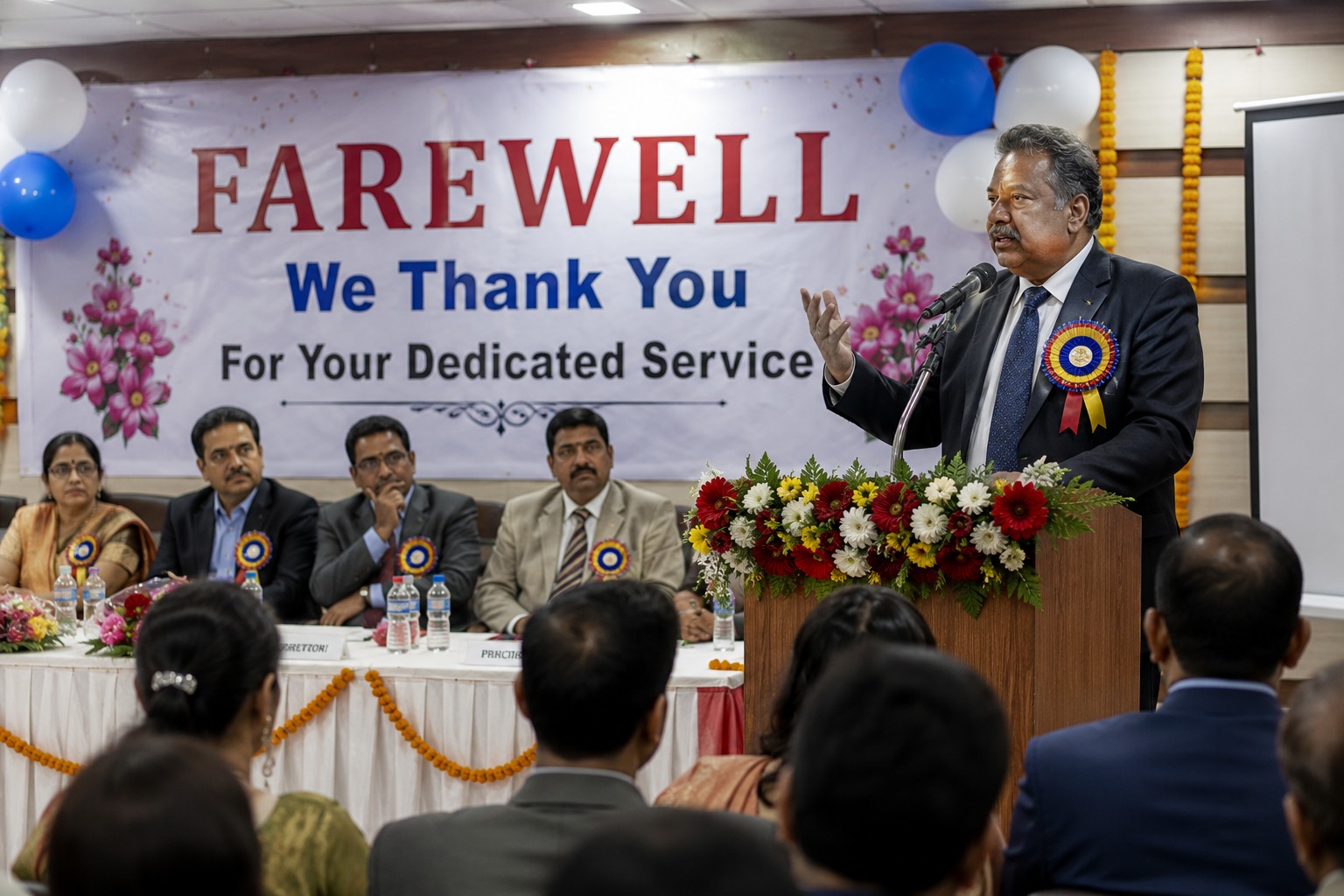
In many government offices, schools and colleges, farewell functions have increasingly become symbols of unnecessary extravagance rather than occasions of simplicity and grace. Lengthy ceremonies are organised, valuable instructional hours are sacrificed, and public resources are spent on emotional displays that last only a few moments. This is happening at a time when many of our institutions are struggling with questions of performance, quality and public trust.
The fundamental question is this: when our collective outcomes remain under scrutiny, should we not evaluate our performance before indulging in lavish praise? Should a teacher, officer or employee be remembered primarily for a farewell ceremony, or for the results of a lifetime of work? Is not the institution they served for decades the most authentic testimony to their contribution?
Perhaps the most disturbing aspect is the involvement of students in such events. Children are often encouraged to deliver speeches filled with exaggerated praise, highlighting supposedly extraordinary achievements and unparalleled services. These carefully choreographed moments are then circulated on social media to attract admiration and applause. One is compelled to ask whether educational institutions exist to nurture critical thinking, knowledge and character, or to cultivate personality worship.
The truth is that respect is earned through character, not ceremonies. Genuine recognition does not depend on banners, bouquets or elaborate tributes. If an individual has served with honesty, dedication and responsibility, their legacy remains alive in the hearts and minds of people. Such individuals do not require grand functions or social media campaigns to validate their worth.
Another unfortunate reality is that we often place greater value on emotional display than on actual achievement. Amid tears, sentimental speeches and prolonged tributes, an essential question gets lost: What tangible benefit did the institution derive from our presence? What improvements did we bring to our field of work? What example have we left behind for future generations?
Retirement should therefore be viewed not as an occasion for self-congratulation but as an opportunity for self-reflection. If farewell functions are held, their focus should be on sharing experiences, discussing institutional improvement and mentoring younger generations. Retiring professionals should speak not only about their successes but also about their mistakes and the lessons they learned along the way, enabling others to benefit from their experience.
An even more troubling aspect is that many farewell functions become exercises in expediency rather than truth. It is not uncommon to find individuals who, for years, privately criticised an officer or employee for incompetence, corruption, favouritism or administrative failures, suddenly extolling the same person’s honesty, dedication and exemplary character on the day of retirement. Poetry is recited, glowing tributes are delivered, and the impression is created that the institution is losing an irreplaceable asset.
If these praises are true, then what was the basis of years of criticism? And if the criticism was justified, what value do these public accolades hold? This contradiction points to a deeper weakness in our collective character—a tendency to sacrifice truth at the altar of convenience, relationships and short-term interests.
If this is not hypocrisy, what else can it be? To hold one opinion in private and present the exact opposite from a public platform does little service either to the individual or to the institution. Institutional reform becomes impossible when truth is routinely subordinated to social and professional compulsions. Respect is important, but respect should not come at the cost of honesty.
Developed societies do not build cults around individuals; they place performance at the centre of public life. There, retirement is often marked by quiet dignity and a sense of responsibility. In our context, however, the noise surrounding farewell functions sometimes drowns out the more important questions of accountability and achievement.
The time has come to ask ourselves: Do we seek the echo of applause, or the satisfaction of fulfilling our responsibilities? History rarely remembers ceremonies. It remembers character, integrity and performance. Ultimately, a person’s legacy is determined not by the honours they receive, but by the impact they leave behind.
Comments are closed.