Srinagar, Sep 10: Chief Minister Omar Abdullah on Thursday urged filmmakers from India and abroad to shoot in Jammu and Kashmir, saying the region was “open, safe, vibrant and eager to welcome your crews”, and pitched cinema as an industry that could generate employment for local youth.
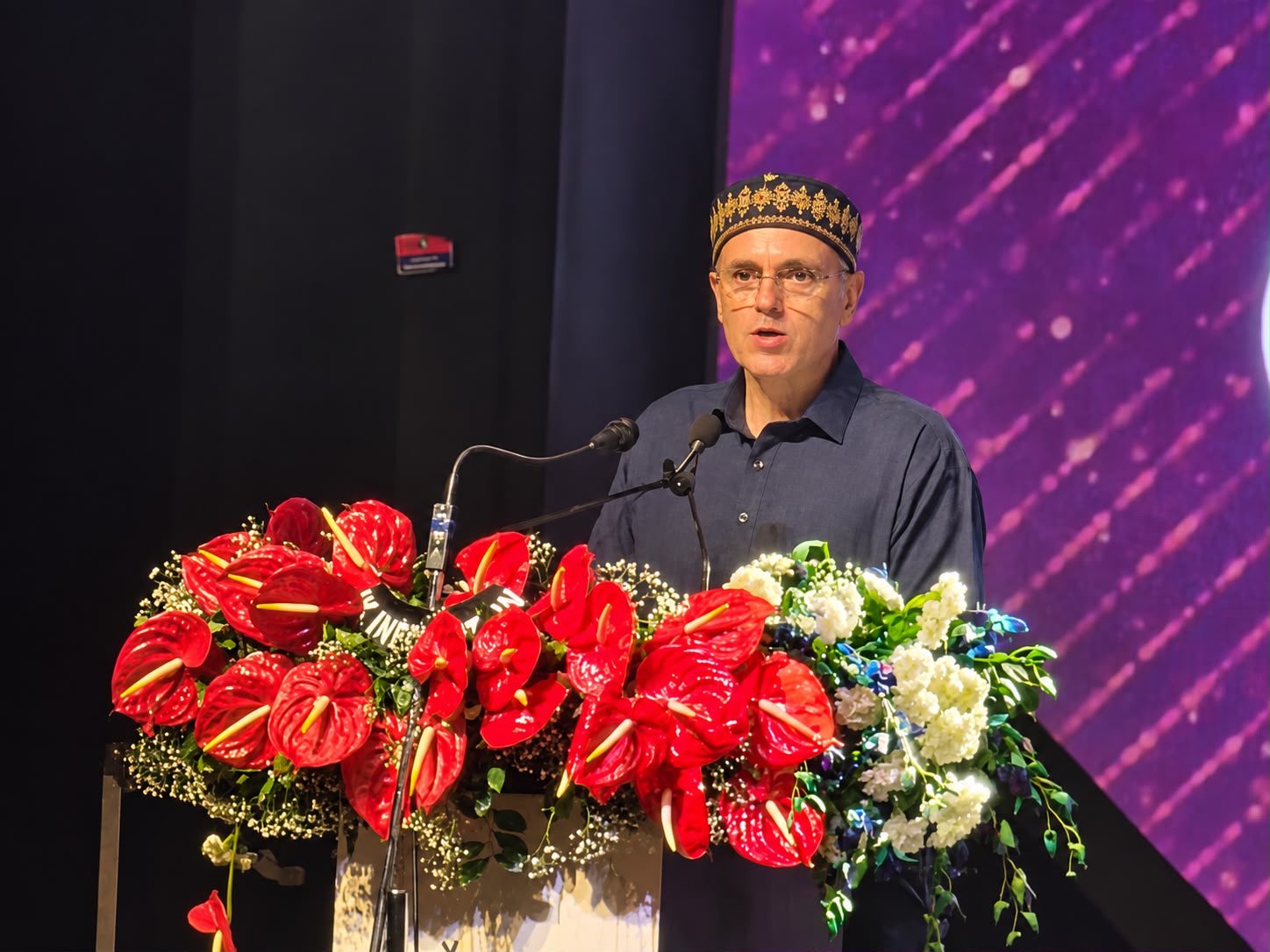
Speaking on the closing ceremony of the first-ever International Film Festival of Jammu and Kashmir (IFFJK) at the SKICC here, CM Omar as per Kashmir Convener said his government was working to bring film shoots back to the Valley, which he said had been a favoured destination before Switzerland and other foreign locations took over.
“We are trying to remind the film industry that films were made in Kashmir before Switzerland and other foreign locations became favoured destinations. We are trying to bring film shoots back to Kashmir. It will generate local employment and give a boost to the economy,” he said.
The Chief Minister said the J&K Film Policy had made the region filmmaker-friendly, offering financial subsidies linked to shooting days and local expenditure, single-window clearance through a dedicated online portal for location approvals and security permissions, and additional incentives for productions hiring local artists, technicians and crew.
“We are treating cinema not merely as entertainment but as an official industry — one that generates employment, nurtures young talent and brings global cultures together,” he said, adding that the government was building a local workforce of cinematographers, line producers, sound engineers and actors, and investing in post-production facilities, equipment banks, studios and film institutes.
Addressing the closing ceremony of the four-day festival, CM Omar said Jammu and Kashmir must move beyond being “merely a beautiful filming location” and become a place where stories are created and talent discovered.
Around 120 films from more than 30 countries were screened at the festival, but he said its deeper value lay in the connections it created. “A young writer meeting a director, an aspiring filmmaker learning from a professional, or two people meeting here who may one day make a film together.”
Recalling the region’s long association with cinema, he said the festival had brought back films that shaped Kashmir’s visual memory, including Junglee, Arzoo, Kashmir Ki Kali and Kabhi Kabhie, screened against the landscapes that made them memorable. “For decades, Kashmir travelled to audiences through a cinema screen. This week, in a sense, the screen came back to Kashmir.”
But, he cautioned, “nostalgia cannot define the future of Jammu and Kashmir’s film industry.” He said the region had more to offer than its landscapes — its languages, literature, music, craft, history and everyday lives. “Our landscapes may bring filmmakers here, but our stories, our people and our professional filmmaking environment can bring them back.”
Calling for a two-way relationship with the film industry, CM Omar said filmmakers from across the world should be welcomed while opportunities must be created for local talent to reach wider audiences and find collaborators beyond the region.
He said the success of IFFJK a decade from now should be measured not by the number of films screened or personalities attending, but by the careers launched, collaborations created and stories that reach audiences across India and the world. The festival, he added, should grow beyond a four-day annual event into a year-round platform for screening, learning, training and collaboration.
“Government can provide a platform and an enabling environment, but a vibrant film culture must be sustained by the creative community itself,” he said.’
Highlighting the economic potential of cinema, CM Omar said filmmaking could support professionals, local services, artists, jobs and businesses. “Films coming to Jammu and Kashmir should therefore leave behind not only valuable images but also skills, employment and stronger local capabilities.”
Inviting visiting filmmakers, actors and delegates to return, he said: “Come back to shoot, write, teach, collaborate and discover more of Jammu and Kashmir.”
To young filmmakers and storytellers, he urged them to learn the craft and tell stories from their neighbourhoods, villages, families and generations. “Some of cinema’s most powerful voices are intimate and local. What matters is that the voice be authentic and the craft remain strong.”
Reflecting on the venue, he said Dal Lake had for centuries reflected the mountains, sky and changing seasons, while cinema reflected the spirit of the world. “Perhaps the opportunity before us now is for Jammu and Kashmir increasingly to reflect itself through cinema — to tell its own stories, its own voices with confidence and to share them with audiences across India and the world.”
He said that while the curtain had come down on the first edition, he hoped it would not mark the end of the idea that brought everyone together. “If years from now, filmmakers from Jammu and Kashmir are standing in festivals across the world, the story is that first-hand encouragement of opportunity here.”
The festival, supported by the J&K Government and the Department of Information and Public Relations, featured 135 shortlisted films and concluded on September 10.


Comments are closed.