



Rizabul Hussain / Sneha Bhardwaj
Affordable, home-grown therapies must replace costly imports, and testing must reach district hospitals as well as metropolitan centres. A child’s genes cannot be chosen, but the care that follows can be. Science has begun to rewrite what a rare disease diagnosis means, and the task now is to make sure every family benefits from it.
A child who is slow to sit up, who tires easily or whose muscles seem weaker than they should be is often told to wait and watch. For families of children with rare genetic diseases, that waiting can last years, and the lost time cannot be recovered. Behind each such story is a condition written into the child’s genes before birth. For the first time, science is beginning to read that text early enough to change how it ends.
Rare diseases are rare one at a time but common together. A Lancet study notes that about 80 per cent of rare diseases have genetic roots, and around 70 per cent show up in childhood. The difficulty lies in finding them. Diagnosis can take four to eight years, and about 95 per cent of rare diseases have no approved treatment. Families often go from doctor to doctor and test to test before anyone names the condition.
The most important change is the ability to detect these disorders very early. Newborn screening tests a few drops of a baby’s blood for inherited metabolic, blood and genetic conditions, often before any symptom appears. This matters because many treatments work best when they start early. In spinal muscular atrophy (SMA), outcomes are significantly better when therapy begins before symptoms appear, and some pilot programmes in Indian states have started adding SMA to their newborn screening panels. Genetic testing and prenatal diagnosis give families another chance to understand their risk before a child is born.
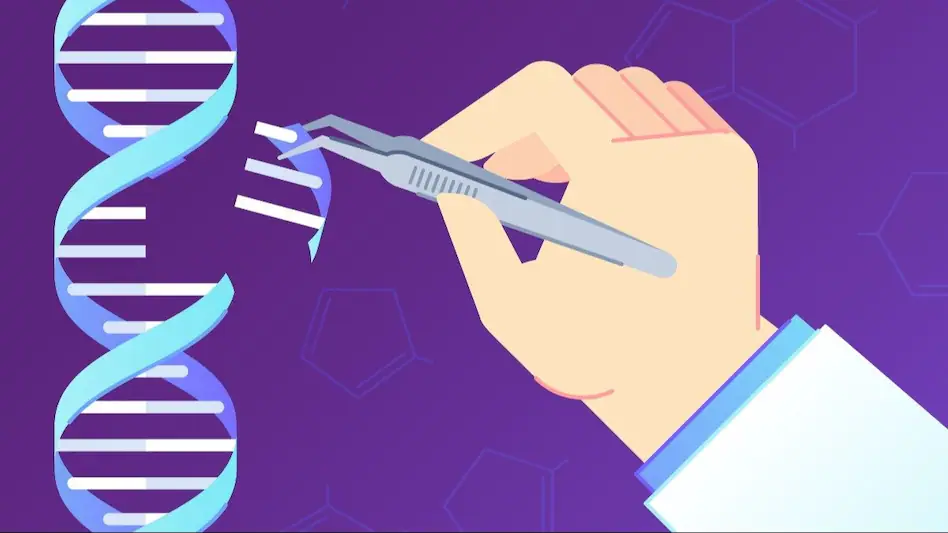
Treatment itself is also changing. Gene therapy aims to correct or replace the faulty gene instead of managing symptoms for life. India is making its own attempts. BIRSA 101, an Indian CRISPR gene-editing therapy now under development, is intended to treat sickle cell disease, which is common among tribal communities in Madhya Pradesh, Chhattisgarh and Jharkhand. At a national conference on rare diseases in May 2026, ICMR’s Director General pointed to progress in repurposed drugs and gene therapy, and to emerging technologies such as CAR-T cell therapy.
Policy has begun to catch up with science. Rare diseases were first formally recognised in the National Health Policy 2017 and given a structured framework by the National Policy for Rare Diseases, 2021. Financial assistance has since been raised to Rs 50 lakh per patient, and the focus is now on genetic screening and indigenous therapies. The number of Centres of Excellence has grown from eight to 15, including two in the Northeast.
Yet the distance between promise and reality is still wide. Some therapies are priced beyond almost any family’s reach. Zolgensma, a gene therapy for SMA, costs around Rs 17 crore for a single dose, and India imports it entirely from abroad. Even Rs 50 lakh covers only a small part of such a bill. Experts also say the support is often delayed, and it falls short for many children with lysosomal storage disorders such as Gaucher, Pompe and Niemann-Pick. A review of newborn screening in India points to fragmented programmes, inadequate registries, limited laboratory infrastructure, workforce shortages and high treatment costs. The registry itself is thin. ICMR’s national registry has only about 15,000 patients listed for 231 rare genetic diseases.
This is where laboratory science becomes central. Every genetic diagnosis begins with a sample and with trained professionals who can run the test and read the result correctly. Biochemical assays, cytogenetic studies and molecular tests all depend on skilled laboratory technologists and scientists. Without enough of them, and without well-equipped labs reachable beyond the big cities, new policies will remain promises on paper. Training this workforce is as vital as developing the drugs.
The road ahead is clear enough. Newborn screening must become national and cover treatable disorders. Registries must be complete, so that no child is invisible to the system. Affordable, home-grown therapies must replace costly imports, and testing must reach district hospitals as well as metropolitan centres. A child’s genes cannot be chosen, but the care that follows can be. Science has begun to rewrite what a rare disease diagnosis means, and the task now is to make sure every family benefits from it.
Comments are closed.