Srinagar, Nov 24: The use of heavy machinery near the ecologically fragile Sheshnag Lake along the Amarnath Yatra route has sparked controversy, with the Border Roads Organisation (BRO) defending the work as necessary for pilgrims safety even as political leaders, environmental activists and religious figures demanded transparency and scientific scrutiny.
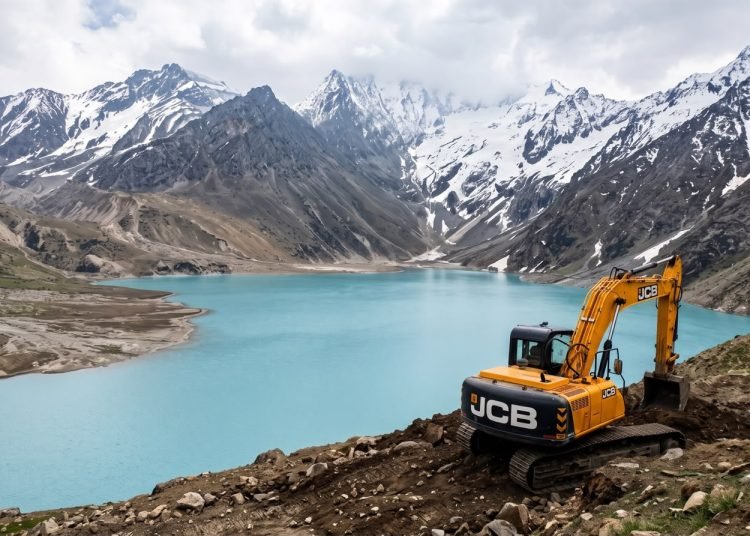
The row erupted after a video purportedly showing an excavator operating near the high-altitude glacial lake surfaced on social media, raising questions over the nature and scope of the work in the sensitive Himalayan terrain.
Former Jammu and Kashmir chief minister and PDP president Mehbooba Mufti on Tuesday attempted to visit the site to assess the situation but was stopped by police at Chandanwari, citing security reasons. She was accompanied by PDP legislators Waheed-ur-Rehman Para and Syed Muntazir Mehdi.
Mufti expressed concern over the reported excavation and questioned the use of heavy machinery in the area, saying she wanted to assess the ground situation.
The BRO, which is carrying out work along the pilgrimage route, said the activity was part of post-Yatra maintenance and track-stabilisation operations conducted in accordance with safety requirements and environmental safeguards.
The organisation said the work involved widening existing tracks and stabilising vulnerable stretches identified during previous pilgrimages to facilitate safer movement of pilgrims and ease congestion. It maintained that the activity was confined to existing tracks, with measures being taken for proper disposal of excavated material, protection of natural drainage and minimal disturbance to the surrounding terrain.
The BRO rejected claims circulating on social media about new construction, saying the work was aimed at improving the existing pilgrimage route. It cited requirements arising from previous pilgrimages and the need to stabilise vulnerable stretches, with reports linking the activity to directions concerning pilgrim safety in litigation related to the Amarnath route before the Supreme Court.
However, the clarification failed to allay concerns, with opposition leaders and activists seeking details about the nature and scope of the work, permissions obtained and safeguards being followed.
CPI(M) leader and Kulgam MLA M Y Tarigami called for an immediate halt to any activity that could threaten the lake and its surroundings, describing the area as a fragile landscape with loose moraine and steep slopes. He said infrastructure for pilgrims was necessary but stressed that development in the high Himalayas should be guided by scientific assessments, environmental studies and consultations with experts and local communities. Tarigami also sought disclosure of project details and the agency carrying out the work, besides demanding an inspection by glaciologists and environmental experts.
Former Srinagar MP Aga Syed Ruhullah Mehdi criticised the reported activity, questioning the use of machinery near a lake considered sacred and ecologically vulnerable.
PDP spokesperson Mohit Bhan described the activity as an affront to the religious significance of Sheshnag, arguing that environmental conservation and faith were closely linked.
Kashmir’s chief cleric Mirwaiz Umar Farooq expressed concern over the visuals, saying improvements in facilities for pilgrims were welcome but should not come at the cost of the fragile Himalayan ecosystem.
Environmental activist Raja Muzaffar Bhat questioned how heavy machinery had reached the high-altitude area and sought accountability from the authorities.
Sheshnag Lake, situated in south Kashmir’s Anantnag district, is a high-altitude glacial lake along the traditional Pahalgam route of the Amarnath pilgrimage and an important halt for pilgrims travelling towards the cave shrine. It is among 14 high-risk glacial lakes identified in Jammu and Kashmir, making activities in its vicinity particularly sensitive.
The traditional Pahalgam route passes through Chandanwari, Sheshnag and Panchtarni before reaching the shrine, with pilgrims traversing difficult high-altitude terrain marked by steep slopes, narrow tracks and changing weather conditions.
The controversy has brought renewed attention to infrastructure development in fragile Himalayan areas, where road construction, slope cutting, dumping of excavated material and changes in drainage can have environmental implications.
With Sheshnag identified among high-risk glacial lakes, critics have called for greater transparency and scientific scrutiny of the work, including its scope, environmental safeguards and any assessment of potential risks to the lake and downstream areas.


Comments are closed.