
Naturopathy: Natural Healing for a Healthy India
As lifestyle-related disorders, stress and obesity become growing public health concerns, naturopathy and yoga offer an opportunity to renew our focus on prevention, healthy living and a closer relationship with nature. Their future, however, must rest on scientific research, responsible practice and wider public awareness.

S Ahmad
Modern healthcare has made extraordinary progress. Medical science can now diagnose illnesses with remarkable precision, perform complex surgeries, develop life-saving medicines and provide treatments that were difficult to imagine only a few decades ago. Yet, alongside these achievements, society is facing another growing challenge: an increasing burden of lifestyle-related disorders, stress, obesity and health problems associated with changing patterns of food, work and everyday living.
Long working hours, limited physical activity, irregular eating habits, inadequate sleep and prolonged exposure to stress have become familiar features of modern life. For many people, healthcare begins only after an illness develops. Preventive habits, meanwhile, are often pushed aside until the body begins to show signs of distress.
This raises an important question: can healthcare become more effective if greater attention is given not only to treating illness but also to preventing it?
This is where naturopathy and yoga deserve a meaningful place in India’s wider healthcare conversation.
Naturopathy rests on a simple philosophy: nature, healthy habits and the body’s own capacity for recovery should form an important part of maintaining well-being. It encourages people to reconsider their relationship with food, physical activity, rest and the environment. Rather than treating health as something that depends entirely on medicines and hospitals, it promotes a way of life in which prevention, balance and personal responsibility receive greater attention.
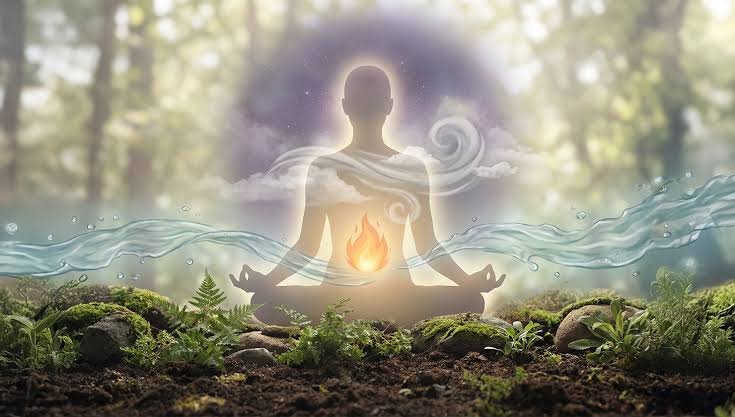
The philosophy is often described as a return to nature. It draws upon natural elements and practices, including diet, fasting under appropriate supervision, hydrotherapy, mud packs, massage and other lifestyle-based interventions. In India, naturopathy is closely associated with yoga and traditional concepts such as Panchabhuta, which refers to the five elements of nature: earth, water, air, fire and ether.
The relevance of this approach becomes clearer when we look at the changing health needs of society. The growing incidence of obesity, diabetes, stress-related conditions and other lifestyle disorders has made preventive healthcare an urgent priority. A healthy diet, regular physical activity, adequate sleep and effective stress management are not complicated ideas, yet they remain difficult to practise consistently in everyday life.
Naturopathy encourages people to make these habits part of their routine.
Prevention must become a priority
One of the biggest weaknesses of modern lifestyles is that people often ignore preventive healthcare. Many remain indifferent to their eating habits, physical activity and sleep patterns until a medical problem forces them to seek attention.
Healthcare systems must, of course, remain equipped to diagnose and treat diseases. Hospitals, doctors, medicines and advanced medical technologies are indispensable. But the long-term health of a population cannot depend on treatment facilities alone. It also requires awareness, education and everyday habits that reduce preventable health risks.
This is where the philosophy of naturopathy offers an important perspective. It places emphasis on the relationship between lifestyle and health and encourages individuals to take greater responsibility for their well-being.
A person who eats sensibly, remains physically active, gets adequate rest and manages stress is making an important investment in long-term health. These practices are relevant across age groups and economic backgrounds. They do not require expensive equipment or elaborate facilities, although professional guidance may be necessary in certain circumstances.
The message is particularly important for younger generations. Children and adolescents are growing up in an environment where screen time, sedentary activities, processed food and irregular routines are increasingly common. Developing healthy habits early can help establish a stronger foundation for adulthood.
Similarly, older people can benefit from appropriate physical activity, balanced nutrition, relaxation and social engagement. Healthy ageing should not be understood merely as living longer, but as maintaining the ability to remain active and independent for as long as possible.
Naturopathy’s emphasis on prevention and lifestyle change therefore deserves wider public discussion. However, its claims must be supported by credible research, and natural therapies should not be presented as guaranteed cures for serious illnesses. People living with chronic or complex conditions must continue to receive appropriate medical evaluation and treatment. Responsible integration, rather than competition between healthcare systems, should be the guiding principle.
Gandhi’s enduring connection with nature cure
The discussion about naturopathy in India cannot be separated from the contribution of Mahatma Gandhi.
Gandhi believed that personal cleanliness, sanitation, suitable food, physical exercise and a disciplined lifestyle were essential to maintaining health. His interest in nature cure was connected with his wider philosophy of simplicity, self-reliance and harmony with the natural environment.
On 18 November 1945, Gandhi became the Lifetime Chairman of the All India Nature Cure Foundation Trust in Pune and signed its deed. This date later acquired national significance when the Ministry of Ayush declared 18 November as Naturopathy Day, with the observance beginning in 2018.
In 1946, Gandhi also led a nature cure campaign at Uruli Kanchan, a village near Pune. His approach reflected the belief that communities could improve their health through better sanitation, diet, exercise and awareness of natural living.
His ideas remain relevant because they draw attention to a basic truth: healthcare is not confined to hospitals. The condition of our homes, neighbourhoods, food, water and surroundings also influences our well-being.
Gandhi’s emphasis on cleanliness and personal responsibility also has a wider public health dimension. Safe drinking water, proper sanitation, clean surroundings and healthy food practices are essential to preventing illness. These are not merely individual responsibilities; they require collective action and effective public institutions.
The value of revisiting Gandhi’s association with nature cure lies not in treating every historical belief as a modern medical conclusion, but in recognising the continuing importance of preventive habits, community participation and a disciplined approach to health.
Building institutions around naturopathy and yoga
For naturopathy to grow beyond general public interest, it requires institutions capable of providing education, research, treatment and professional standards.
India has taken steps in this direction through the Ministry of Ayush and the National Institute of Naturopathy (NIN), Pune. Established on 22 December 1986, the institute functions as an autonomous body under the Ministry of Ayush. Its home, Bapu Bhavan, reflects the continuing association between the institution and Gandhi’s legacy of nature cure.
The institute works towards standardising and disseminating knowledge in naturopathy and yoga, promoting education and training, encouraging research and developing a wider understanding of natural approaches to health.
Its activities also include specialised outpatient services. These cover areas such as maternal care, diabetes management through diet and lifestyle interventions, and mind-body medicine involving yoga, meditation and relaxation for stress and anxiety.
Such services demonstrate the potential of institutions to connect traditional approaches with organised healthcare delivery. They also create opportunities for public education, allowing people to understand how lifestyle changes can support their health.
An important development in this direction was the inauguration of Nisarg Gram, the new campus of the National Institute of Naturopathy in Pune, by Prime Minister Narendra Modi on 25 February 2024.
Spread over 25 acres at Yewalewadi and constructed at a cost of Rs. 213.55 crore, the campus includes a 250-bed hospital, a research and extension centre and a naturopathy medical college offering undergraduate, postgraduate and paramedical courses.
Its facilities include a yoga hall, Saatvik diet centre, hydrotherapy, magnetotherapy, chromotherapy, massage and physiotherapy.
The campus represents a significant investment in the institutional development of naturopathy. It provides infrastructure for treatment, education and research under one system. More importantly, it reflects an effort to give naturopathy a stronger institutional foundation rather than allowing it to remain confined to informal practices and scattered centres.
The establishment of such facilities must, however, be accompanied by quality standards, qualified professionals, transparent treatment protocols and regular evaluation. Public confidence in any healthcare system depends not merely on the buildings it constructs but also on the quality, safety and effectiveness of the services it delivers.
The need for scientific evidence
One of the most important challenges facing naturopathy is the need to strengthen its scientific foundation.
Natural therapies have attracted public interest for generations, but popularity alone cannot establish medical effectiveness. Individual experiences and traditional knowledge may provide useful starting points for research, yet healthcare decisions must also be informed by systematic studies, clinical evaluation and reliable evidence.
This is particularly important when naturopathy is discussed in relation to chronic, autoimmune, degenerative and other serious health conditions. Such conditions can require specialised diagnosis and treatment. No patient should be encouraged to discontinue prescribed medication or delay necessary medical care on the assumption that a natural therapy will provide a cure.
The responsible way forward is to examine individual therapies through appropriate scientific methods, identify their potential benefits and limitations, and determine where they can safely complement conventional treatment.
The Central Council for Research in Yoga and Naturopathy (CCRYN), which has been engaged in research, promotion and development in these fields since 1978, has an important role in this process. The council is fully funded by the Ministry of Ayush and has 22 units across the country.
The National Institute of Naturopathy also has a dedicated research department and an Institutional Ethics Committee registered with the Department of Health Research. Its work includes research methodology workshops, Good Clinical Practice training, observational studies, systematic reviews and collaborative research.
Its ongoing studies cover different methods of fasting, hip baths, wet sheet packs, sun exposure and type 2 diabetes, integrated naturopathy and yoga programmes, gut microbiota and the use of naturopathy and yoga in relation to knee osteoarthritis.
Such research is important because it can help move the discussion beyond general claims and towards a clearer understanding of what works, for whom, under what conditions and with what limitations.
The emphasis on research was also highlighted by Vaidya Rajesh Kotecha, Secretary, Ministry of Ayush, who stressed the importance of scientific validation, systematic research, clinical evaluation and collaboration in strengthening the credibility and wider application of naturopathy.
This should remain the central direction of future development. Traditional knowledge deserves serious examination, but it must also be open to scientific scrutiny. A healthcare approach becomes stronger when its benefits are demonstrated, its limitations are acknowledged and its practitioners follow responsible standards.
Education and professional standards
The expansion of naturopathy also depends on the availability of trained professionals.
The Bachelor of Naturopathy and Yogic Sciences (BNYS) programme offered at Nisarg Gram is an important step in this direction. The National Institute of Naturopathy is the first Central Government institution in the country to offer this programme in affiliation with a Central University, Shri Lal Bahadur Shastri National Sanskrit University, New Delhi.
The course extends over five and a half years, including four and a half years of academic and clinical training followed by a one-year Compulsory Rotatory Residential Internship. For the 2026-27 academic session, 100 seats have been offered at Nisarg Gram, with classes scheduled to begin on 30 November 2026.
The wider educational landscape also indicates the need for continued investment. As of 1 April 2024, the country had 71 undergraduate naturopathy colleges with an admission capacity of 5,214 students and six postgraduate colleges with a capacity of 144 students.
Professional registration is another important requirement. The Naturopathy Registration Board, constituted by the Ministry of Ayush under the aegis of NIN, provides central registration to eligible practitioners and accredits naturopathy institutions and hospitals.
Such arrangements are necessary to establish professional accountability. Patients must be able to distinguish qualified practitioners from individuals making unsupported claims or offering treatments without appropriate training.
The short skill-development courses offered by NIN also have a wider role. Courses in acupressure, naturopathy and naturopathy cooking promote self-care, while training in massage, fitness and yoga can help participants develop professional skills.
The idea of self-health reliance is useful when understood correctly. It encourages individuals and families to learn healthy practices and become more aware of their well-being. It should not, however, be confused with self-diagnosis or replacing professional medical advice when illness requires treatment.
Taking natural healthcare to tribal communities
One particularly meaningful aspect of the expansion of naturopathy is its outreach to tribal communities.
With support from the Tribal Development Department of the Government of Maharashtra, the National Institute of Naturopathy has established Nisarg Arogya Sadhana Kendra at Gohe (Budruk), in Ambegaon taluka of Pune district.
The facility functions as a yoga and naturopathy hospital for tribal people. It has 20 beds, separate wards for men and women, a yoga hall and a diet centre. Its objective is to address nutritional needs through locally available resources and develop a sustainable model of healthcare based on natural therapies.
The centre also serves as a training facility where tribal youth can learn skills related to naturopathy and yoga. Its Treatment Assistant Training Course has an annual admission capacity of 40 tribal students.
This approach is significant because healthcare outreach must respond to the realities of the communities it serves. Geographical isolation, limited access to medical facilities, economic difficulties and local food practices can influence the health needs of tribal populations.
Working with locally available resources and training community members can help strengthen awareness and participation. It can also create opportunities for traditional knowledge to be documented and examined responsibly.
The wider government effort to engage tribal healers as community-level partners in health outreach reflects this growing interest in community participation. A national capacity-building programme for tribal healers was held in Hyderabad on 16 January 2026, involving the Ministry of Tribal Affairs, the Ministry of Health and Family Welfare, the Indian Council of Medical Research and the Ministry of Ayush.
During Janjatiya Gaurav Pakhwada 2026, a capacity-building conclave held in Hyderabad on 1 and 2 November brought together around 1,500 traditional healers from nine States and Union Territories.
Such initiatives recognise that communities possess knowledge and experience that can contribute to local health outreach. At the same time, traditional practices must be assessed responsibly, with patient safety and appropriate referral to qualified medical services remaining essential.
Naturopathy, wellness and India’s international role
India’s traditional systems of medicine have also attracted growing international attention.
The country’s wellness sector increasingly includes yoga, Ayurveda, naturopathy and other traditional approaches. International visitors are drawn to India for wellness programmes, rehabilitation and lifestyle-related care, alongside conventional medical treatment.
According to the supplied government figures, the number of international patients visiting India for all kinds of healthcare increased from 1,82,945 in 2020 to 6,44,387 in 2024. Yoga, Ayurveda and wellness-based therapies have emerged as contributors to this growth.
The introduction of a dedicated Ayush Visa on 27 July 2023 was intended to make it easier for foreign nationals and their attendants to visit India for treatment under Ayush systems. The initiative forms part of the broader Heal in India vision, which seeks to strengthen India’s position as a destination for medical value travel.
The Union Budget in February 2026 also announced five proposed Regional Medical Value Tourism Hubs, which are expected to combine advanced medical treatment with traditional therapies, wellness services and rehabilitation.
This creates an opportunity for India to present its traditional systems to the world. However, international credibility will depend on more than attractive wellness facilities and promotional campaigns. It will require trained professionals, transparent standards, credible research, patient safety and honest communication about the benefits and limitations of different therapies.
India’s traditional healthcare systems can gain greater recognition when their practices are supported by evidence and delivered responsibly.
Prakrutik Chikitsa, Swasth Bharat: A timely message
The 9th National Naturopathy Day, to be observed on 18 November 2026 at the Central Research Institute of Yoga and Naturopathy in Nagamangala, Karnataka, carries the theme ‘Prakrutik Chikitsa, Swasth Bharat’.
The theme places prevention at the centre of the discussion, highlighting good nutrition, physical activity, yoga and stress management, with particular attention to obesity prevention.
It is a timely message. India’s healthcare priorities must include both the treatment of disease and the promotion of healthier lifestyles. Public awareness campaigns, school-level health education, workplace wellness initiatives and community programmes can all contribute to this effort.
The challenge is to translate the message into everyday practice.
Schools can encourage physical activity and better food habits among children. Workplaces can create healthier routines and promote stress management. Local health institutions can organise awareness programmes on nutrition, exercise and preventive care. Families can make small but meaningful changes in their daily routines.
Naturopathy and yoga can contribute to this wider effort when they are taught and practised responsibly. Their strongest public value may lie not in promises of miraculous cures but in encouraging people to pay attention to the basic habits that support good health.
Carrying the philosophy forward
Naturopathy’s message is simple: health is closely connected with the way we eat, move, rest and interact with our surroundings. Its emphasis on nature, prevention and lifestyle change offers useful ideas at a time when society is confronting the consequences of increasingly sedentary and stressful lives.
India has taken steps to strengthen this system through the National Institute of Naturopathy, Nisarg Gram, educational programmes, research institutions, hospitals, practitioner registration and community outreach.
These developments provide an institutional foundation, but the real test will be the quality of care, the strength of scientific evidence and the extent to which ordinary people can access reliable information and services.
Naturopathy should neither be dismissed without examination nor promoted through exaggerated claims. Its practices deserve research, its practitioners must be properly trained, and patients must receive honest guidance about the role natural therapies can play alongside conventional healthcare.
Ultimately, the idea of healing with nature is also an invitation to rethink our everyday choices. A healthy society cannot be built through hospitals alone. It also requires clean surroundings, nutritious food, physical activity, adequate rest, awareness and a culture that values prevention.
As India observes National Naturopathy Day under the theme ‘Prakrutik Chikitsa, Swasth Bharat’, the larger message deserves attention beyond a single day of celebration. The aim should be to make healthy living a regular part of public life, supported by education, credible research and accessible healthcare.
Nature cannot replace modern medical science, just as medical technology cannot remove the need for responsible living. The two can contribute to a healthier future when their roles are understood clearly and their benefits are pursued with care.
The true promise of naturopathy lies in reminding us that healthcare is not only about fighting disease after it appears. It is also about creating the conditions in which people can live healthier, more balanced and more fulfilling lives.
Comments are closed.