PAMPORE, November 6: Timely rainfall and favourable flowering conditions have raised hopes of a better saffron harvest in Kashmir this year, Director Agriculture Kashmir Sartaj Ahmad Shah said, while urging growers to take collective responsibility for maintaining irrigation infrastructure to ensure sustained production.
Speaking to Kashmir Convener during a visit to the India International Kashmir Saffron Trade Centre (IIKSTC) at Dusoo, Pampore, Shah said the crop had witnessed encouraging flowering following rainfall at regular intervals, raising expectations of a promising harvest across the saffron-growing belt.
He said last year’s production had declined due to a prolonged dry spell, with inadequate irrigation being one of the major reasons for the reduced yield.
Stressing the importance of irrigation in sustaining saffron cultivation, Shah said the government had installed around 124 borewells in saffron-growing areas, which needed to be made fully functional to ensure adequate water supply to the fields.
However, he expressed concern that farmers had yet to fully appreciate the importance of irrigation and their role in maintaining the facilities created for their benefit.
He said the government was committed to restoring the borewells, but growers must come forward and form Water User Associations (WUAs) to ensure their proper operation and long-term sustainability.
“The department’s responsibility is to make these borewells functional once. After that, their operation, maintenance and recurring expenses will have to be borne by the farmers who benefit from them. The government has no provision for meeting these recurring costs,” he said.
Shah said the restoration of each borewell involved substantial government investment, ranging from Rs 75 lakh to Rs 1.20 crore, depending on the requirements, including drip and sprinkler irrigation facilities.
He said farmers must collectively take responsibility for maintaining the infrastructure, as its benefits would directly accrue to their agricultural fields.
Explaining the proposed structure of the Water User Associations, Shah said each borewell generally covered a command area of around 30 hectares, equivalent to approximately 600 kanals.
All farmers falling within the respective command areas, he said, needed to come together, form associations and contribute towards the operational and maintenance expenses of the irrigation facilities.
The Director also flagged the alleged theft and misuse of irrigation infrastructure in several areas, including pipes, drip irrigation systems, sprinkler equipment and lateral pipes.
“Wherever we have installed borewells, pipes and drip and sprinkler irrigation systems, people have stolen them. We have even installed fencing to protect this infrastructure, but that too has been misused.
These facilities are meant to benefit farmers, and they must understand their responsibility in protecting them,” he said.
Shah said the government intended to facilitate nearly 6,000 beneficiaries through these irrigation facilities, but expressed concern over repeated incidents of theft and damage to public infrastructure.
He urged saffron growers to cooperate with the Agriculture Department, establish Water User Associations and safeguard the facilities to ensure their continued operation and long-term benefit to saffron cultivation.
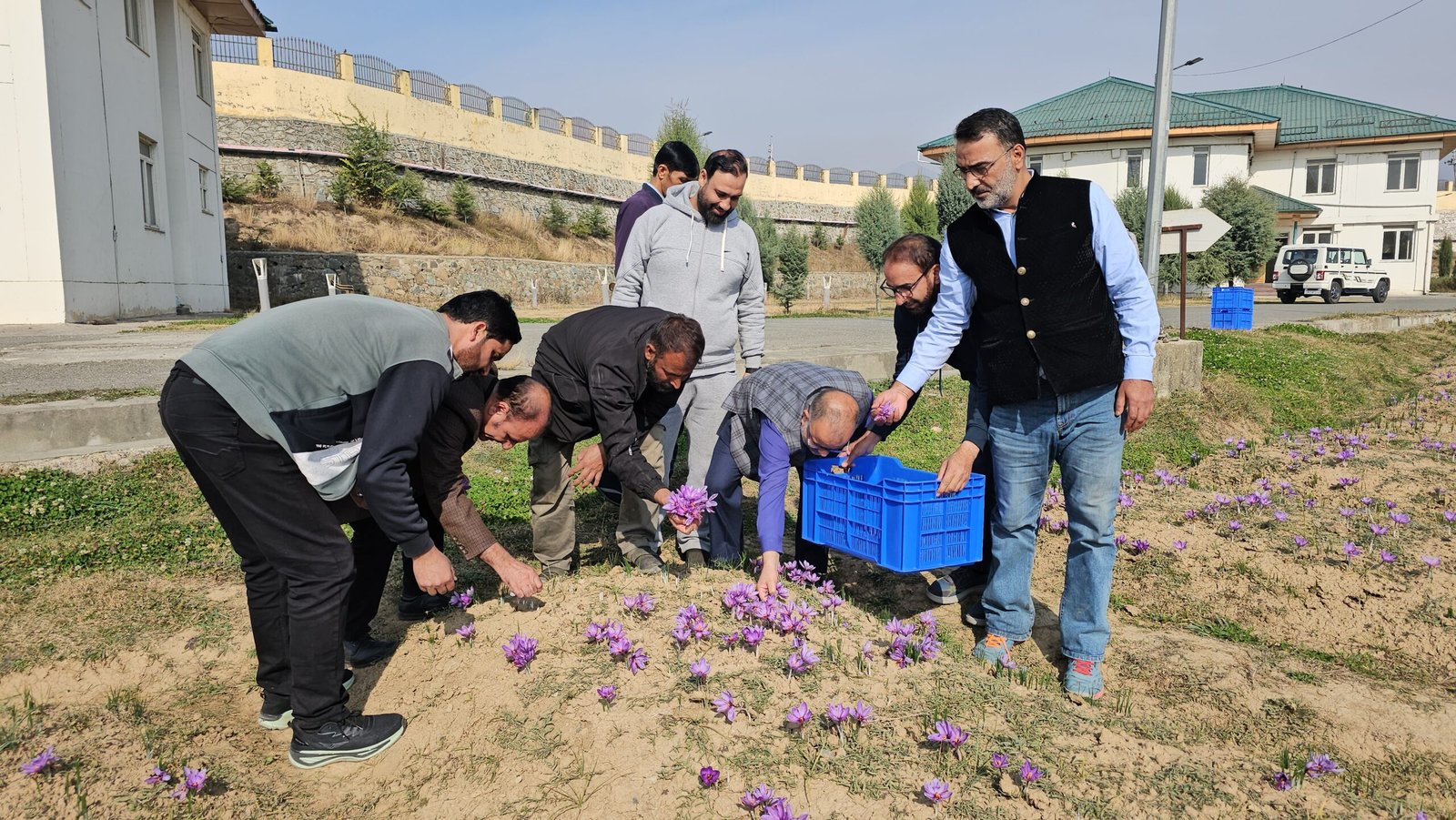
During the visit to IIKSTC, Dusoo, Shah was accompanied by departmental officials and also participated in saffron flower plucking. He interacted with growers and officials and took stock of the ongoing harvesting activities.


Comments are closed.