


Javaid Jawad
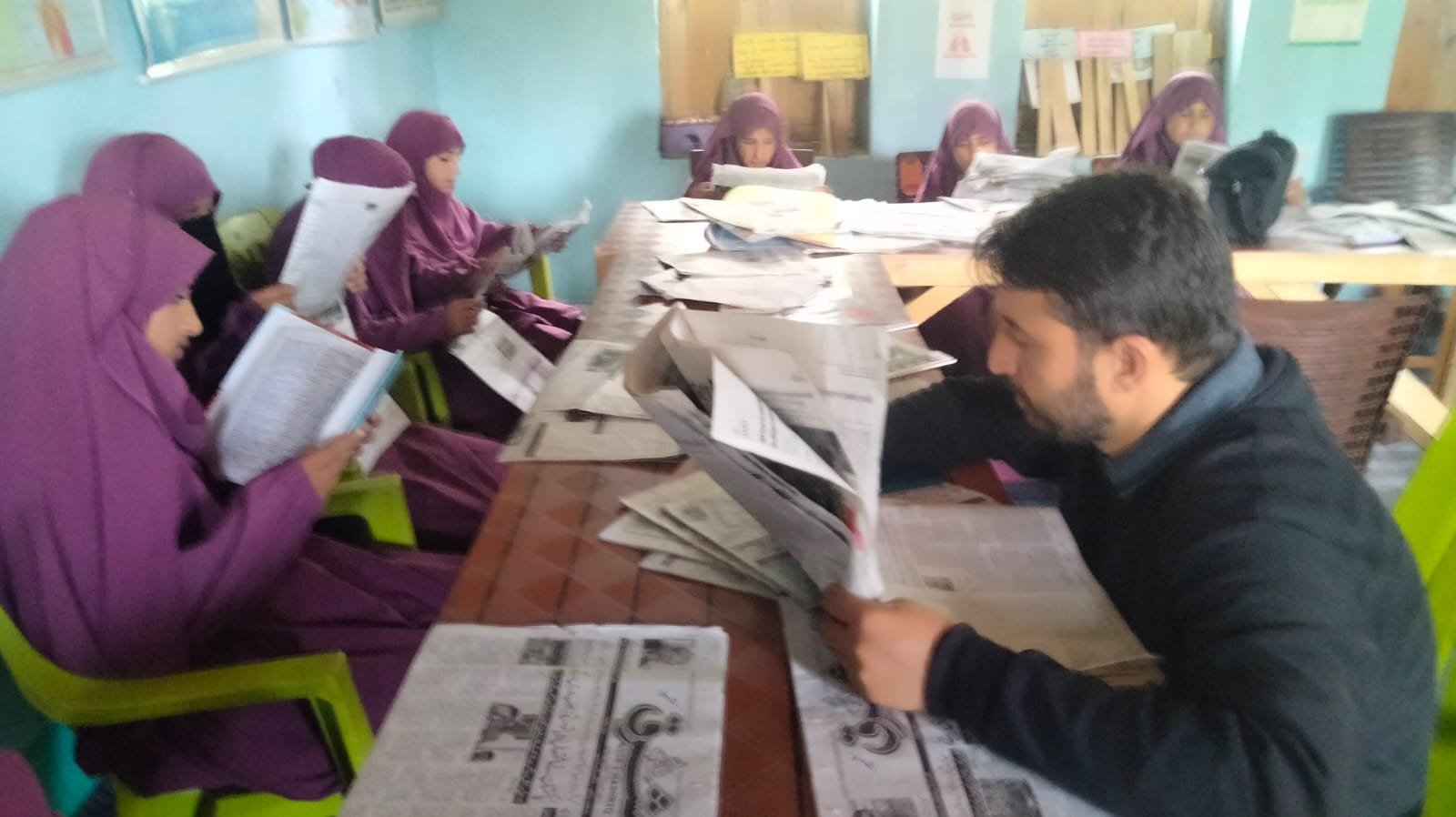
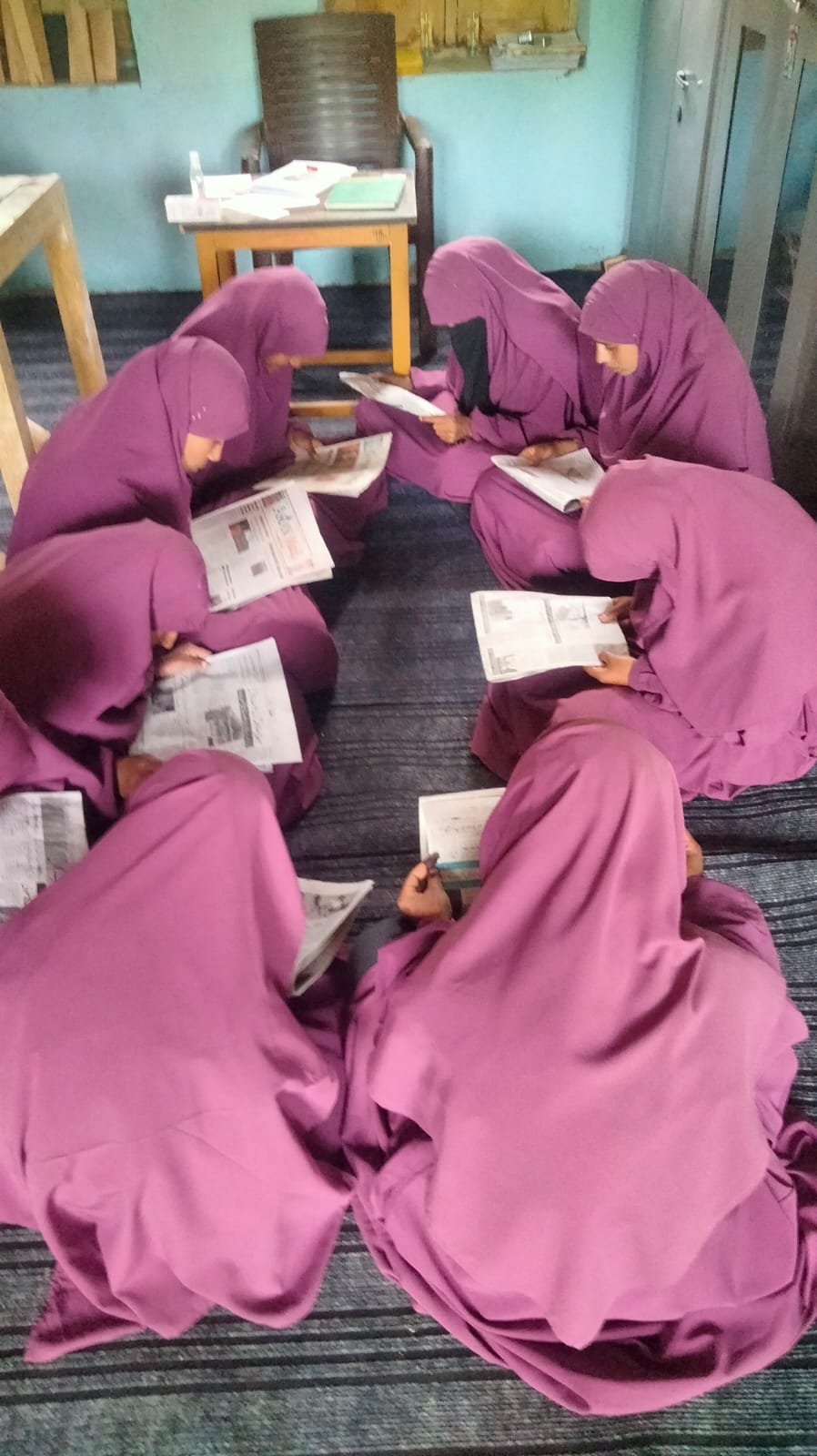
There was a time when students of government schools were, at least, proficient in Urdu. They could read, write, and speak the language with confidence. Today, barring a few exceptions, many of them seem to be falling behind in both English and Urdu—a matter that calls for serious reflection and immediate attention.
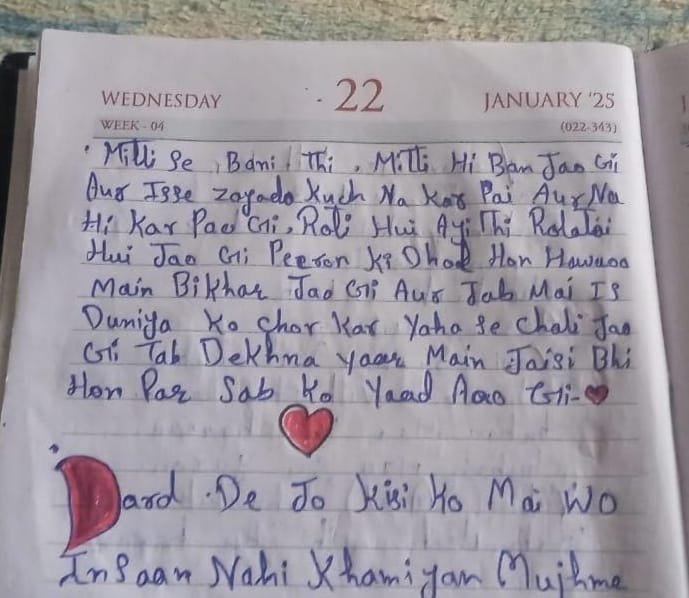
This morning, during the morning assembly, a student was reciting a naat before the school, her voice melodious and confident. I was listening attentively along with the other students and teachers when the incorrect pronunciation of a word suddenly caught my attention.
I walked towards the dais and looked closely at the diary she had placed in front of her. What I saw left me surprised. The entire naat had been written not in the Urdu script, but in Roman letters.
On the surface, it was an ordinary incident. But to me, it was much more than a student’s mispronunciation or an unusual way of writing. In that small moment, I saw a much larger picture of our changing relationship with Urdu.
The incident took me back to the days when children in government schools, although often considered less proficient in English, had a fairly strong command of reading and writing Urdu. In those schools, all subjects—including Mathematics and Science—were taught in the Urdu script. Urdu, therefore, was not merely a subject; it was an integral part of a child’s entire educational experience.
Students read questions in Urdu, wrote their answers in Urdu, read their textbooks in Urdu and expressed their thoughts in the same language. As a result, they developed a natural and strong relationship with both the language and its script.
Then things began to change.
The medium of instruction in government schools gradually shifted from Urdu to English. Along with this change, children’s relationship with Urdu also became increasingly limited. Urdu began to be confined largely to its textbook, examinations and a few specific activities.
The situation was further shaped by the changing educational backgrounds of teachers. A considerable number of young teachers entered the profession after having themselves been educated in English-medium schools. Consequently, Urdu—which is not only an important part of our linguistic heritage but also of our literary, cultural and historical identity—has gradually moved further away from the younger generation.
The reflection of this change is now clearly visible in our government schools.
I still remember the time when I joined the Department of Journalism and Mass Communication at the University of Kashmir. Almost all my classmates, except me, came from English-medium backgrounds. Initially, I felt that my relative weakness in English might become a major obstacle for me.
But Urdu has given me a different kind of confidence.
I could read and write Urdu fluently and, more importantly, I could articulate my thoughts effectively. That experience made me realise, perhaps for the first time, that language is not merely a means of communication. It plays a fundamental role in shaping the way we think, feel and understand the world.
The language in which a child dreams his or her earliest dreams, listens to stories, asks questions and expresses emotions does not remain merely a language of textbooks. It becomes part of the child’s personality.
That is why, when I see a child today writing Urdu words in Roman script, I do not see merely an individual student’s weakness. I see a reflection of the changing linguistic habits of an entire generation.
It makes us pause and ask: in teaching our children one language, are we inadvertently depriving them of the basic script and cultural connection associated with another?
There is no denying that English is an important global language today. It is a language of knowledge, research, technology and employment. Our children must learn English, and they should strive to acquire a high level of proficiency in it.
But learning English should never mean moving away from our mother tongues, national languages or regional languages. We cannot make our children proficient in English at the cost of making them unable to read their own language.
The real issue, therefore, is not a choice between English and Urdu. It is a question of balance.
A child can excel in English while also acquiring fluency, literacy and confidence in Urdu. Building strong connections with global languages is undoubtedly important, but linguistic progress achieved at the cost of weakening one’s relationship with one’s oficial language remains incomplete in some fundamental way.
Comments are closed.