

Let Kashmir’s Friday Sermons Help Heal Society and Not Feed Politics

Dr. Siddhartha Ghosh


The problems addressed by the pulpit belong to all and therefore, the solutions should be the joint effort of all. A state that assists without obtrusively interfering with religious affairs does not threaten religious autonomy. It is a state partner in reform that Jammu and Kashmir needs the most.

Not many things touch the ordinary lives in Kashmir like the Friday congregation. Each week the mosque unites the student and the trader, the elderly and the mid-aged. It is not surprising that religious leadership of Kashmir and its Waqf Administration came to the same conclusion, that there is a need for Friday sermons to address the social evils afflicting Kashmir including increasing rates of drug abuse and youth suicides and the disintegration of the social fabric of the family. It is surprising that one call for reform was welcomed while the other was seen as a malicious intervention.

Two initiatives, one purpose

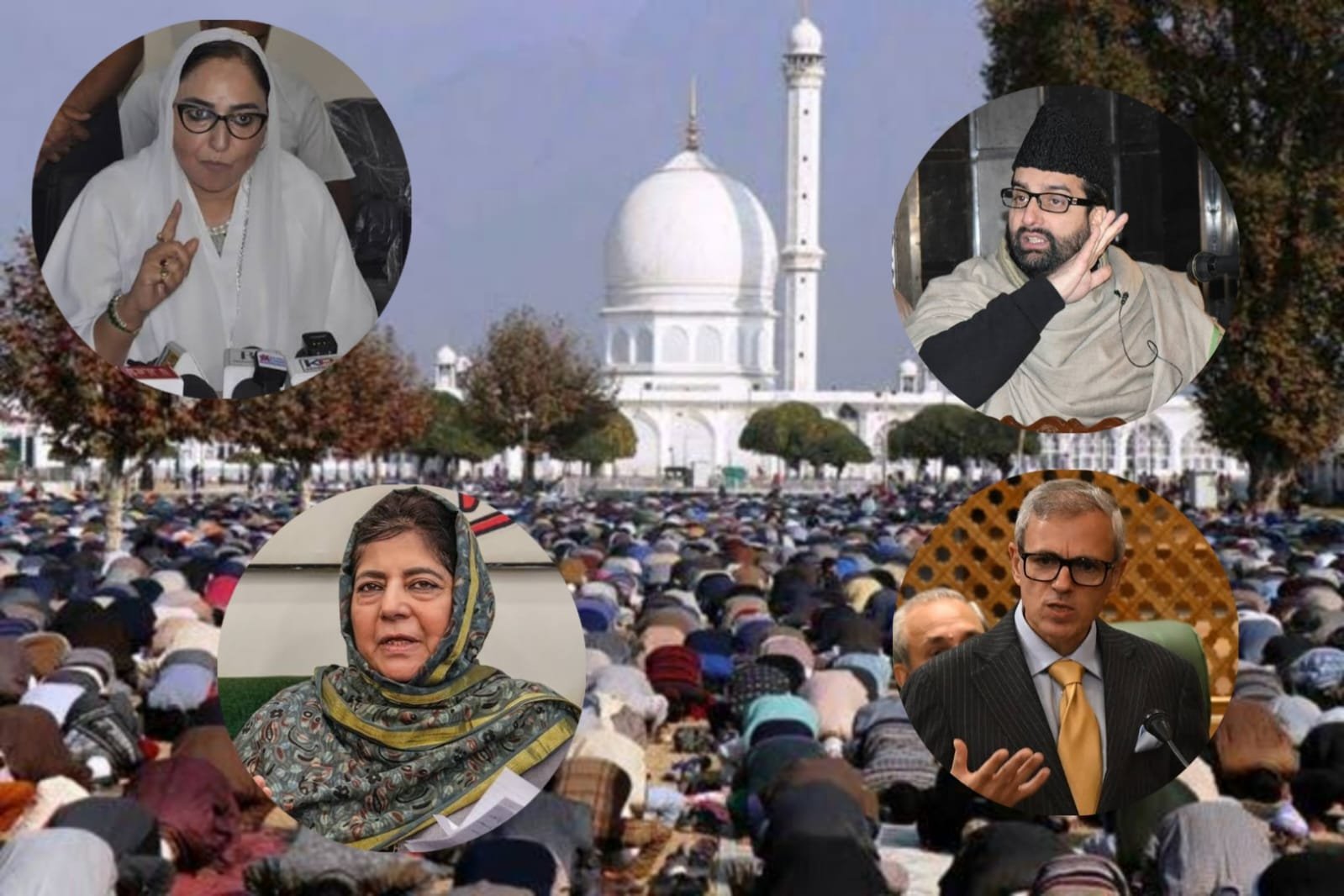
On 15 September, the Mutahida Majlis-e-Ulema (MMU) led by Mirwaiz Umar Farooq brought together over 70 Ulema from J&K and Ladakh at Srinagar. Permission to hold such meeting was granted by the administration after a gap of two years.

 The participants of the conference resolved that mosques under their jurisdiction will, from time to time, dedicate their Friday sermons to a specific social cause. On 10 October, a similar gathering of Muftis, Imams and Khateebs of J&K Waqf Board’s managed mosques and shrines, presided over by Dr Darakhshan Andrabi, also decided to constitute a core committee of Religious Scholars to finalize a common social cause/subject to be dealt in Friday sermons.

Though the two resolutions had a similar objective, the reaction to them was different. Chief Minister, Omar Abdullah, said the J&K Waqf Board’s resolution was “unacceptable” and that the interference of the BJP in Kashmir’s religious issues was worrisome. The PDP, too, opposed the move.

The MMU was also critical of the Board for going beyond the purview of its mandate. On 13 October, Dr Andrabi said that the purview of the proposed committee was to frame a common subject of social cause, adding that her statement had been misreported and misinterpreted, and that imams were free to choose a social cause of their interest.

The main objection, that an administrative body can’t tell an imam what to say, is based on an assumption the Board never made. Suggesting weekly themes to Imams, as proposed by the Board, is a method to structure and organize content rather than to regulate or control it.

As the statutory manager of Hazratbal, Chrar-e-Sharief and Peer Dastgir Sahib shrines, the Board is legally obligated to manage these mosques, and as such can legitimately ask how best they can fulfil the needs of the communities who help maintain them. It is akin to bookkeeping to require the Board to remain silent on the social purpose of those spaces.

Nor is the proposal to suggest weekly themes to Imams, in and of itself, an innovation in the Muslim world. Various Muslim-majority nations already have similar systems. Turkey has a centralized body, Diyanet, which prepares weekly Imams’ sermons.

 Egypt’s Ministry of Awqaf has a unified framework for sermons. The UAE publishes prepared khutbas. Jordan sets themes for its preachers. Malaysia’s state religious departments and Singapore’s MUIS also issue official texts. The Jammu and Kashmir proposal is relatively light-touch in comparison to all of the above. It doesn’t prescribe sermon content, and doesn’t sanction or penalize khateebs in any way.

 The Board’s initial announcement could have stated the voluntary nature of the committee in clearer terms. Given the Board is operating in a sensitive environment, it is incumbent on all state institutions to ensure their statements don’t give cause for offense. However, given the nature of the proposed changes and the fact they were made clear within three days of the initial announcement, they do not infringe on the right to religious freedom.

Selective outrage and an overlooked record

The political response demonstrates more than the proposal. Regional parties in Kashmir have long been advocating for the state to address the drug problem and the malaise among the youth. Usually, it is the identity of the messenger that disturbs them. When a public institution suggests mobilizing its resources to address this, it is the messenger that disturbs them.

The objective in itself is legitimate. For example, when advanced by the Mirwaiz it is considered legitimate, while if advanced by the Waqf Board which is presided over by a lady, it is considered illegitimate. Double standards like these do not promote religious freedom, and do not help the families whose dear ones are battling drug addiction.

The Board’s record gets lost in the noise. Dr. Andrabi has been President of the Board since 2022 and overseen improvement works at Hazratbal, Peer Dastgir Sahib in Khanyar, and Chrar-e-Sharief as well as the Sabaat complex of Sheikh Noor-ud-Din Noorani (RA) and the survey, digitization and improved collection of rents of Waqf assets. These are in line with the documented records, transparency in leasing and accountability in income of the Waqf (Amendment) Act 2025. Her administration which has reformed the management of endowments is entitled to suggest the ways and means to achieve the same in other allied fields.

The road to partnership

Meanwhile, this has reopened an older, unresolved case. The Shia Auqaf in Jammu and Kashmir currently have no independent administrative boards. In 1978, Aga Syed Yousuf Al-Mosvi of Budgam, brought a case to exempt Shia Waqf Properties from the purview of the general Waqf.

It was argued that as the nature of the Shia Endowments was different from that of the Sunni, and as a result, differing legal position may be applicable. The then Chief Minister Sheikh Abdullah, ordered for the exemption to be granted, and this did not in any way, legally establish, what the position with respect to Shia Waqf is or is not. Careful study of the applicable Waqf Acts, the status of Waqf properties, and the provisions of the law for a separate administrative board, are required. It is important that a comprehensive survey of all Shia Waqf Properties is done in the first instance.

The lesson in this is that Jammu & Kashmir’s social crises are too critical to be put on hold to resolve who gets the credit. There is no need for the MMU program and the Waqf Board’s committee to compete. In fact, they can and should work together. A joint research cell comprising doctors, psychologists, rehabilitation professionals and the Health and Social Welfare Departments of the UT, can assist Imams with adequate information while the Scholar is free to retain the last word on the sermon.

 The Waqf Board should document the voluntary nature of its committee. The MMU should accept the offer extended to it. The political class should appraise the initiative on the basis of results achieved at the de-addiction centres and at the household level, and not on the basis of who is the chairperson.

The problems addressed by the pulpit belong to all and therefore, the solutions should be the joint effort of all. A state that assists without obtrusively interfering with religious affairs does not threaten religious autonomy. It is a state partner in reform that Jammu and Kashmir needs the most.


Author is Director Red Lantern Analytica Foundation

Comments are closed.