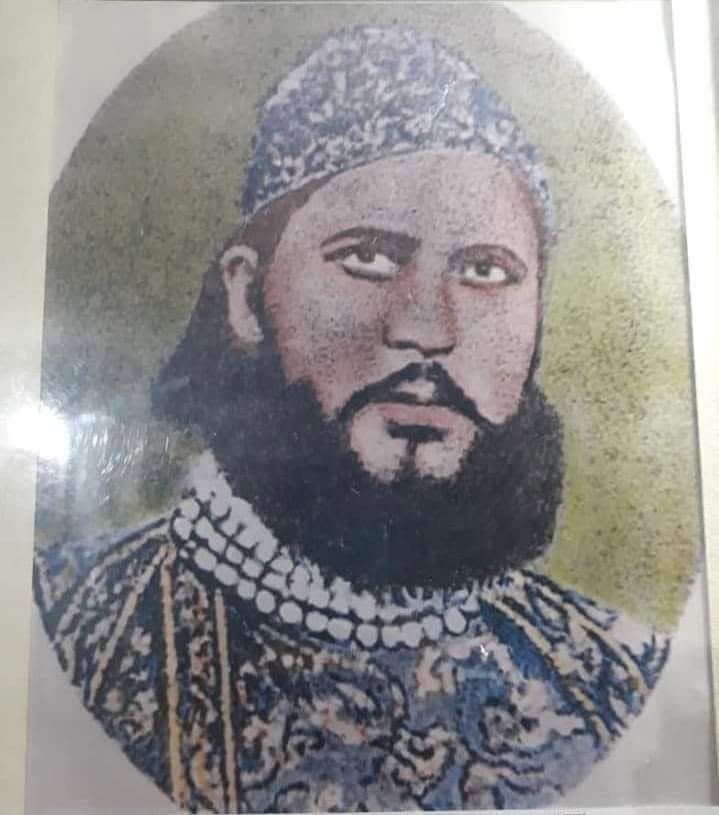
Ali Bahadur II (1835–1873), son of Nawab Zulfikar Ali of Banda, was a direct descendant of the Maratha Peshwa Baji Rao I and his Muslim wife, Mastani.
In 1849, Ali Bahadur II inherited the state of Banda, which was under British control. He received an annual allowance of four lakh rupees.¹ The British, however, did not permit him to exercise the full privileges of his position. He was denied the right to use the title of Nawab, was not granted a gun salute, and his military force was reduced to just 25 horsemen and 100 infantrymen.²
In 1857, India witnessed the First War of Independence. On 9 June, the people of Banda joined the uprising, and on 14 June, the British residents abandoned the town. At the centre of these events was Nawab Ali Bahadur II. With British authority collapsing in Banda, the proud brahmin nawab declared himself independent and joined the struggle against British tyranny. A popular slogan associated with Nawab Ali Bahadur II and his administration was: “Khalq Khuda Ka, Mulk Badshah Ka, Hukm Nawab Ali Bahadur Ka.” (The people belong to God, the country belongs to the Emperor, and the command belongs to Nawab Ali Bahadur)³
Nawab Ali Bahadur II soon became a leading revolutionary and attracted many rebels to Banda. He raised funds, cooperated with other rulers, and divided the district among them, with each agreeing to assist the others against their enemies. Most importantly, he protected European fugitives and did not allow them to be dishonoured or harmed, because he was against British colonial tyranny, not against civilians.⁴
On 18 April 1858, General Whitlock led the Madras Column towards Banda. Nawab Ali Bahadur II, with an army of around 9,000 men, opposed the British, and the Battle of Banda took place. The Nawab’s forces were defeated, many rebels were captured, and around 800 were killed. Ali Bahadur II and his remaining forces retreated towards Kalpi.⁵
He then marched to kalpi, where he met the famous rani of jansi whom he considered as sister. At Kalpi, the revolutionary forces were led by Rao Saheb, Rani Lakshmibai of Jhansi, and Nawab Ali Bahadur II. Their army included the Gwalior Contingent, mutinous Bengal regiments, rebel cavalry, Afghan soldiers, and the Nawab’s troops.
From 16 to 20 May 1858, constant skirmishes took place, with the revolutionaries repeatedly harassing the British forces. On 22 May, they launched a major attack on the British front and right flank. Although the British line was initially pushed back, the arrival of the British Camel Corps changed the course of the battle. The revolutionary forces were eventually defeated and retreated. Sir Hugh Rose occupied the town and fort the following day.⁶
On 30 May 1858, the Nawab of Banda, Tantia Tope, Rani Lakshmibai, Rao Sahib, and other chieftains reached Morar near Gwalior with about 7,000 infantry, 4,000 cavalry, and 12 guns. The Maharaja of Gwalior, who was loyal to the British, confronted the revolutionaries but was defeated and fled. The revolutionaries then captured the Gwalior Fort, one of the strongest fortresses in India.⁷
Sir Hugh Rose marched towards Gwalior, and on 17 June 1858, a fierce battle was fought at Kota-ki-Serai. Rani Lakshmibai fought bravely and died in battle. Her death was a great loss to the revolutionary forces. On 19 June 1858, the British recaptured Gwalior. The Nawab of Banda who was saddened by the death of his sister and other revolutionary leaders had already left the city.⁸
After resisting the British Empire across Central India for more than five gruelling months, the Nawab found himself surrounded, his army broken, and his closest allies dead. In November 1858, he finally surrendered under the terms of the Royal Proclamation⁹. The British abolished the state of Banda, erasing it from the political map. Nawab Ali Bahadur II was banished to Indore and placed under strict police surveillance, given a reduced life pension of Rs. 36,000 per year. He lived out his remaining years in exile, passing away in August 1873¹⁰.
Though the British stripped him of his title and kingdom, Nawab Ali Bahadur II’s legacy remains unextinguished. As a ruler belonging to a unique Muslim lineage, he chose national liberation over the comforts of his royal palace, fighting alongside some of the greatest warriors of the 19th century to write one of the most courageous chapters of 1857.
References:
¹The revolt of 1857 in Bundelkhand in light of the report of majar F W Pinkaney by Kalpana Tyagi, 2007, p – 29.
²ibid, p – 73.
³Gazetteer of India Uttar Pradesh, District Banda by Dangli Prasad Varun,1981, p – 59.
⁴The Revolt in Central India, 1857-59 by Lieutenant Colonel Reginald George Burton,1908. P – 27-29.
⁵A History Of The Hyderabad Contingent by Major Reginald George Burton,1905, p – 230.
⁶Rani Lakshmi Bai Of Jhansi By Sinha P – 82.
⁷The Rebellious Rani by Sir John Smyth p – 179.
⁸Rani Lakshmi Bai Of Jhansi By Shyam Narain Sinha,1980, P – 88.
⁹The Revolt in Central India, 1857-59 by Lieutenant Colonel Reginald George Burton,1908, P – 222.
¹⁰A Collection Of Treaties. Engagements And Sanads VOL. V by C.U. Aitchison, 1892, P – 5.
The author is an aspiring researcher and first-time writer from Bangalore, Karnataka, with a keen interest in exploring history. Passionate about uncovering and sharing historical insights, the author is beginning their writing journey with the aim of developing a distinctive voice and perspective. He can be mailed at shaiksabdrm@gmail.com


Comments are closed.