Srinagar, Sept 08: Noted filmmaker Imtiaz Ali on Tuesday said Kashmir remains a treasure trove of untold stories, characters, and cultural traditions that offer rich material for cinema, even as he expressed optimism that the region’s deepening bond with the silver screen would unlock new avenues for homegrown talent.
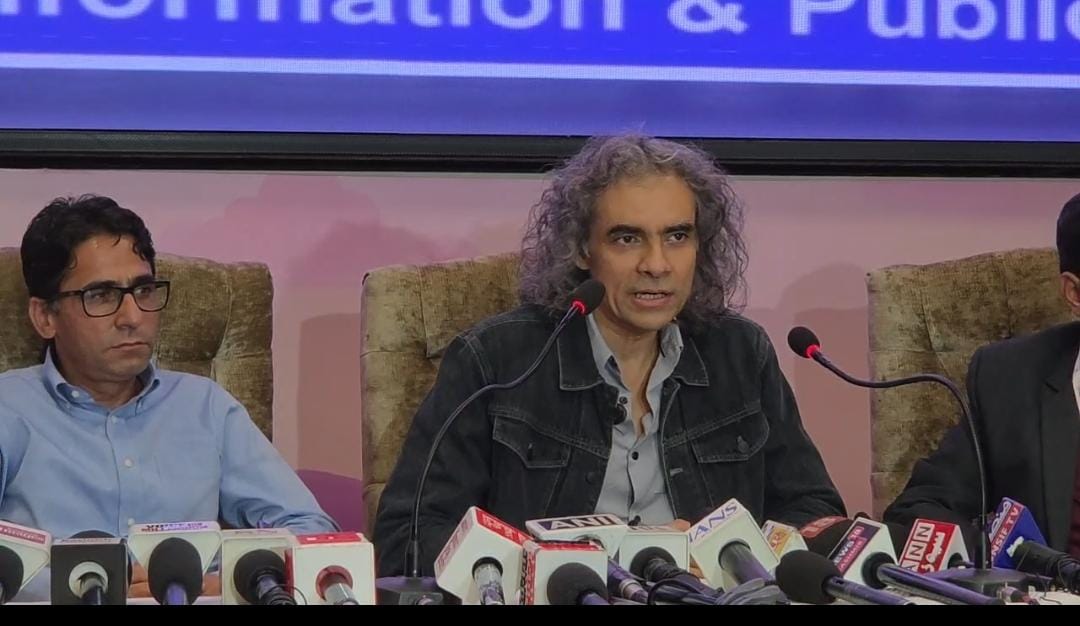
Interacting with the media on the second day of the International Film Festival of Jammu & Kashmir (IFFJK) at the SKICC here, Ali, who has frequently returned to the Valley for his shoots as per Kashmir Convener said the region’s cinematic allure remains unmatched. “We always hope that whenever we shoot, we come back to Kashmir. There is perhaps no other place in the world that is so cinematic,” he said.
Reflecting on his film Laila Majnu, Ali said the project was inextricably woven into the fabric of the Valley, with its characters and setting drawing deeply from Kashmiri roots. “Laila Majnu is a film based in Kashmir. The characters are from Kashmir, and the whole setting and feel of the film are Kashmiri,” he noted, adding that he was delighted the film continued to strike a chord with audiences in the region even eight years after its release. “This is Kashmir. I am very happy and I thank Kashmir for Laila Majnu,” he said.
When asked about other Kashmiri stories that intrigue him, Ali named several historical and cultural figures, including the 16th-century poetess Habba Khatoon and various Sufi saints, as subjects he would be keen to explore on screen. “There are many characters in Kashmir that fascinate me. I think about them and, if I get an opportunity, I would definitely like to make something on them,” he said.
The filmmaker also observed that ordinary Kashmiri life—particularly its humour and cultural nuances—had largely remained underrepresented in cinema. “There are many things that have not come up. Kashmir is normally famous for its landscape, but I find Kashmiri humour very interesting too,” he remarked.
Ali underscored the role of the ongoing film festival in offering outsiders a firsthand experience of the region, beyond the familiar depictions of its scenery. “The biggest benefit of a film festival is that people will come here from outside and see Kashmir with their own eyes. They will understand what they see here and mperhaps make films based on that,” he said.
Recalling his own shooting experiences in the Valley, Ali spoke warmly of the support extended by locals, which he said had always made the process memorable. “My shooting here has been wonderful and spectacular. People came out and helped us. Nobody complained. They went out of their way to help us,” he said, adding that local workers—from painters to carpenters—gradually became an integral part of his filmmaking teams.
Describing Kashmiris as “very sensitive and creative,” Ali said these qualities could serve as a strong foundation for the region’s film industry. “They feel things deeply, and that is a very good quality. There is a certain grace in Kashmiris,” he said.
On the prospects of a flourishing film ecosystem in Jammu and Kashmir, Ali stressed the need for greater opportunities and government support for local artists and filmmakers. “We have to make films. If this festival continues to work hard, this place can become a hub for cinema. It can become a heaven for filmmakers,” he said, adding that with the right environment, even internationally acclaimed directors could be drawn to the region. “Even Steven Spielberg could come if you give him a reason to come,” he quipped.
Ali expressed hope that the coming years would see more films emerging from Kashmir featuring local actors, actresses, and narratives. “InshaAllah, there will be films in which Kashmir is there, and Kashmiri actors and actresses are there. I am looking forward to that,” he said.
The filmmaker also advocated for introducing children to cinema and filmmaking from an early age, while noting that the region had yet to fully tap into its cultural identity through movies, despite its long association with the medium. “We have not got over the landscape of Jammu and Kashmir. It will take many more years. Gradually, what is happening is that Kashmiri culture and music are coming into the picture. I think this is another opportunity that is available,” he said.
Ali maintained that the emergence of local talent would hinge on creating more platforms and opportunities for them, and viewed the IFFJK as a significant step in that direction—one that could help build a stronger film culture in the Union Territory.


Comments are closed.