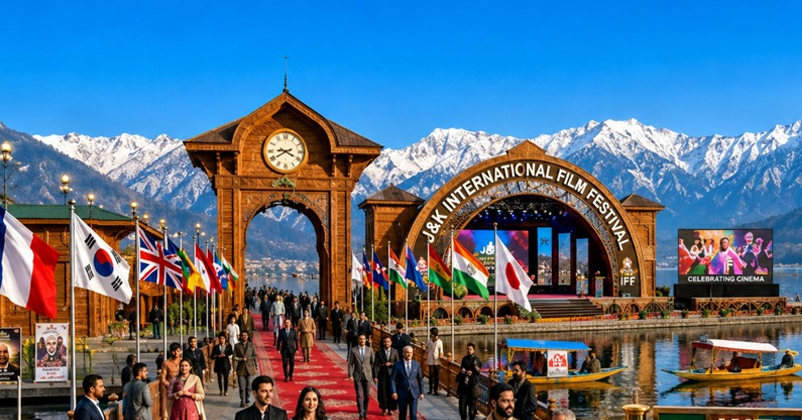
SRINAGAR, JULY 29: The inaugural International Film Festival of Jammu and Kashmir (IFFJK) 2026 has received 875 film submissions from nearly 50 countries, officials said on Wednesday, a day before the submission window closes on July 30.
The four-day festival, organised by the Department of Information and Public Relations in collaboration with the National Film Development Corporation, is scheduled from September 7 to 10. The programme will include screenings of selected films, masterclasses, panel discussions, interactive sessions and cultural events, providing a platform for filmmakers, industry professionals, students and cinema enthusiasts.
The curtain-raiser ceremony was held on July 17 when Jammu and Kashmir Chief Minister Omar Abdullah formally launched the festival and invited filmmakers, producers, artists and cinema enthusiasts from across the world to participate.
Speaking to Kashmir Convener on condition of anonymity, a senior official overseeing the event said the festival aims to promote Jammu and Kashmir as a centre for cinema and cultural exchange while showcasing its heritage, landscapes and creative potential before an international audience. “The event also seeks to encourage artistic excellence, foster cinematic innovation and strengthen cooperation among filmmakers through the medium of cinema,” he added.
The official said the response has been overwhelming. “Receiving 875 entries from 50 countries in the first edition itself is a testament to the growing interest in J&K as a film destination. We are confident this will establish IFFJK as a major event on the global film calendar,” he said.
Earlier this month, Chief Minister Omar Abdullah emphasised the festival’s cultural and economic significance. “Filmmaking in Bollywood and Kashmir was synonymous at one time. No film was complete without a Valley sequence,” he recalled at the curtain-raiser.
The administration is working to make J&K “easier and cheaper” for productions through skill development initiatives and collaboration with Mumbai production houses to train local youth in technical crafts like cinematography and lighting, officials said. A local pool of high-end filming equipment is being built so crews don’t have to transport gear from outside.
CM Omar Abdullah has directed organisers to ensure local filmmakers, writers, actors and technicians are meaningfully integrated through exhibitions and networking. He has proposed a special segment to recognise actors, directors and musicians who have kept J&K’s cinematic legacy alive over the decades.
For Kashmir’s struggling film fraternity, the festival could not have come at a better time. Bilal Ahmad Mir, a Sopore-based cinematographer who has worked on small-budget independent projects, said the festival would be a game-changer. “For years, filmmakers would bring their own crews from Mumbai or Delhi. We were only hired as spot boys or drivers. This festival will put us on the same platform as national and international professionals,” he told Kashmir Convener.
“We are not politicians. We just want to work,” said Mir. “If this festival brings even a fraction of the film industry’s economic activity to our doorstep, it will be a blessing. We have been waiting for this moment for decades.”
Misbah Khan, a Srinagar-based actor who has appeared in a few provate productions, said the exposure alone would be transformative. “We have the talent, but we never had the platform. I have acted in plays since I was 12, but Bollywood never looked our way. This festival is our chance. I hope the government ensures structured interactions and networking sessions, not just screenings,” she said.
Ghulam Mohammad Dar, a papier-mâché artisan from downtown Srinagar, said the festival could revive their struggling craft. “When films are shot here, they showcase our art. When tourists come, they buy our products. This festival will bring tourists, filmmakers and buyers together. My father used to say the film industry kept Kashmir alive in the 1970s. Maybe this festival will do the same for our generation,” he said.
Lieutenant Governor Manoj Sinha has been the strategic architect of J&K’s cinematic resurgence, launching the J&K Film Policy 2024 to provide a more robust framework with financial incentives and support for productions. “In the last five years, we have succeeded in reviving cinema culture in J&K. We are building film-shooting infrastructure on the lines of European countries,” Sinha had said.
He introduced a Single Window Portal allowing filmmakers to apply online for shooting permissions and subsidies, eliminating bureaucratic hurdles. The administration is also working on a film city project to provide world-class facilities.
LG Sinha has called cinema a “vital element of soft power” and urged filmmakers to showcase the transformation J&K has witnessed since August 2019 and narrate stories of peace and progress. “Good cinema must strike a balance between entertainment and social concerns, influencing human values and national interest,” he had said.
In July, he met a PHDCCI delegation and assured full support for initiatives promoting investment, tourism and the creative economy, backing their network of diplomatic missions to promote the festival worldwide. He has consistently linked the cinematic revival to improved peace in the region, warning against attempts to disrupt normal life and emphasising that peace, a vibrant movie culture and economic prosperity are interlinked.
The festival arrives at a transformative moment for filmmaking in Kashmir following the revocation of Article 370. Over 300 film projects have been shot in the region since 2019, officials said, including major Bollywood titles like Rocky Aur Rani Kii Prem Kahaani, Shershaah and Rohit Shetty’s Singham Again.
The new Film Policy has opened previously off-limits locations and simplified permissions. Shetty, after filming Singham Again at Lal Chowk, had called it “Naye Bharat ka Naya Kashmir” (New India’s New Kashmir).


Comments are closed.