

Anzar Fayaz
“The successful launch of Vikram-1 is far more than the story of a rocket reaching orbit. It marks the arrival of India’s private space industry as a global contender, demonstrating how innovation, entrepreneurship and policy reforms can work together to redefine the nation’s ambitions in space.”
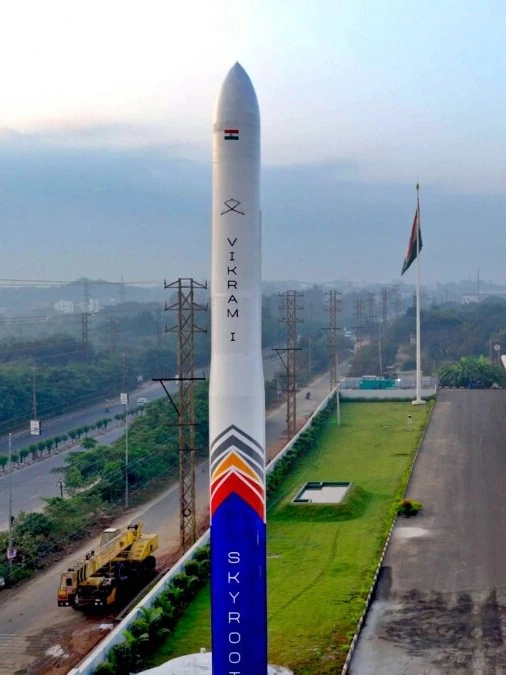
India has entered a new era in its space journey. On 18 July 2026 Skyroot Aerospace, which is based in Hyderabad successfully launched Vikram-1 under Mission Aagaman. This launch is a historic milestone because it is the first time a privately developed orbital launch vehicle from India has gone into orbit. The mission is important for several reasons. It shows that India’s private space industry is now a player on the global stage. It also shows how innovation, entrepreneurship and government reforms have come together to change the nations space ambitions.
The launch happened at the Satish Dhawan Space Centre in Sriharikota. At 06:35 GMT, Vikram-1 took off carrying many customer payloads and technology demonstrations. In 15 minutes the rocket put its payloads into an orbit around 450 kilometres above Earth. It did everything it was supposed to do on its flight.
This is a milestone and it is not just about launching a rocket. For a time India’s space programme was run almost entirely by the Indian Space Research Organisation. While the Indian Space Research Organisation did a job of launching satellites and sending missions to the Moon and Mars private companies in India were mostly just suppliers. They were not launching rockets on their own.
That has changed now with Mission Aagaman. Vikram-1 is the first privately developed Indian orbital rocket to successfully reach orbit. This puts India in a group of countries where private companies have shown they can launch rockets into orbit. People who study this field think this is a turning point. It could make Indias commercial launch industry much bigger and stronger in the space economy.
Skyroot Aerospace was started in 2018 by two Indian Space Research Organisation engineers, Pawan Kumar Chandana and Naga Bharath Daka. They wanted to make it easier and more affordable for people to get to space. The company first got attention in 2022 when it launched Vikram-S Indias privately developed suborbital rocket. This showed that the company could do engineering and set the stage for the more ambitious Vikram-1 programme.
In less than ten years Skyroot has gone from being a small startup to one of India’s leading space technology companies. It has done this with the help of research, manufacturing and a growing customer base from around the world.
Vikram-1 is named after Dr. Vikram Sarabhai, who is known as the father of India’s space programme. The rocket is 22 metres tall and can carry payloads of up to 350 kilograms into low-Earth orbit. It uses new technologies, including 3D-printed rocket engines and lightweight composite structures. These technologies are meant to make launch services faster and more affordable for satellites. The market for satellites is growing all over the world.
The mission was called “Aagaman” which is a Sanskrit word that means “arrival”. This name is fitting because the mission marks the arrival of an era in India’s space ecosystem. In this era private startups will work alongside the Indian Space Research Organisation to develop launch vehicles, satellites and advanced space technologies.
The first mission carried commercial and experimental payloads. This showed that Skyroot is ready to provide launch services to customers from around the world who are looking for ways to launch satellites.
Indias space reforms have been very important to this achievement. In 2020 the government opened up the space sector to companies. This allowed startup’s like Skyroot to use the Indian Space Research Organisations facilities and expertise to build and launch their rockets.
These reforms have encouraged investment, innovation and entrepreneurship in the space sector. They have led to the creation of Indian space startup’s like Skyroot Aerospace. India wants to grow its space economy from around $8 billion to nearly $44 billion by 2033. This will create high-skilled jobs and make India a major player in the international commercial launch market.
Prime Minister Narendra Modi said the launch was a ” new frontier” in India’s space journey. He praised the innovation and talent of India’s engineers and said the mission showed the country’s entrepreneurial spirit and growing technological capabilities. The Prime Minister even sent a postcard with the message “Vande Mataram” that went on the mission as a symbolic payload.
After the launch Prime Minister Modi talked to Skyroot CEO Pawan Kumar Chandana and the company’s leaders. He said that when his government decided to open up the space sector to companies many people did not think it was a good idea.. Now with Vikram-1s success he has been proven right.
He also said he watched the launch live and praised the Skyroot team for inspiring young Indians to dream big in science, technology and innovation.
Piyush Goyal, the Union Commerce and Industry Minister also congratulated Skyroot Aerospace. He called Mission Aagaman a milestone in India’s technological progress. He said the launch shows the success of India’s space reforms and the Make in India initiative. He also highlighted that Skyroot operates from Hyderabads GMR Aerospace & Industrial Park SEZ, which shows the strength of India’s manufacturing ecosystem.
The launch of Vikram-1 has implications for India’s economy. The demand for launching satellites is growing all over the world. By offering launch services Indian companies like Skyroot can attract international customers and make high-value exports. This will strengthen India’s position in the commercial space industry.
The mission also shows that investors are confident in India’s private technology ecosystem. It is expected to encourage entrepreneurs to start companies in the aerospace sector.
Private companies have changed the space industry over the past decade. American companies like SpaceX have made launch services cheaper and more frequent. Companies like Rocket Lab have created a market for small-satellite launches.
With Vikram-1 India has shown that its private sector can compete in this industry. Although Skyroot is still a relatively young company compared with established global players the successful orbital launch puts India in a stronger position to participate in the growing international market for commercial space services.
The launch of Vikram-1 also has an impact on the next generation. For students in India the successful launch shows that Indian startups can create world-class innovations. It shows that young engineers can build technologies that can reach space.
Prime Minister Modi said this while congratulating the team. He noted that Skyroots young workforce represents the confidence, talent and aspirations of a generation of Indian innovators.
Mission Aagaman is the beginning for Skyroot Aerospace. Now that Vikram-1 has been successfully tested the company will focus on commercial launches and expanding its customer base. It will also keep developing launch technologies.
For India the mission shows that when the government, private industry and scientific talent work together they can accelerate progress and strengthen the country’s strategic and economic capabilities.
Comments are closed.