


Adv. Sanjay Pandey
“While American influence remains substantial, the rise of alternative institutions such as BRICS and the Shanghai Cooperation Organisation reflects a world that is steadily moving toward multiple centres of power and decision-making.”
Over the past few years, the geopolitical equations in West Asia have changed rapidly. While facing the joint military offensive of the United States and Israel, Iran not only held its ground on the battlefield but also gained a strategic upper hand. Behind this victory lay Iran’s indigenous military capability, the unity of its people, and decisive diplomacy; however, it also received a strong pillar of support – China.
In the recent conflicts such as the “12-Day War” and the “Ramadan War”, the strength displayed by the Iranian people and entrepreneurs, along with the economic, technical, diplomatic, and humanitarian assistance provided by China, has given rise to a new balance of power. The exact nature of China’s assistance to Iran, how China has expanded its influence in the region based on available information, and how all of this signals that the era of American dominance is being consigned to history, is becoming apparent.
The assistance provided by China to Iran spanned all levels, from the battlefield to reconstruction. First and foremost, China did not allow Iran’s economic lifeline to be severed. While many countries feared purchasing Iranian oil due to Western sanctions, China consistently remained Iran’s largest oil customer. China is the largest buyer of Iranian and Russian oil, and this trade through pipelines and sea routes ensured that Iran’s foreign currency sources did not dry up and its economy did not collapse even during wartime.
Simultaneously, China extended highly active diplomatic support for a ceasefire and agreement. While indirect negotiations with the US were underway through Pakistan’s mediation, China welcomed Iran’s diplomatic stance from the very beginning. After the agreement was announced, Chinese Foreign Minister Wang Yi, during a telephone conversation with his Iranian counterpart Abbas Araghchi, praised the firmness and responsible diplomatic approach of the Iranian government and people against oppression. Highlighting the need for accurate and complete implementation of all provisions of the agreement, he declared that China was ready to cooperate for this.
On the diplomatic front, China took a coordinated position with Russia. Both China and Russia welcomed the Islamabad Agreement. Russian Foreign Minister Sergei Lavrov stressed the responsibility of the US and Israel to abide by the agreement. China and Russia agreed that the international community, with the support of the UN Security Council, should back this agreement. This political front caused the US efforts to isolate Iran to fail.
Even in the post-war reconstruction phase, China announced its support for Iran and Lebanon. Chinese Foreign Ministry spokesman Lin Jian made it clear that Beijing gives high priority to post-war reconstruction and that new humanitarian aid would be sent soon to improve the economic situation and the standard of living of the people. Furthermore, a reconstruction fund of $300 billion is to be raised under the Islamabad Agreement, in which China is also expected to play a significant role. China also provided major assistance on the military-technical front. Deep cooperation in air defense, drone technology, missile systems, and cyber capabilities enabled Iran to strengthen its indigenous capacity and effectively challenge Israel’s Iron Dome system.
China is also a key partner for Iran in building its digital future. At the recently held BRICS Future Network Innovation Forum 2026, Iran proposed a cooperation framework to develop Trusted Computing Power Networks, an initiative led by China’s Ministry of Industry and Information Technology. Iran is enhancing its capabilities in areas such as artificial intelligence, the Industrial Internet of Things, smart logistics, and modern financial technology, with China as its principal technical partner.
China’s influence expansion in Iran is not limited to government-to-government diplomatic relations but spans the economy, technology, financial infrastructure, and the digital future. As soon as the Islamabad Agreement was announced, Iran coordinated high-level political engagement with China, Russia, and Oman. Foreign Minister Araghchi, while informing China’s Wang Yi about the details of the agreement, emphasized the strategic nature of Iran-China relations and expressed gratitude for China’s support during the negotiations.
Both countries discussed opportunities to enhance bilateral cooperation in energy, trade, and investment. This elucidates the far-sighted vision of Parliament Speaker Mohammad Bagher Ghalibaf. He himself serves as Iran’s special representative for China affairs and has stated unequivocally that “if any regional bloc emerges in the future, China and Iran will be two definite and indispensable members.” In his view, “China is unique for us. We must convince China that we are not just customers but full partners.” This stance reflects the determination to elevate the relationship with China from ordinary trade to a comprehensive strategic partnership.
Against this backdrop, Ghadir Ghiafeh, Vice President of the Iran Chamber of Commerce, underlined that an Iran-China development document should be prepared with an understanding of where China is headed by 2035 and 2050. Since artificial intelligence, cutting-edge technology, and electric vehicles are China’s priorities, Iran should formulate its industrial and trade policies along similar lines. This would make Iran a priority market for China and earn Iran a place in China’s value chain. To give concrete shape to this strategy, a proposal was made to establish ‘Iran-China Cooperation Divisions’ in Special Economic Zones. These zones will provide a secure and stable environment to boost exports and attract investment. Alongside this, it was decided to set up an Iran-China Joint Investment Fund, which would ensure long-term capital participation for China.
Additionally, Isa Mansouri, head of the Iran Chamber’s research center, proposed establishing a Logistics Town to streamline customs, transportation, and economic exchanges. If Chinese companies were stationed there, local-level outsourcing would occur and Iran would become a Supply Bridge for China to East Asia. In the petrochemical sector, it was suggested that a network be formed by involving Iran, China, and a third country like Turkey, Pakistan, or Qatar, so that Iran could become a trade-industrial hub. On the infrastructure front, the Chabahar port and the Makran oil refinery project are two ambitious projects. The Mining and Mineral Commission identified 37 projects, of which four crucial ones are: the development of Chabahar port as an export hub, exploration of rare minerals, deep mining, and the supply of 25,000 mining machines.
If China invests in Chabahar, Iran will become the trade hub of West Asia and Eurasia. Additionally, a proposal was made to allow China to set up an oil refinery on the Makran coast, where Iran would supply crude oil and China would transport the processed products itself; this would guarantee China’s energy security and make Iran an exporter of value-added products instead of raw materials. Equal seriousness is being given to technology transfer and institutional building. The Industry Commission stressed that if government policies are stable, laws are respected, and peace prevails, domestic investors are willing to undertake technology transfer instead of merely importing parts. To elevate relations with China from mere financing to a strategic level, a demand was made to establish a ‘Unified Command’, so that centralized policy-making can occur without the creation of parallel institutions. In the digital field, Iran demonstrated active leadership on the BRICS platform. At the BRICS Future Network Innovation Forum, Iran put forward proposals for future digital infrastructure, Trusted Computing Power Networks, and cross-border industrial cooperation, striving to establish itself as a regional technology partner.
This cooperation aims to go beyond mere exchange of ideas to direct joint projects, testing platforms, and industrial applications. Ghalibaf’s decisive statements gave political impetus to all this. He stated, “Now we must take the reins from the hands of the missile-firing youth, lead from the front, lift the people out of economic pressure, and bring prosperity.” He highlighted the need for fundamental reforms in financial mechanisms, logistics, transportation, and infrastructure for economic cooperation with China. His remark, “We must be integrated with China in a shared ecosystem, from education to market and supply chain,” demonstrates the depth of the envisioned cooperation. Stating that they are not managers who consider sanctions a ‘piece of paper,’ he further declared, “If lifting sanctions means surrender, we will never do it; the Iranian people will lay down their lives but will not surrender.” Simultaneously, after the Islamabad Agreement, Iran increased maritime security coordination with Oman. Both countries expressed commitment to ensuring a safe and uninterrupted passage for international maritime traffic through the Strait of Hormuz. This strait is crucial for global trade and energy security and also bolsters China’s energy security.
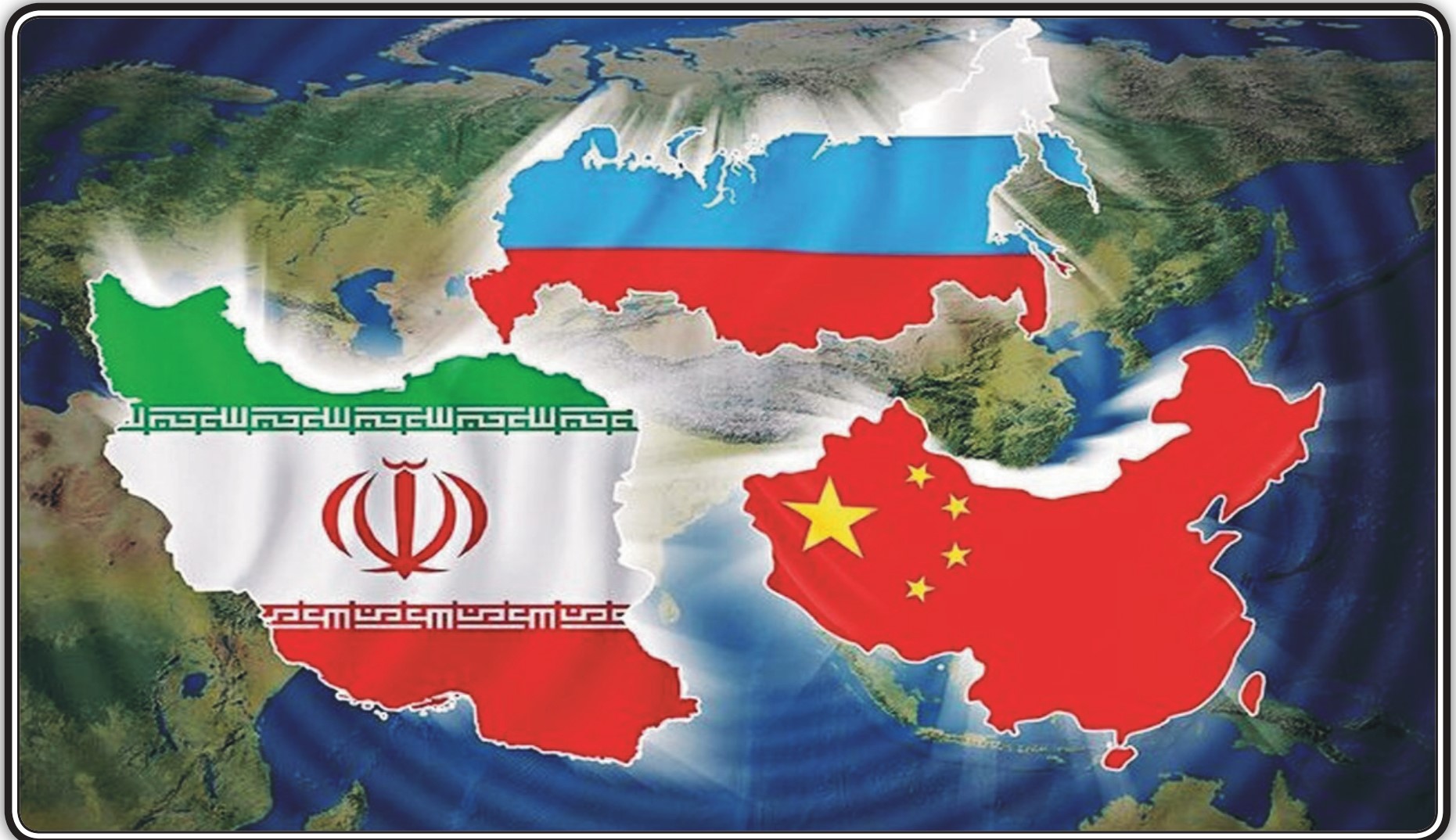
All these developments naturally raise the question of the fate of America’s unipolar dominance. The new strategic triangular alignment of Iran-China-Russia is a strong indicator of the decline of American hegemony. First, the weaponization of the dollar is no longer as effective as before. The US had cornered many countries by using the dollar as an economic weapon; but with China-Iran trade moving to yuan-rial and discussions on alternative currency systems gaining momentum in BRICS, the dollar’s grip is loosening.
Under the Islamabad Agreement, the US had to accept provisions to release Iran’s frozen assets and end the blockade on its ports, which in a way amounts to a retreat. On the other hand, multipolar institutions like the Shanghai Cooperation Organisation, BRICS, and the Belt and Road Initiative – which have emerged as alternatives to US-led NATO and G7 – are getting stronger. Iran has become an active member of all these organizations, and its participation in drafting a digital infrastructure blueprint under China’s leadership at the BRICS Future Network Forum is a direct challenge to American technological dominance.
Even on the military front, the illusion of American invincibility has been shattered. When Iran breached Israel’s air defense system through drone and missile attacks, the aura of invincibility surrounding Israel, built on American weapons, collapsed. That Western technology is not the ultimate, was proven with China’s cooperation. The US had to accept Iran’s condition in the ceasefire agreement, binding Israel to halt attacks on Lebanon, which demonstrates the limits of American diplomacy.
The economic and technological center is also shifting now. China is the world’s largest manufacturing hub and has taken a lead in AI, electric vehicles, and quantum technology. Countries like Iran are now looking to China, not the US, for capital, technology, and future employment. As evident from the writings, Iran is seeking to embed itself in China’s value chain, while on the other hand, it is charting a digital future through the BRICS Plus framework. This poses a major challenge to the US’s position at the center of the global economy.
A more important factor is the rising voice of the Global South. China has clearly articulated that the representation of emerging markets in the United Nations is inadequate and that the voice of the Global South needs to be heard more. Chinese Foreign Minister Wang Yi, while issuing a whitepaper on making global governance more just and balanced, stated that, “All countries, big or small, are equal members of the international community.” The Iran-China partnership is a tangible pillar of this changing global order.
Rejecting the American unipolar system, the foundation of a multipolar, rules-based global order—minus the monopoly of the West—is being laid. Of course, American dominance will not completely become history overnight. The US still possesses a vast network of military bases, technological capacity, and the dollar’s status as a reserve currency. However, the era of a unipolar world is certainly ending, and these developments prove that a new system with multiple poles is emerging. The very fact that the US now has to negotiate agreements through Pakistan’s mediation and commit to a comprehensive final solution within 60 days of the ceasefire is a clear indicator of the relative decline of American supremacy.
Finally, the upper hand gained by Iran in the war against the US-Israel and the subsequent political advantage achieved through the Islamabad Agreement would not have been possible without China’s resolute and multi-dimensional support. By ensuring an economic lifeline, providing political protection, engaging in technical cooperation, guaranteeing post-war reconstruction, and charting a shared digital future on platforms like BRICS, China has made Iran a comprehensive strategic partner.
To put it in Ghalibaf’s words, “China and Iran have become the definite and indispensable members of any future regional bloc.” Although American dominance has not yet been completely relegated to history, it is indisputable that this new strategic alignment of Iran-China-Russia, the rising voice of the Global South, and the strengthening of multipolar institutions are digging deep into the foundations of that dominance.
Comments are closed.