
From Survival to Self-Reliance: How PM SVANidhi is Redefining India’s Urban Informal Economy

S. Ahmad
Since its launch in 2020, more than 1.12 crore loans have already been disbursed. The initiative has benefited over 75 lakh beneficiaries across cities and towns. Loans worth over ₹17,800 crore have been provided under the scheme. Its impact is visible not only in official numbers but also in the everyday journey of vendors building stronger and more sustainable livelihoods.
Every morning across India’s cities, millions of street vendors begin their day long before most urban residents wake up. They arrange fruits on carts, prepare tea at roadside stalls, display vegetables in crowded markets, repair shoes on pavements, sell flowers outside temples, and provide countless services that keep urban life moving. They are among the most visible faces of India’s informal economy, yet for decades they remained among its most overlooked participants.
Despite their critical contribution to urban commerce, street vendors have historically operated on the margins of the formal financial system. Access to institutional credit remained elusive. Most relied on personal savings, loans from relatives, or informal moneylenders who often charged exorbitant interest rates. The absence of affordable credit limited their ability to expand businesses, absorb financial shocks, or improve their livelihoods. The COVID-19 pandemic further exposed these vulnerabilities, disrupting livelihoods and pushing many vendors into deeper financial uncertainty.
It was against this backdrop that the Prime Minister Street Vendor’s AtmaNirbhar Nidhi (PM SVANidhi) scheme was launched in June 2020. Initially conceived as a relief and recovery measure for street vendors affected by the pandemic, the programme has evolved into one of India’s most significant interventions in urban financial inclusion. What began as a micro-credit initiative has gradually transformed into a comprehensive model of empowerment that combines access to finance, digital inclusion, social security, entrepreneurship development, and economic dignity.
Today, nearly six years after its launch, PM SVANidhi offers valuable lessons about how targeted public policy can strengthen livelihoods, deepen financial inclusion, and bring millions of informal workers into the mainstream economy.
Recognising the Invisible Workforce
Street vendors occupy a unique position within India’s urban economy. They provide affordable goods and services to millions of consumers while generating self-employment opportunities for themselves and their families. They serve as crucial links in local supply chains and contribute significantly to the vibrancy and accessibility of urban markets.
Yet for many years, public policy often viewed vendors through the lens of regulation rather than economic empowerment. Their contribution was acknowledged, but meaningful efforts to integrate them into formal economic systems remained limited.
PM SVANidhi represents a departure from that approach. Instead of treating vendors merely as beneficiaries of welfare, the scheme recognises them as entrepreneurs. It acknowledges that given the right support, access to capital, and institutional backing, small vendors can improve their productivity, strengthen their businesses, and contribute even more effectively to local economic growth.
This shift in perspective may be one of the programme’s most important achievements.
The scheme’s guiding philosophy revolves around three principles—Swarozgar (self-employment), Svavlamban (self-reliance), and Swabhimaan (self-respect). These concepts move beyond financial assistance and focus on empowering individuals to build sustainable livelihoods through their own efforts.
Credit as a Tool of Empowerment
At the heart of PM SVANidhi lies a simple but powerful idea: access to affordable credit can transform lives.
The scheme provides collateral-free working capital loans through progressive tranches. Beneficiaries can access loans of ₹15,000, ₹25,000, and ₹50,000 as they successfully repay earlier loans. Interest subsidies and government-backed credit guarantees further reduce financial barriers.
For many beneficiaries, these loans represent their first interaction with formal banking institutions.
The significance of this cannot be overstated.
Financial exclusion often traps individuals in cycles of dependence on informal lenders. Interest rates charged by moneylenders can consume a significant portion of earnings, leaving little room for savings or business expansion. Institutional credit changes this equation. It lowers borrowing costs, improves financial stability, and creates opportunities for growth.
The numbers illustrate the scale of this transformation. More than 75.5 lakh beneficiaries have received over 1.12 crore loans amounting to more than ₹17,800 crore since the scheme’s inception. Independent impact assessments conducted in 2023 and 2025 indicate that nearly 95 percent of beneficiaries accessed formal institutional credit for the first time through PM SVANidhi.
This is not merely a story about loan disbursement. It is a story about bringing millions into the formal financial ecosystem.
Equally significant is the finding that approximately 30 percent of beneficiaries later accessed additional credit beyond SVANidhi loans. This suggests that the programme is helping vendors establish credit histories and improve creditworthiness, enabling them to access broader financial opportunities.
In other words, the scheme is not creating dependency. It is building financial capability.
The Digital Inclusion Revolution
Perhaps one of the most transformative aspects of PM SVANidhi is its emphasis on digital adoption.
India’s digital payments revolution has often been discussed in the context of consumers, technology companies, and urban professionals. Less attention has been given to how digital platforms can empower small vendors operating in informal markets.
PM SVANidhi addresses this gap directly.
The scheme incentivises digital transactions by offering cashback rewards of up to ₹1,600. Vendors are encouraged to adopt digital payment systems, use QR codes, and engage with formal financial channels.
The results have been remarkable.
More than 55 lakh beneficiaries have been onboarded digitally under the scheme. Together, they have conducted over 841 crore digital transactions worth nearly ₹8.96 lakh crore. Beneficiaries have also received close to ₹800 crore through digital cashback incentives and interest subsidies.
These figures reveal a profound shift in business practices.
Digital transactions provide more than convenience. They create financial records, reduce dependence on cash, improve transparency, and increase trust between vendors and customers. Digital payment histories can also strengthen future access to formal credit and other financial products.
For many street vendors, digital adoption represents an entry point into the broader digital economy. It enhances financial literacy and enables participation in an increasingly technology-driven marketplace.
The transformation is particularly important in a country where digital infrastructure is rapidly expanding and electronic payments are becoming commonplace. Ensuring that small vendors are not left behind in this transition is essential for inclusive economic growth.
Beyond Loans: Building a Social Safety Net
One of the most innovative components of PM SVANidhi is its recognition that financial inclusion alone is insufficient.
Economic vulnerability often extends beyond access to credit. Health emergencies, educational expenses, housing insecurity, and lack of social protection can all undermine livelihoods.
The “SVANidhi se Samriddhi” initiative addresses these challenges by linking beneficiaries and their families with multiple welfare schemes. Through socio-economic profiling, vendors are connected to selected central government programmes that provide social security and welfare benefits.
This integrated approach reflects a more holistic understanding of poverty and vulnerability.
Instead of treating financial assistance and social protection as separate domains, the scheme seeks to combine them. The objective is not merely to support businesses but to improve overall quality of life.
Impact assessments indicate that beneficiaries have experienced improvements in housing stability, nutrition, healthcare access, and educational opportunities for their families. These outcomes highlight the broader developmental significance of the programme.
When families gain greater financial security, the benefits often extend across generations. Better nutrition improves health outcomes. Increased educational access enhances future opportunities. Stable housing reduces uncertainty and stress.
The ripple effects can be substantial.
Women’s Economic Empowerment
Any discussion of PM SVANidhi must also acknowledge its contribution to gender inclusion.
Nearly 46 percent of beneficiaries under the scheme are women. This level of participation is significant given the barriers many women entrepreneurs continue to face in accessing credit, assets, and business opportunities.
Women’s economic empowerment has implications that extend far beyond individual income generation. Numerous studies have shown that increased financial control among women often leads to greater investments in children’s education, healthcare, and household welfare.
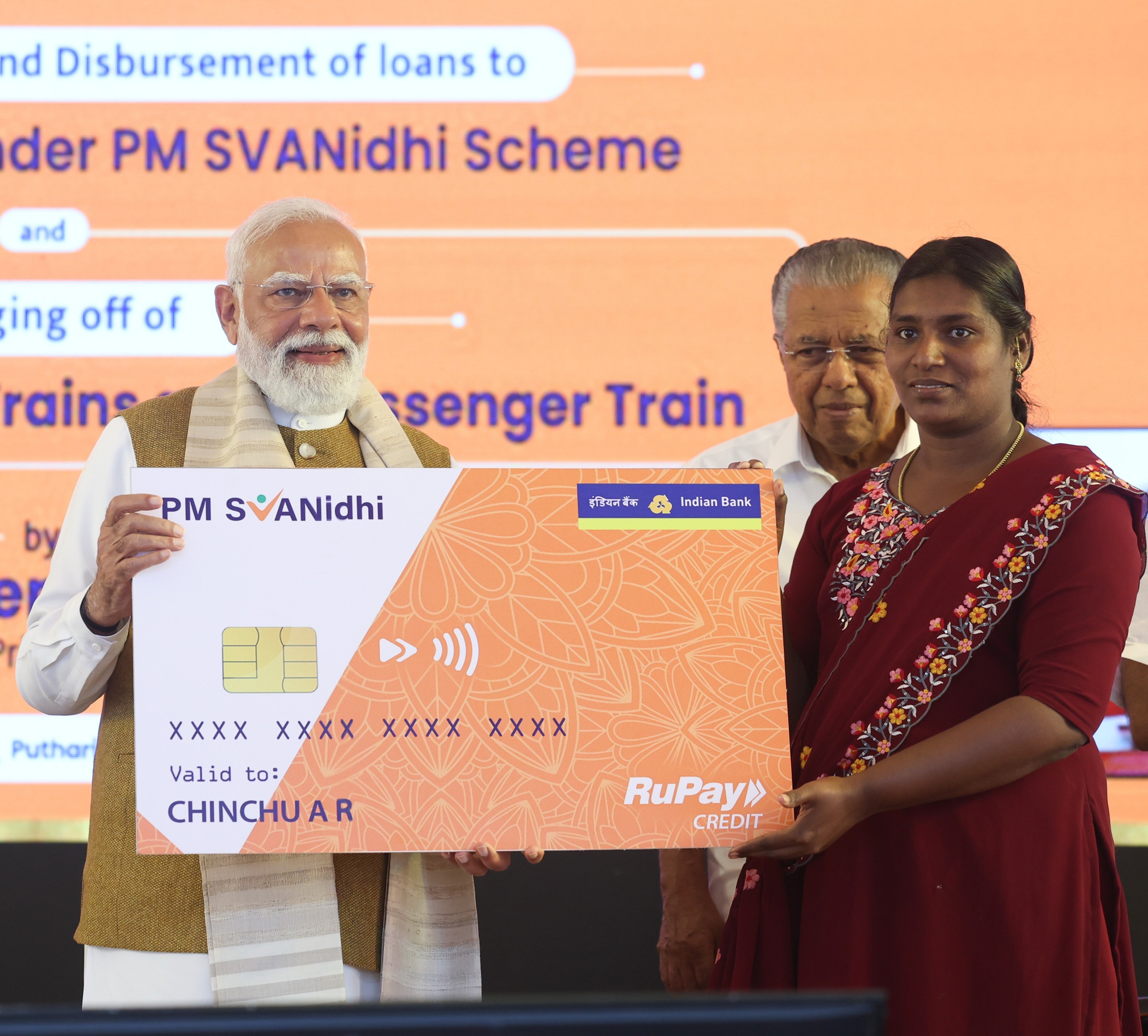
The story of Santhi R from Thiruvananthapuram illustrates this impact. As the primary breadwinner of her family through a dry fish business, she previously depended on high-interest microfinance loans that constrained growth. Through PM SVANidhi, she gained access to affordable institutional credit, expanded her operations into fish packing and local supplies, improved inventory management, and eventually secured a credit card under the scheme.
Her experience demonstrates how access to capital can enable women entrepreneurs not merely to survive but to diversify and scale their enterprises.
Similarly, Babita Sharma from Ghaziabad transformed a small stall selling puja items into a more organised and profitable business through successive loan tranches. By expanding inventory and improving her vending infrastructure, she increased both sales and customer reach.
These stories represent thousands of women across India who are using financial inclusion as a pathway toward greater economic independence.
Stories Behind the Statistics
Public policy is often evaluated through numbers, but its true impact is best understood through human experiences.
Consider Sewali Kalita from Guwahati. Running a modest pan stall, she faced severe financial difficulties and at times borrowed from neighbours simply to manage daily expenses. Through PM SVANidhi, she secured an initial loan and identified an opportunity in the growing demand for organic vegetables during the pandemic.
What followed was a remarkable journey of adaptation and entrepreneurship.
She diversified her business, expanded operations through subsequent loans, cleared debts, enrolled her children back in school, and eventually established a dedicated vegetable stall. Today, she earns a stable monthly profit and runs a thriving enterprise alongside her husband.
Or take the case of Yograj Mali from Gandhinagar. A commerce student operating a street food business, he saw his livelihood disrupted by the pandemic. Access to a PM SVANidhi loan helped revive his business and introduced him to digital payments and broader social security programmes.
Such stories remind us that economic policies are ultimately about people. Behind every loan sanctioned is an individual attempting to improve their circumstances, support a family, and build a more secure future.
The success of PM SVANidhi lies not only in the volume of loans disbursed but in the opportunities those loans create.
Strengthening Urban Economies
The broader significance of PM SVANidhi extends beyond individual beneficiaries.
Street vendors form an integral part of urban economic ecosystems. Their businesses generate employment, support local suppliers, provide affordable products, and contribute to market dynamism.
When vendors gain access to capital, their increased purchasing power often benefits wholesalers, producers, transport operators, and service providers. Business expansion creates additional demand across supply chains.
This multiplier effect contributes to local economic development.
Furthermore, by integrating vendors into formal financial systems, the scheme strengthens economic resilience. Formal credit access reduces vulnerability to shocks, while digital transactions improve efficiency and transparency.
In a rapidly urbanising country, supporting informal workers is not simply a matter of welfare policy. It is an economic imperative.
India’s urban future will depend significantly on how effectively it can create inclusive growth opportunities for millions who work outside formal employment structures. PM SVANidhi offers one model for achieving this objective.
Challenges and the Road Ahead
While the achievements of PM SVANidhi are substantial, continued success will require addressing emerging challenges.
As the scheme expands, ensuring consistent implementation across diverse regions will remain important. Financial literacy programmes must keep pace with growing digital adoption. Beneficiaries transitioning to larger businesses may require access to higher credit limits and more advanced financial products.
There is also scope to strengthen market linkages, business mentoring, and entrepreneurship support. Access to credit is essential, but sustained growth often requires additional support in areas such as inventory management, marketing, accounting, and technology adoption.
The extension of the scheme until March 2030 provides an opportunity to deepen these interventions and build on existing achievements.
Future efforts could also focus on strengthening data-driven monitoring systems, expanding partnerships with financial institutions, and enhancing integration with social security programmes.
The objective should not merely be to increase loan numbers but to maximise long-term economic mobility.
A New Vision of Urban Inclusion
The story of PM SVANidhi ultimately reflects a larger shift in India’s development approach.
For decades, informal workers often remained outside mainstream policy discussions despite their immense contribution to economic activity. Programmes designed specifically for their needs were relatively limited.
PM SVANidhi challenges that pattern.
It recognises street vendors as entrepreneurs, economic contributors, and stakeholders in urban development. It seeks to provide not charity but opportunity; not dependency but capability; not temporary relief but long-term empowerment.
The scheme’s success demonstrates that when policy interventions are designed around the realities of people’s lives, meaningful change becomes possible.
From crowded markets in Delhi to roadside stalls in Guwahati, from temple precincts in Ghaziabad to fish markets in Kerala, millions of vendors are building more secure futures through access to credit, digital tools, and social protection.
Their journeys reveal an important truth about development. Economic transformation does not occur only through large industries, major infrastructure projects, or corporate investments. It also happens when small entrepreneurs gain the confidence, resources, and opportunities needed to grow.
In that sense, PM SVANidhi is about far more than loans. It is about dignity, inclusion, and recognition. It is about bringing millions of informal workers closer to the centre of India’s growth story.
As India continues its journey toward becoming a more prosperous and inclusive economy, the lessons of PM SVANidhi deserve attention. They show that when governments invest in the aspirations of ordinary citizens, even small amounts of support can generate extraordinary outcomes.
For millions of street vendors across the country, the scheme has transformed the language of survival into the language of self-reliance. And that may be its most enduring achievement.
Comments are closed.